July 21, 2026 | 10:23 GMT +7
Hotline: 0913.378.918

July 21, 2026 | 10:23 GMT +7
Hotline: 0913.378.918
"There was a time when I had to take six months of unpaid leave to go into business. That was the first time after many years of attachment to the laboratory that I had to make such a difficult decision," M.Sc. Tran Thi Tham Ha, a researcher at the Department of Biotechnology, Physiology, Biochemistry, and Post-Harvest Technology under the Western Highlands Agriculture and Forestry Science and Technology Institute (WASI), confided.
That petite woman has devoted nearly 20 years to science and was once sponsored by the State to study abroad, returning to serve the Vietnamese agricultural sector.
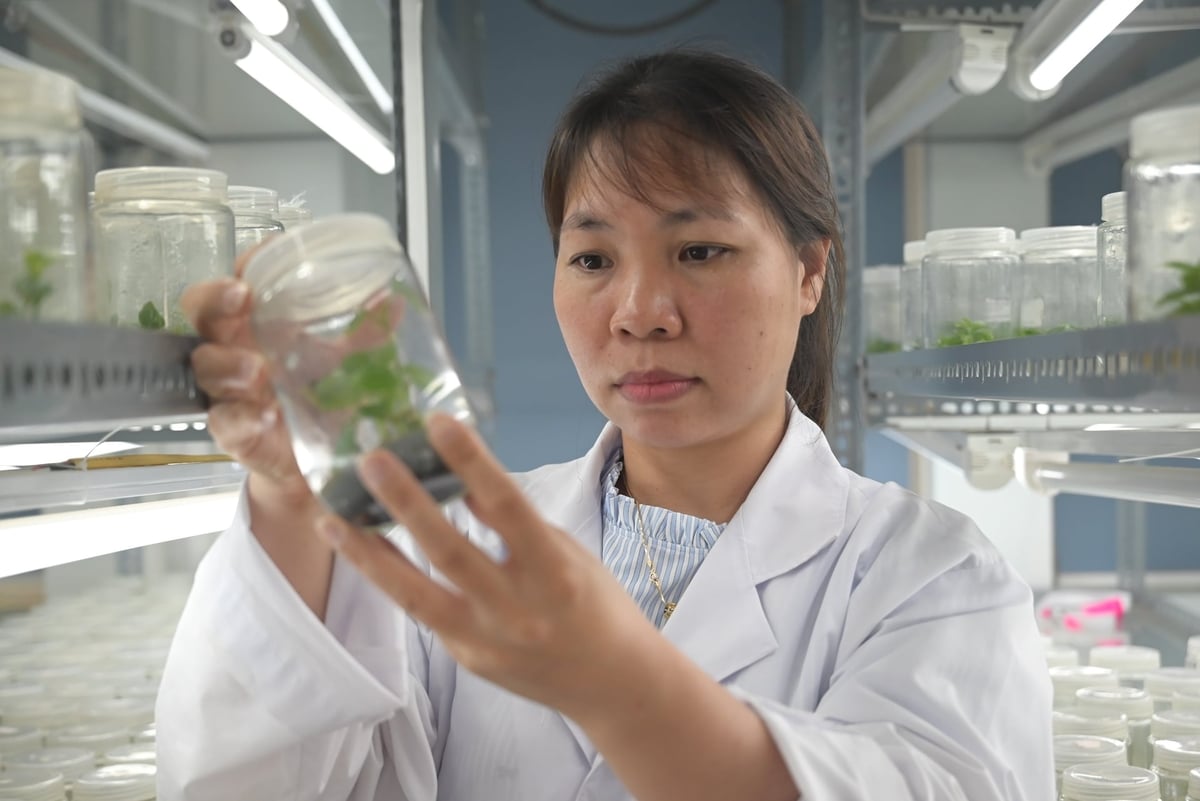
M.Sc. Tran Thi Tham Ha inspecting tissue culture plant growth in the laboratory. Photo: Pham Hoai.
In 2015, she received a scholarship to study in Australia. Two years of studying in a modern research environment opened up many new perspectives on science for her. From the systematically invested laboratory equipment and connected databases to the mechanisms encouraging creativity, everything helped scientists dedicate almost all of their time to research.
Bringing the accumulated knowledge back to the country, she expected to contribute to many technical advances that would serve agricultural production. However, the reality presented many gaps. Not every project had enough equipment to be deployed immediately. Some machinery serving research had to wait for years to be invested in. Many specialized chemicals and materials took considerable time to procure, while administrative procedures still occupied a significant portion of the researchers' time.
"Difficulties regarding research conditions will eventually be untangled step by step if there is investment. What makes many people doing science worry more is their own life," Ms. Ha said slowly.
After the Covid-19 pandemic, all household expenses increased. The salaries of the husband and wife were no longer enough to cover living costs. After many nights of thinking, she decided to apply for six months of unpaid leave to try her hand at business. "At that time, I simply thought that I had to find an additional source of income to make the family more stable. Because if we just rely on our salaries, it is very difficult to balance life," Ms. Ha recalled.
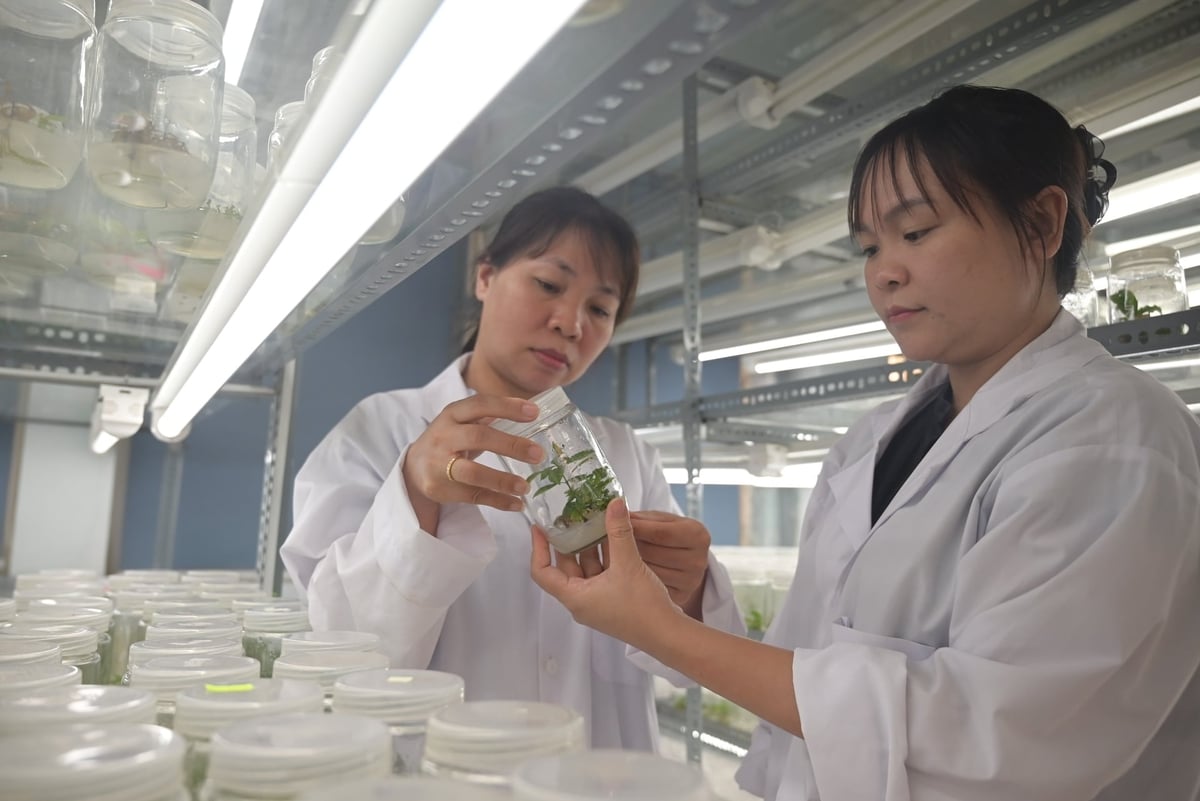
Despite many difficulties, with passion and enthusiasm, young scientists still diligently cultivate green seeds for the overall development of the agricultural sector. Photo: Pham Hoai.
Six months away from the laboratory helped her partially resolve the burden of food and clothing. However, the further away she was from work, the more she missed the unfinished experimental samples and the feeling of suspense whenever monitoring the results of a research protocol that lasted for many months.
By the time she returned to the Institute, she understood that scientific research was not just a profession but had become a part of her life. Since then, outside working hours, she has maintained her business to earn extra income, giving her peace of mind to continue in the profession.
"I do not do business to get rich. I just want to have an additional source of income to continue doing science without too much pressure about life. What we long for is not special favor, but policies strong enough so that researchers can live on their profession, dedicated to contributing with peace of mind and without being distracted by the matter of food and clothing," Ms. Ha shared.
According to her, training a scientist takes many years, from university lecture halls and years of master's studies to Ph.D. candidacy and the accumulation of laboratory experience. If after all that time, scientists still have to struggle with the livelihood equation, it is not only their personal disadvantage but also a waste of high-quality human resources that the State has taken great pains to train.
If the story of M.Sc. Tran Thi Tham Ha is a journey to find a balance between passion and life, M.Sc. Truong Minh Hang (currently working at the Department of Biotechnology, Physiology - Biochemistry, and Post-Harvest Technology under WASI) chose to stay with the profession starting from very rustic memories.
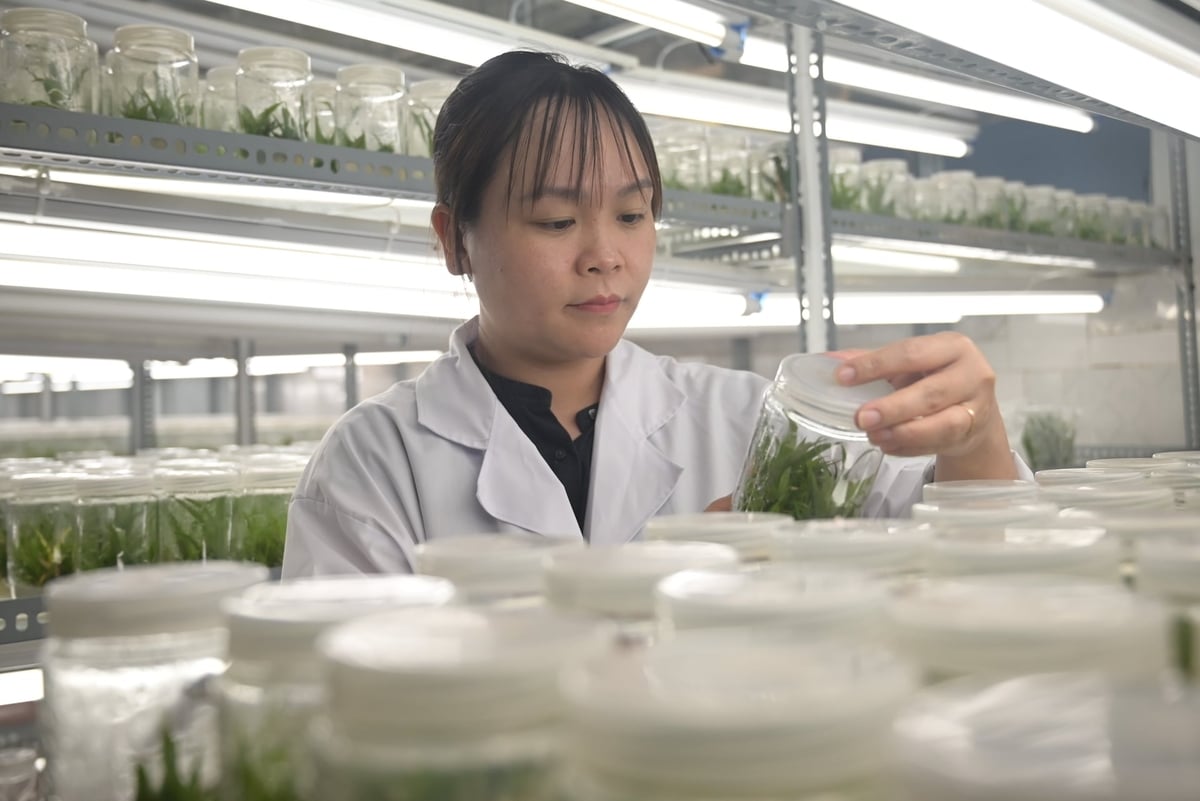
M.Sc. Truong Minh Hang strives to overcome difficulties to keep her passion for science. Photo: Pham Hoai.
Her childhood was tied to the Institute's campus, where her father spent many years conducting research. The times spent following her father into the experimental garden, hearing stories about plant breeding, or quietly observing scientists diligently working on experiments that spanned many crop seasons nurtured a special love for the research profession within her.
After graduating from university, she continued to pursue the scientific path and received a scholarship to study in Japan. The modern research environment, along with the advanced laboratory system, helped her access many new methods and opened up many career opportunities after graduation.
"I also used to think about many other choices, but in the end, I still decided to return. Being trained from the State's budget funding, I also wish to bring the knowledge I learned to serve Vietnamese agriculture," Ms. Hang shared.
The day she returned to the Institute, she realized that doing science in Viet Nam would face many more difficulties than she had previously imagined. Research equipment was not yet fully synchronized, budget funding for many projects was limited, while the results of a research project sometimes took many years to be recognized.
However, what she worried about more was the story behind the laboratory. Her husband is also a researcher. Both husband and wife chose the scientific path, so their income relies mainly on their salaries.
"If we only look into salaries, it is very difficult to stabilize life. The families on both sides have supported us a lot so that my husband and I can pursue the profession with peace of mind. Not everyone has that luck. Young people do not mind starting with a low salary or spending many years on a research topic. What makes many people hesitate is that after many years of study, even when trained abroad, income and working conditions are still not commensurate with what they have invested in the profession.
What we hope for is not a special priority but a mechanism sufficient for scientists to confidently live on their profession, wholeheartedly dedicating themselves to research without having to stand before the choice between passion and livelihood," Ms. Hang confided.
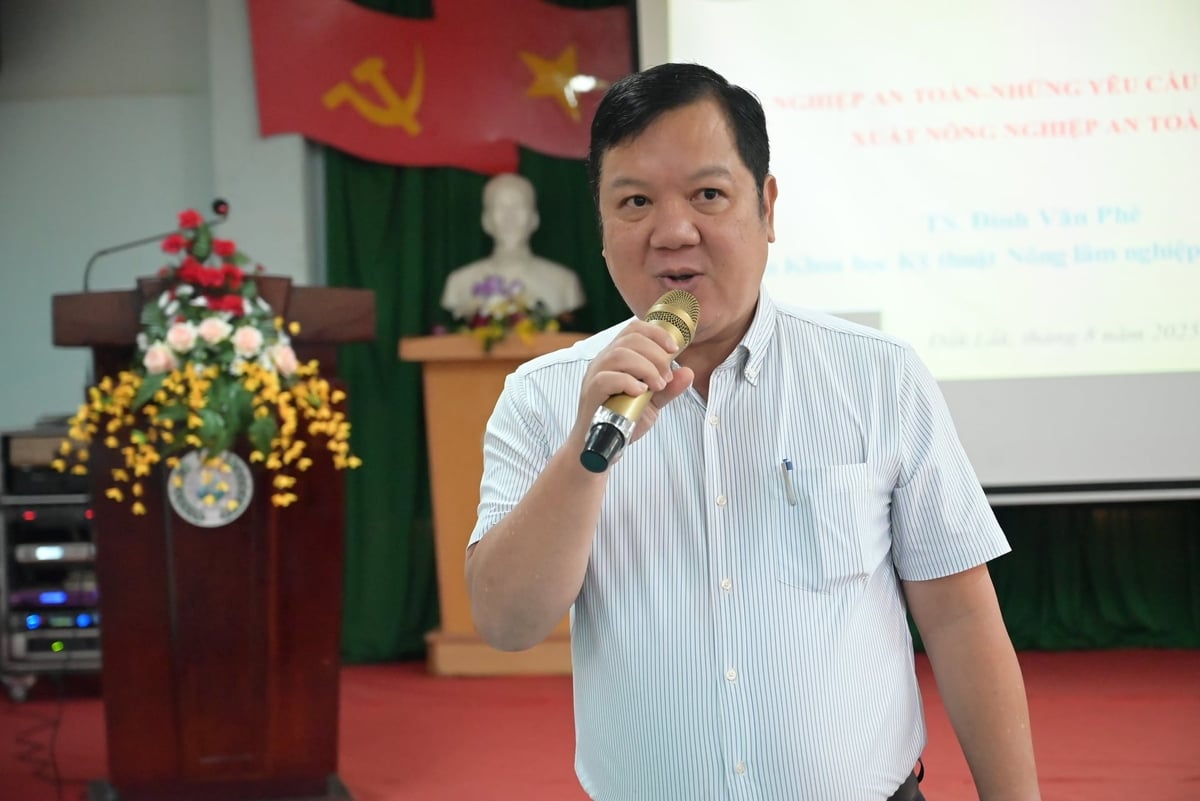
According to Dr. Phan Viet Ha, keeping scientists is not simple at all in the context of remaining difficulties. Photo: Pham Hoai.
According to Dr. Phan Viet Ha, Acting Director of the Western Highlands Agriculture and Forestry Science and Technology Institute, the Institute currently has 235 cadres, officials, and workers, including 123 officials directly engaged in research work. However, the 2026 operating budget decreased by about 22%, while most of the budget must be spent on regular expenditures and salaries, making investment in research and taking care of the cadres' lives difficult.
"Training a scientist takes many years, but keeping them to stay is even harder. Without policies strong enough regarding income, the research environment, and preferential mechanisms, retaining a high-quality research team will become increasingly difficult," Dr. Ha expressed openly.
The pressure of making a living is still present behind the doors of those laboratories. Yet, every day, those scientists still quietly start their work with the belief that behind each experimental sample and each research project is practical value intended for farmers and the sustainable development of agriculture. But for that flame of passion to continue to be maintained, strong enough mechanisms are urgently needed so that scientists can contribute with peace of mind.
Translated by Ha Chi
(VAN) Viet Nam's forestry sector is shifting from resource extraction to the development of strategic ecological infrastructure, opening new drivers for the green economy and the carbon market.
![Scientists' strength: [8] Fairness and creative motivation](https://t.ex-cdn.com/nongnghiepmoitruong.vn/608w/files/content/2026/07/16/pgsts-dang-van-dong-cham-soc-hoa-lay-on-103239_191-082039.jpg)
(VAN) Scientists must enjoy proportionate benefits from the intellectual products they create.

(VAN) The sugarcane industry is shifting its focus from expanding cultivation area to improving the quality of raw material zones in order to build sustainable competitive advantage.
![HCMC fisheries complies with the law: [Final] Technology fills the gaps](https://t.ex-cdn.com/nongnghiepmoitruong.vn/608w/files/huytd/2026/07/17/1455-3-133654_171.jpg)
(VAN) Through smart vessel positioning solutions and the digitalization of fishing logbooks, HCMC is proactively tightening control of inactive fishing vessels, closing management loopholes from shore.
![Scientists' strength: [7] Waiting for a broad mechanism](https://t.ex-cdn.com/nongnghiepmoitruong.vn/608w/files/anhntk/2026/06/23/1119-dsc00323-nongnghiep-081103.jpeg)
(VAN) Besides developing new rice varieties, scientists also have to worry about finances, resources, and research aspirations.
![Scientists' strength: [6] Need a medicine strong enough](https://t.ex-cdn.com/nongnghiepmoitruong.vn/608w/files/benlc/2026/07/12/1618-chatgpt-image-12_15_17-10-thg-7-2026-122814_896.jpeg)
(VAN) Retaining scientists requires not only income but also a conducive research environment, a meritocratic mechanism, and trust.

![Scientists' strength: [1] Thoughts of a former institute director](https://t.ex-cdn.com/nongnghiepmoitruong.vn/resize/174x104/files/benlc/2026/07/06/4051-_dsc2865-071318_463.jpg)
![Scientists' strength: [2] Key laboratory crisis](https://t.ex-cdn.com/nongnghiepmoitruong.vn/resize/174x104/files/benlc/2026/07/07/5846-dsc_0474-073322_439.jpg)
![Scientists' strength: [3] Cold shivers in the gene bank](https://t.ex-cdn.com/nongnghiepmoitruong.vn/resize/174x104/files/benlc/2026/07/08/2901-20210901_101217-100306_940.jpg)
![Scientists' strength: [4] Struggling to make ends meet](https://t.ex-cdn.com/nongnghiepmoitruong.vn/resize/174x104/files/tuongdt/2026/07/05/4118-z6770461445774_8c42773c23a8a113490e41c3772cf5ef-143810_411.jpg)