July 21, 2026 | 16:33 GMT +7
Hotline: 0913.378.918

July 21, 2026 | 16:33 GMT +7
Hotline: 0913.378.918
Whichever sample is collected, its information is documented, packaged, and divided into two parts to be stored in two separate vaults: medium-term storage at a temperature of 0 to 5°C (preserving seeds for about 30 years) and long-term storage at a temperature of -18 to -20°C (preserving seeds for approximately 50 years). Because of this, anyone entering the gene bank feels frozen to the bone, even when fully dressed in padded cotton trousers, padded cotton jackets, hoods, shoes, and gloves.
Silence is the feeling I experience as I walk through the campus of the Plant Resources Center (under the Vietnam Academy of Agricultural Sciences), the national focal unit in Vietnam's agricultural crop genetic resource conservation system.
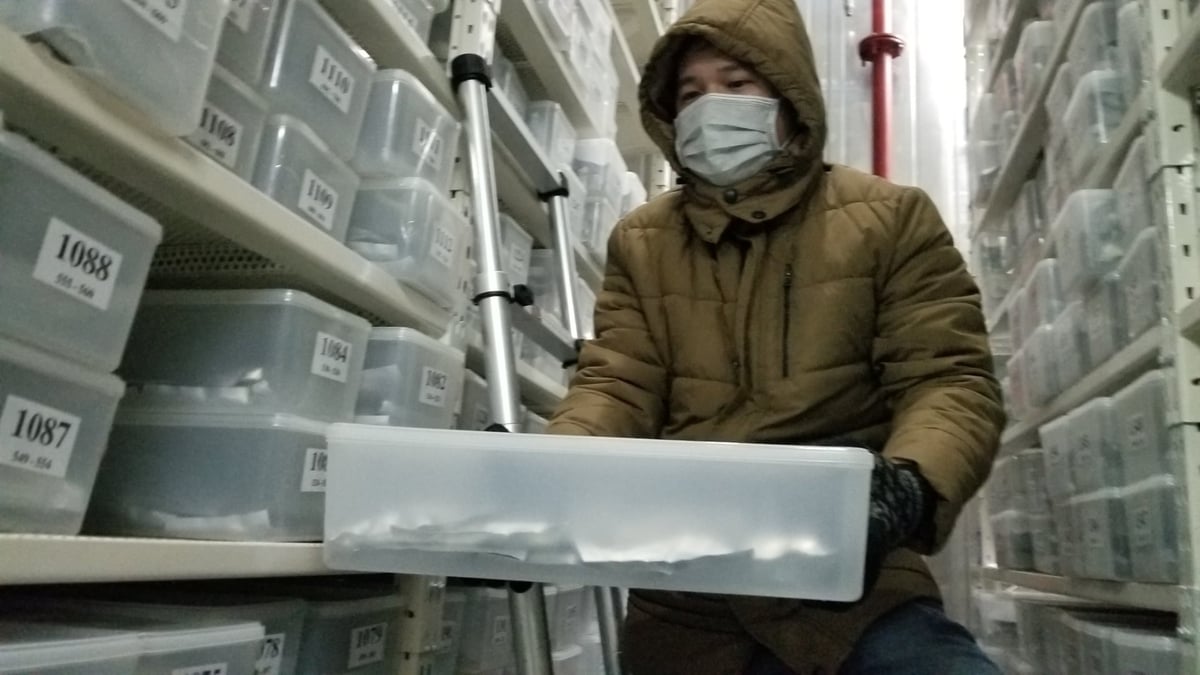
Inside the gene bank of the Plant Resources Center. Photo: Duong Dinh Tuong.
The Center’s duties include: Formulating scientific research and technology transfer programs, projects, and plans on long-term, 5-year, and annual plant resource conservation to submit to competent authorities for approval and organize their implementation; conducting scientific research on plant resources; transferring technology, cooperating with experts, and training human resources on plant resources...
As crucial as its mandate is, many scientists at the Center have left one after another, while those who remain are also in a state of shock due to the financial self-reliance mechanism, as the State pays them only six months of salary per year.
On an occasion visiting the farm of the "Gen Xanh" (Green Gene) group on the outskirts of Hanoi, I met their key personnel. All of them used to be scientists at the Plant Resources Center, including three master's graduates and one Ph.D. Their skin is deeply tanned by the sun, but everyone looks healthy and vibrant, a stark contrast to their former colleagues still clinging to the old agency.
Dr. Nguyen Duc Chinh guided me around the farm and shared that in 2005, after graduating from Hanoi University of Agriculture, he started working at the Plant Resources Center. During his employment, he was sent to study high-tech agriculture in Israel, then went to Australia for a master's degree in applied agricultural science, and to Japan for a Ph.D. in biotechnology.
The transition from working for the state to farming came to them as if by destiny. At that time, the Plant Resources Center had a project to build an organic vegetable cultivation model for farmers. Normally, when a project ends and support stops, farmers also return to their old cultivation methods. However, he regretted all the hard work, so he established the Gen Xanh group to experiment with organic vegetable production themselves. He discussed with his wife, M.Sc. Nguyen Thi Duyen, along with a group of other colleague master's graduates like Nguyen Thi Thanh and Tran Van Luyen, to rent 3.5 hectares of land in Hiep Thuan, Hanoi, to start a farm.
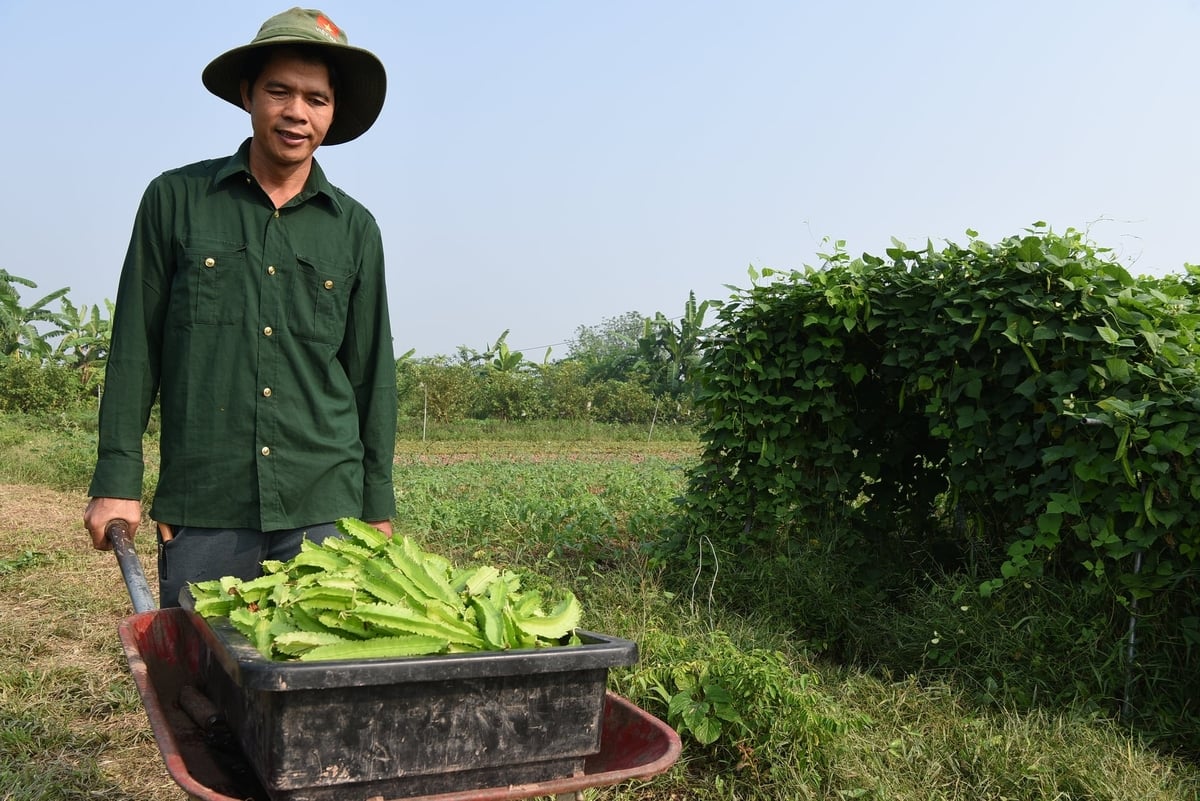
Dr. Nguyen Duc Chinh harvesting vegetables on the farm. Photo: Duong Dinh Tuong.
They officially left the agency in 2020. Mr. Tran Van Luyen confided: "When we left, it was also the time of the most massive wave of resignations; about half of the staff had already left before us. In our group of four, Thanh and I were contract workers, while Mr. Chinh and Ms. Duyen were permanent staff. Having worked for 10 years, I was in the last batch of contract workers to have my salary coefficient raised from 2.34 to 2.67, after which it stopped because the actual take-home income after paying insurance was only just over 2 million VND per month.
On top of that, salaries were not received monthly; instead, we were only advanced a tiny bit at the beginning of the year, and had to wait until October when the state budget was disbursed to receive it all in one lump sum. Furthermore, the working environment did not utilize the knowledge we had learned; the application to practical production was minimal, mostly on paper, so I was determined to quit. Even though I quit, I still continued to participate in a project on temperate fruit trees until it was finished before completely stopping, because I saw it was meaningful for highland people in developing their economy..."
I asked Mr. Luyen if he ever regretted quitting his job at a state agency. He replied immediately: “What is there to regret, brother? Honestly, leaving state employment earlier would have been even better for us.”
At first, the soil was not yet tilled, their technical skills were unrefined, the hired labor was not used to organic farming, and customers did not know about them, so the group suffered losses. It was not until the sixth month that the vegetable sales were enough to cover labor costs. Gradually, as the production process was perfected, the economic efficiency became better and better.
The group’s daily work is exporting and selling vegetables on Mondays, Wednesdays, and Fridays, and producing on the fields on Tuesdays, Thursdays, and Saturdays. In the group, Mr. Chinh is in charge of heavy operations, Ms. Duyen is in charge of posting sales items and recovering debts, Ms. Thanh is in charge of crop varieties, planting schedules, and direct production, and Mr. Luyen is in charge of taking orders, customer care, and logistics into the inner city.
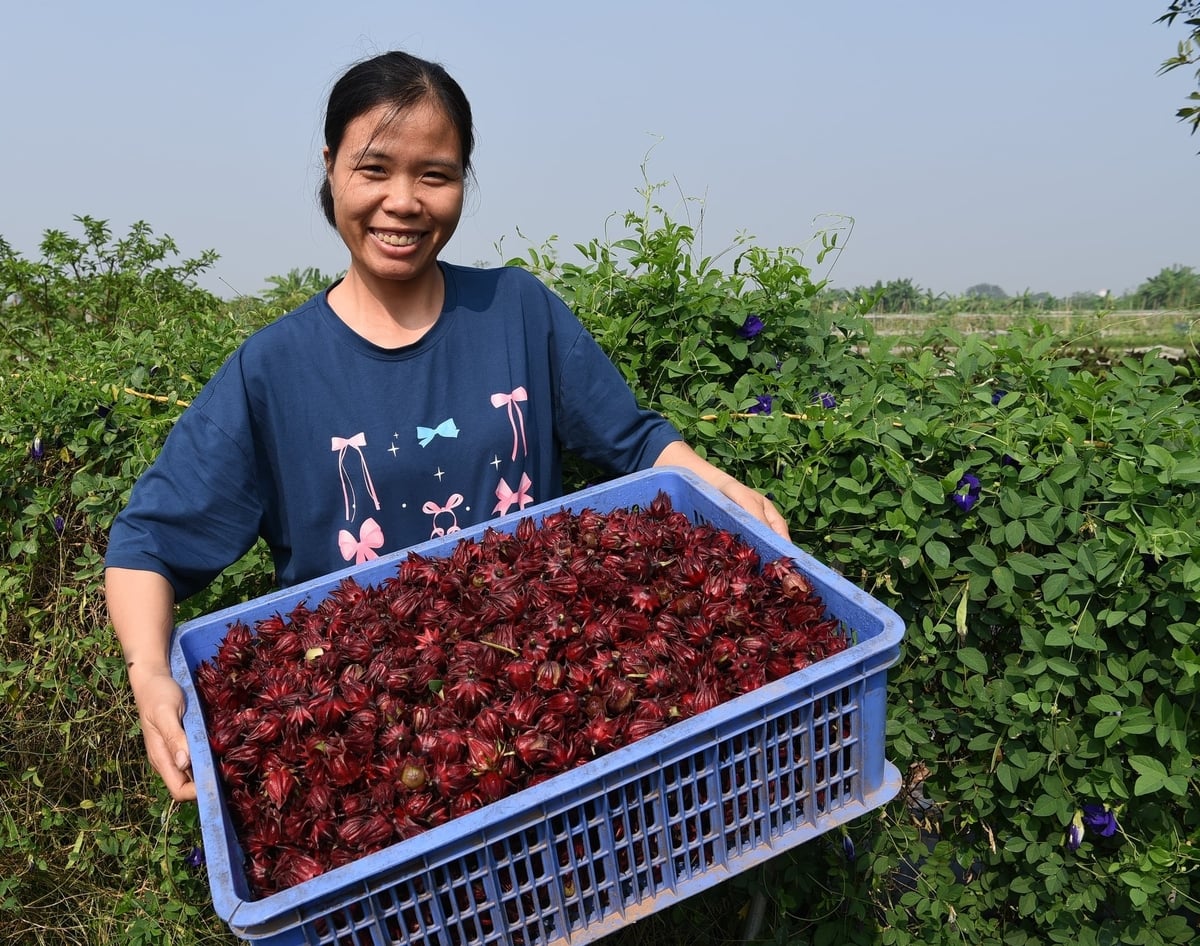
The joy of a bountiful harvest at the Gen Xanh group's farm. Photo: Duong Dinh Tuong.
The group’s customers are mainly households, but they do not buy through stores; instead, they contact the group on social media. Whoever places an order, the group records it and uses a car to transport the goods to a hub in inner Hanoi, from where professional shippers deliver them to each house. Thanks to this delivery method, Gen Xanh can sell at a higher price than when supplying stores, while buyers pay a lower price than when buying from stores. Currently, on average, various types of mustard greens are priced at 40.000 VND/kg, and this price remains stable throughout the year, rarely fluctuating with market conditions.
Cultivating an area of 3.5 hectares, the Gen Xanh group’s annual revenue is about 2 to 2,5 billion VND, with a profit margin of about 10 to 15%. The largest portion goes to paying wages for more than 10 workers, who are elderly local women, then reinvesting in production and purchasing more land to expand their scale. Therefore, the monthly salary they pay each other is 10 million VND; if there is a surplus at the end of the year, they share an additional few tens of millions per person.
“My wife, who is currently working at the Plant Resources Center, has also intended to quit several times, but I keep encouraging her to stay because the office is close to home, and the job is quite light, so she has plenty of time for the family. The two of us do not have paternal or maternal grandparents nearby to help look after the kids, especially when they are sick. Also, because the office is close to home, I worked for the State for so many years without quitting, but later, as the kids grew up and living costs rose, leaving was inevitable," Mr. Luyen shared.
"When running this private farm, we are proactive with our time, and moreover, we can do many good things, such as creating jobs for many local people and creating safe products for society" – Luyen’s shared words made me determined to go and meet those who are still holding the line at the Plant Resources Center.
$1 = VND 26,450 - Source: Vietcombank.
Translated by Ha Chi
(VAN) Viet Nam's forestry sector is shifting from resource extraction to the development of strategic ecological infrastructure, opening new drivers for the green economy and the carbon market.
![Scientists' strength: [8] Fairness and creative motivation](https://t.ex-cdn.com/nongnghiepmoitruong.vn/608w/files/content/2026/07/16/pgsts-dang-van-dong-cham-soc-hoa-lay-on-103239_191-082039.jpg)
(VAN) Scientists must enjoy proportionate benefits from the intellectual products they create.

(VAN) The sugarcane industry is shifting its focus from expanding cultivation area to improving the quality of raw material zones in order to build sustainable competitive advantage.
![HCMC fisheries complies with the law: [Final] Technology fills the gaps](https://t.ex-cdn.com/nongnghiepmoitruong.vn/608w/files/huytd/2026/07/17/1455-3-133654_171.jpg)
(VAN) Through smart vessel positioning solutions and the digitalization of fishing logbooks, HCMC is proactively tightening control of inactive fishing vessels, closing management loopholes from shore.
![Scientists' strength: [7] Waiting for a broad mechanism](https://t.ex-cdn.com/nongnghiepmoitruong.vn/608w/files/anhntk/2026/06/23/1119-dsc00323-nongnghiep-081103.jpeg)
(VAN) Besides developing new rice varieties, scientists also have to worry about finances, resources, and research aspirations.
![Scientists' strength: [6] Need a medicine strong enough](https://t.ex-cdn.com/nongnghiepmoitruong.vn/608w/files/benlc/2026/07/12/1618-chatgpt-image-12_15_17-10-thg-7-2026-122814_896.jpeg)
(VAN) Retaining scientists requires not only income but also a conducive research environment, a meritocratic mechanism, and trust.
![Scientists' strength: [5] Heavy burden of livelihood](https://t.ex-cdn.com/nongnghiepmoitruong.vn/608w/files/chinq/2026/07/17/2452-dsc_0566-081739_259-065506.jpg)
(VAN) Behind the research projects lies the arduous life of scientists, those who persistently cling to their profession amidst the pressure of making a living.

![Scientists' strength: [1] Thoughts of a former institute director](https://t.ex-cdn.com/nongnghiepmoitruong.vn/resize/174x104/files/benlc/2026/07/06/4051-_dsc2865-071318_463.jpg)
![Scientists' strength: [2] Key laboratory crisis](https://t.ex-cdn.com/nongnghiepmoitruong.vn/resize/174x104/files/benlc/2026/07/07/5846-dsc_0474-073322_439.jpg)