July 21, 2026 | 16:32 GMT +7
Hotline: 0913.378.918

July 21, 2026 | 16:32 GMT +7
Hotline: 0913.378.918
An anonymous officer from the Plant Resources Center confirmed this reality to me. A few lucky ones manage to secure positions as plant conservation experts or vocational teachers (if they obtain extra teaching certificates) for external organizations, or sell fertilizers and pesticides, which at least directly relate to their field of study. However, the majority are forced to take up all kinds of side jobs: teaching yoga, working as shippers or Grab drivers, acting as real estate brokers, or selling goods online. They speak frankly with their unit leaders to ask for flexible working hours, skipping daily attendance checks; they only report to the office when there is collective work to do, spending the rest of their time working outside to make a living.
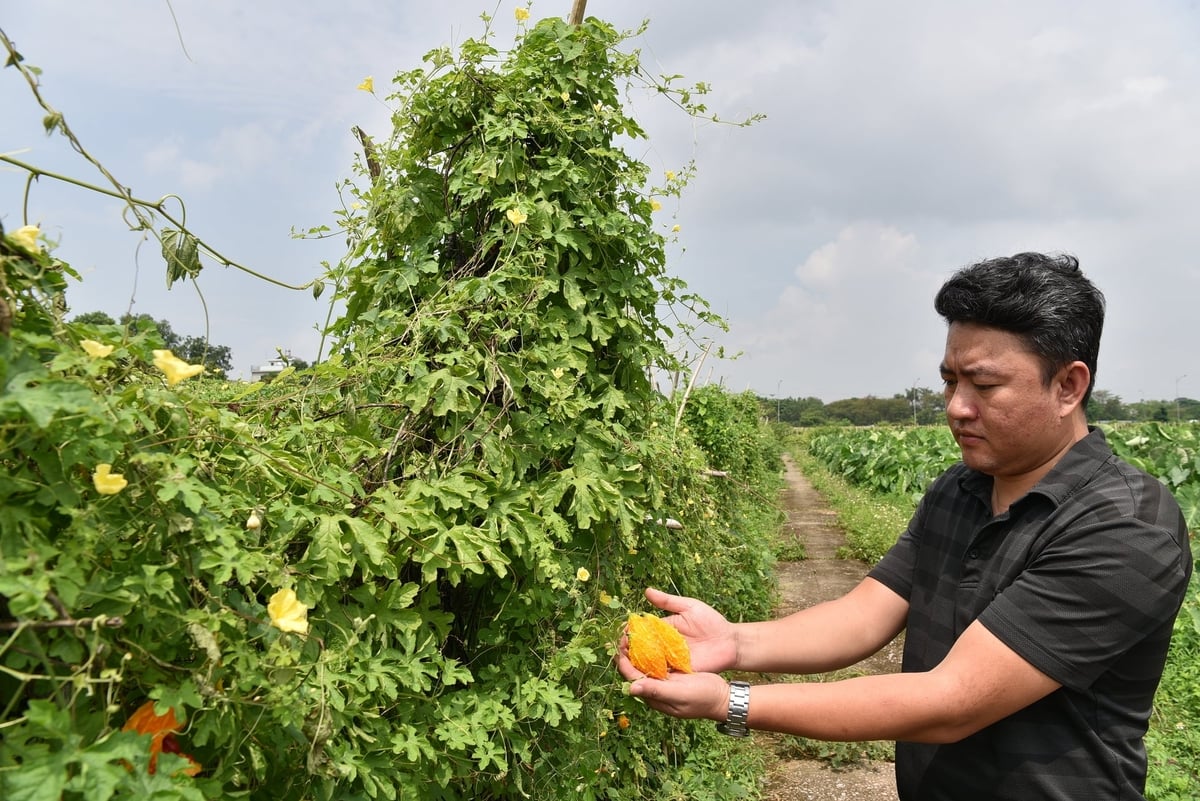
Preserving wild bitter melon variants at the Plant Resources Center. Photo: Duong Dinh Tuong.
Under the current system, financial self-reliance requires generating revenue. However, the Plant Resources Center focuses entirely on basic research, yielding almost no revenue because genetic resources are strictly preserved for storage, not commercial sale.
While the State currently provides only six months of salary, the cold storage vaults for gene preservation must run year-round, and the experimental fields must be tended to season after season. Meanwhile, research grants and projects, which used to sustain scientists' livelihoods, have become a rarity. Whichever individual or team is lucky enough to secure a grant usually keeps the benefits within their group, with no spillover to other colleagues.
In theory, Decree 115 on financial self-reliance was designed as a filter to weed out unproductive civil servants who merely show up to pass the time. In practice, the opposite has happened: young, talented minds are the ones who have left to find a livelihood elsewhere. Those who remain, regardless of their caliber, are gradually losing their motivation for research.
Out of approximately 70 personnel currently at the Plant Resources Center, only six are Youth Union members. There is a complete lack of a younger generation of successor cadres. At its peak, the Department of Plant Breeding and Genetic Evaluation had 37 staff members; today, only 17 remain.
From 2015 to 2020, Dr. Nguyen Huu Hai rolled up his sleeves in orchards across Me Linh District, Hanoi, to complete his doctoral thesis on rehabilitating a degraded local specialty, the Me Linh red pomelo, and formulating an appropriate agricultural care package for it. After draining his last savings and still facing a funding shortage for his thesis, he contemplated giving up several times. Only with the encouragement and financial support of his family did he finally complete it, at a total cost of 500 to 600 million VND.
At that time, society still held academic degrees in high regard. However, as mechanisms shifted, degrees were gradually cheapened because a scientist's salary is determined strictly by a standard coefficient scale, completely detached from academic titles or expertise level.
Despite having worked for 20 years and reaching the rank of Principal Researcher, Dr. Hai's monthly salary, including allowances, is only about 10 million VND. To make matters worse, due to the self-reliance requirements under Decree 115 in recent years, the State only pays him six months of salary. Since his wife works at the same unit under the same payment terms, their family's financial hardship is doubled.
"To be honest, many external seed and fertilizer companies have invited me to join them with monthly salary offers of 35 to 40 million VND. However, I still cherish the entire journey of striving inside this institute, so I am still waiting for an appropriate policy change," Dr. Hai confided.
Refusing to sit idly by, Dr. Hai discussed with M.Sc. Doi Hong Hanh that they had to save themselves first before waiting for state help. They teamed up to pitch ideas and leverage their professional networks to directly apply for scientific projects funded by local provincial governments. Recently, they traveled to Lao Cai Province to propose a project on rehabilitating and standardizing the cultivation protocols for two upland rice variants in two communes, while helping these localities build brands, establish traceability, and enter their products into the OCOP program. The initial feedback has been highly promising. Prior to this, they secured a short-term project to conserve canary wood trees in Co Loa, Hanoi, which provided a modest income to sustain their family's living costs.
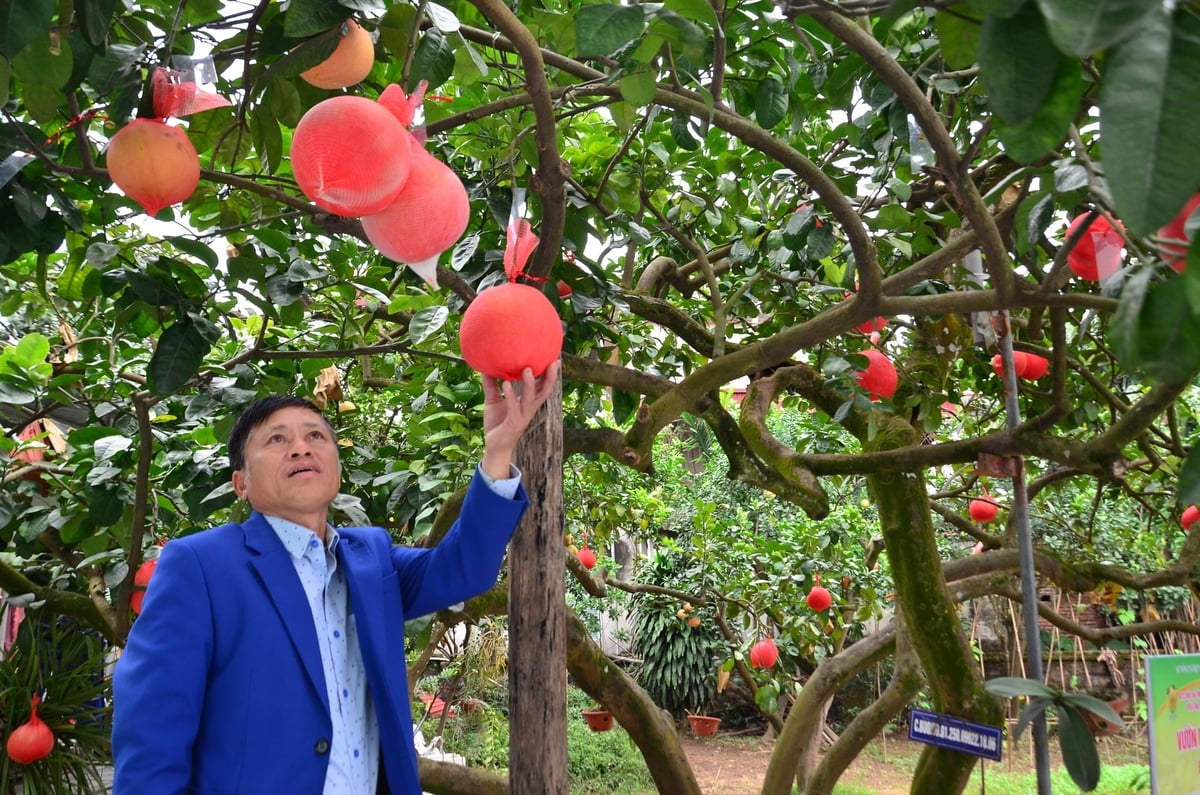
The Me Linh red pomelo region that Dr. Nguyen Huu Hai contributed to rehabilitating. Photo: Duong Dinh Tuong.
During our conversation, Dr. Hai kept expressing his deep aspiration: "Conserving indigenous crop varieties is the unique specialty of the Plant Resources Center. Given the current climate change situation, the trend of utilizing native varieties will gradually return. If only our Center's leadership could meet with provincial and city authorities to sign memoranda of understanding on rehabilitating and developing native crops, it would be much easier for us to apply for local research grants."
M.Sc. Dam Thi Thu Ha (Department of Agricultural Biodiversity, Plant Resources Center) could not hide her sorrow as she watched her colleagues gradually leave the agency one by one. Even her husband, M.Sc. Tran Van Luyen left the Center alongside three others to establish the "Gen Xanh" group, which runs an organic farm to produce and sell vegetables and fruits to make a living.
When asked about her salary, she smiled softly and shared that as a Principal Researcher, her take-home pay after insurance deductions is over 9 million VND per month, but the State only covers six months of it. Fortunately, her department still has two ongoing projects, which secure an additional one to two months of salary, helping them hold the line for now. However, if this situation persists, more scientists will likely be forced to walk out the door.
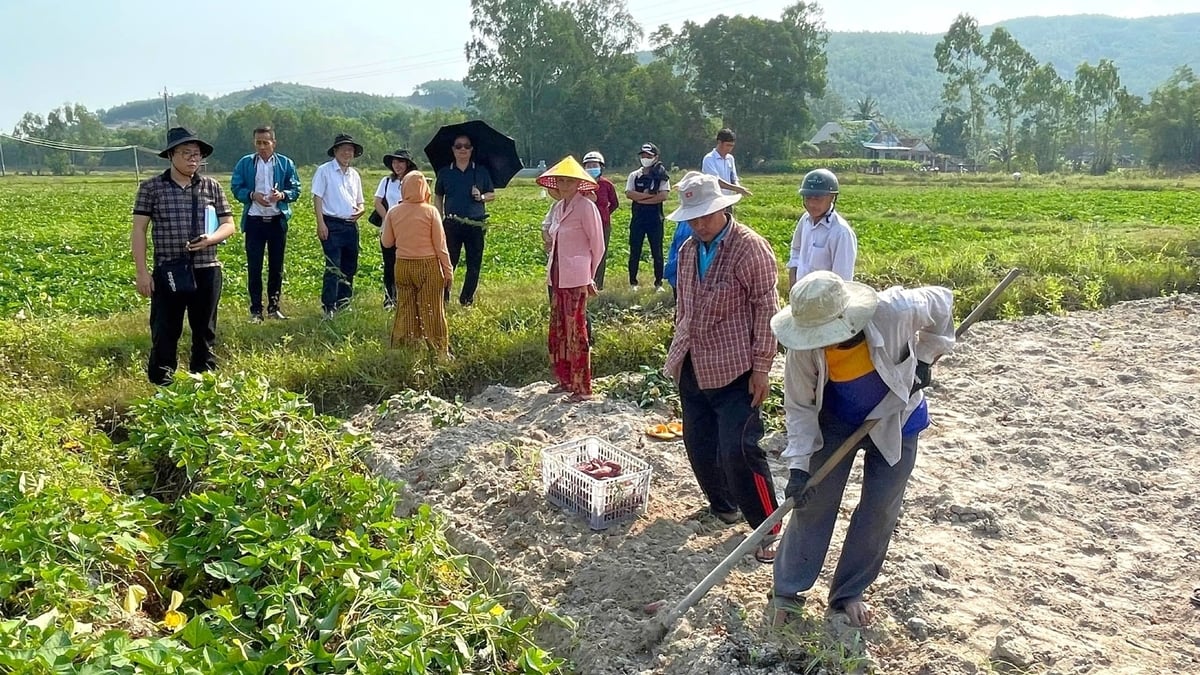
Scientists at the Plant Resources Center evaluating a sweet potato variant. Photo: TTTNTV.
"Securing research grants is extremely difficult now, and even if you succeed, the financial department mandates an immediate 10% budget cut right at the source. On top of that, funding bodies require a commercial outlet for scientific products that is directly tied to production. Yet, our Center primarily focuses on basic research, meaning our immediate practical application capacity is very limited," Ms. Ha explained.
"Our primary task is storing indigenous genetic resources in the vaults. Periodically, every 4 to 5 years, we retrieve them to test their viability. If the germination rate drops below 85%, we take them out to the fields for 'rejuvenation' and multiplication before restocking them in the vaults and re-evaluating their morphological traits. Competing with commercial hybrid or imported varieties on the market is incredibly difficult."
As the principal investigator of a project evaluating the genetic potential and sustainable development of local Vietnamese cassava resources under the Conservation and Sustainable Use of Genetic Resources Program, her work is limited to building a database on native cassava variants and selecting three outstanding high-yield, climate-resilient varieties representing the North, Central, and South regions of Viet Nam. However, the door to bringing these cassava varieties into actual production remains extremely narrow because commercial seed companies prioritize high yields and starch content for industrial processing, paying little attention to quality traits suited for fresh consumption or making traditional cakes.
$1 = VND 26,450 - Source: Vietcombank.
Translated by Ha Chi
(VAN) Viet Nam's forestry sector is shifting from resource extraction to the development of strategic ecological infrastructure, opening new drivers for the green economy and the carbon market.
![Scientists' strength: [8] Fairness and creative motivation](https://t.ex-cdn.com/nongnghiepmoitruong.vn/608w/files/content/2026/07/16/pgsts-dang-van-dong-cham-soc-hoa-lay-on-103239_191-082039.jpg)
(VAN) Scientists must enjoy proportionate benefits from the intellectual products they create.

(VAN) The sugarcane industry is shifting its focus from expanding cultivation area to improving the quality of raw material zones in order to build sustainable competitive advantage.
![HCMC fisheries complies with the law: [Final] Technology fills the gaps](https://t.ex-cdn.com/nongnghiepmoitruong.vn/608w/files/huytd/2026/07/17/1455-3-133654_171.jpg)
(VAN) Through smart vessel positioning solutions and the digitalization of fishing logbooks, HCMC is proactively tightening control of inactive fishing vessels, closing management loopholes from shore.
![Scientists' strength: [7] Waiting for a broad mechanism](https://t.ex-cdn.com/nongnghiepmoitruong.vn/608w/files/anhntk/2026/06/23/1119-dsc00323-nongnghiep-081103.jpeg)
(VAN) Besides developing new rice varieties, scientists also have to worry about finances, resources, and research aspirations.
![Scientists' strength: [6] Need a medicine strong enough](https://t.ex-cdn.com/nongnghiepmoitruong.vn/608w/files/benlc/2026/07/12/1618-chatgpt-image-12_15_17-10-thg-7-2026-122814_896.jpeg)
(VAN) Retaining scientists requires not only income but also a conducive research environment, a meritocratic mechanism, and trust.
![Scientists' strength: [5] Heavy burden of livelihood](https://t.ex-cdn.com/nongnghiepmoitruong.vn/608w/files/chinq/2026/07/17/2452-dsc_0566-081739_259-065506.jpg)
(VAN) Behind the research projects lies the arduous life of scientists, those who persistently cling to their profession amidst the pressure of making a living.

![Scientists' strength: [1] Thoughts of a former institute director](https://t.ex-cdn.com/nongnghiepmoitruong.vn/resize/174x104/files/benlc/2026/07/06/4051-_dsc2865-071318_463.jpg)
![Scientists' strength: [2] Key laboratory crisis](https://t.ex-cdn.com/nongnghiepmoitruong.vn/resize/174x104/files/benlc/2026/07/07/5846-dsc_0474-073322_439.jpg)