July 21, 2026 | 09:41 GMT +7
Hotline: 0913.378.918

July 21, 2026 | 09:41 GMT +7
Hotline: 0913.378.918
One of the greatest challenges facing Ho Chi Minh City (HCMC)'s fishing fleet management is the widespread practice of selling, transferring, or leasing fishing vessels without completing the ownership transfer procedures as required by the law. As a result, when violations occur at sea, establishing legal liability and identifying the responsible offender become highly time-consuming for the agencies conducting proceedings, with the risk that those who intentionally exploit these loopholes for personal gain may evade prosecution.

Fishing vessels required to remain ashore are gathered and managed at coastal landing sites to ensure strict oversight, preventing any vessel from setting sail without meeting all legal requirements. Photo: Le Binh.
In addition, HCMC has a complex network of river mouths and coastal flats. After returning from fishing trips, many small-scale vessels habitually unload their catch at these coastal flats, sell the seafood directly, or transship it to offshore logistics vessels to avoid calling at designated fishing ports. This practice not only disrupts the data chain but also poses a major challenge to monitoring catch volumes and ensuring seafood traceability, one of the core requirements that the European Commission (EC) has consistently urged Viet Nam to tighten.
Fisherman Le Van Bon, the owner of a small fishing vessel in Ho Tram commune, said, "For generations, fishermen like us have been used to buying and selling vessels with a handwritten agreement and a cash payment. We never gave much thought to complicated administrative procedures. But when the authorities checked the original registration records, the information on the previous and current owners did not match, so my vessel was classified as ineligible and ordered to remain ashore."
Mr. Bon added that Border Guard officers had explained to him that unless ownership was formally transferred, he would ultimately bear the consequences if the vessel were involved in an accident or committed an IUU-related violation at sea.
To address this bottleneck, Ho Chi Minh City has mapped out a comprehensive digitalization roadmap for the year-end peak period. A key objective for the second half of 2026 is the synchronous implementation of the electronic Catch Documentation and Traceability (eCDT) system, which will completely replace paper-based fishing logbooks. The Department of Agriculture and Environment is also working with software providers to ensure that installation and user training are provided free of charge to fishermen throughout 2026.
Along tidal channels and coastal flats in the city's coastal communes and wards, high tide signals the start of intensified patrols by authorities stationed there.
HCMC currently has 390 low-powered fishing vessels, including vessels that remain ashore because they have yet to meet the legal requirements for operating at sea, such as obtaining fishing licenses, completing technical inspections, or fulfilling food safety compliance procedures.

HCMC's extensive network of river mouths, coastal flats, and tidal channels presents significant challenges to fishing vessel management. Photo: Le Binh.
In the past, local authorities and Border Guard officers had to assign personnel to take turns manually counting and recording vessels at anchorage points. However, some vessel owners took advantage of the darkness and rising tides to slip through river mouths to fish illegally at sea. Operating without Vessel Monitoring System (VMS) devices, these vessels posed a high risk of violating IUU fishing regulations.
The HCMC People's Committee has instructed local authorities to strictly manage these vessels and ensure that none are allowed to leave their moorings. All vessels required to remain ashore have been identified and gathered at designated coastal landing sites, where they are placed under the direct supervision of commune- and ward-level People's Committees. Vessel owners are also required to remove all engines, fishing tools, and harvesting equipment from their boats.
"HCMC's consistent position is to enforce the law rigorously, with no off-limits zones and no exceptions," stressed Mr. Bui Minh Thanh, Vice Chairman of the HCMC People's Committee.

The digitalization of fisheries is helping HCMC improve the transparency of fishing fleet data, strengthen seafood traceability, and progressively meet the EC's recommendations on combating IUU fishing. Photo: Le Binh.
The HCMC Department of Science and Technology has launched a pilot program to equip all fishing vessels that have not yet met operational requirements with dedicated GPS tracking devices. The system is a smart, automated positioning solution that operates independently of the VMS equipment installed on offshore fishing vessels and is centrally managed through a shore-based software platform.
Combined with stricter monitoring and verification of VMS data at sea, the initiative has created an effective two-pronged monitoring mechanism, significantly reducing the number of vessels that lose VMS connectivity. During the first six months of 2026, the city recorded only 86 cases of VMS signal loss, down about 70% from 254 cases during the same period last year.
Colonel Nguyen Duc Hieu warned, "Fishermen may disconnect their vessel monitoring devices for 5-10 hours, enough time to carry out illegal fishing activities before restoring the signal to make their voyage appear legitimate. Exploiting these periods of signal loss presents an extremely difficult challenge for field enforcement."
Even more concerning, authorities have uncovered cases in which vessel owners swapped VMS devices between boats. They have also detected fishing vessels measuring under 15 m, a category not yet required to install tracking devices, venturing into offshore waters to engage in illegal fishing for illicit gain.
HCMC is now rolling out GPS tracking devices across all fishing vessels that have not yet met the legal requirements for operation. According to Ms. Pham Thi Na, every vessel in this category will be placed under monitoring. If a vessel moves beyond its designated management location, the system will automatically issue an alert, enabling authorities and local governments to intervene immediately and prevent potential violations.
Among the 86 cases of VMS signal loss recorded in the first half of 2026, after excluding incidents attributable to force majeure, authorities imposed administrative fines in two cases, totaling VND 78 million. Meanwhile, HCMC police continue to coordinate with neighboring provinces to verify around 50 fishing vessels that regularly land at ports outside the city.
According to Ms. Pham Thi Na, Deputy Director of the Ho Chi Minh City Department of Agriculture and Environment, the city aims to complete the rollout of electronic fishing logbooks (eCDT) for all fishing vessels measuring 12 m or longer by the end of 2026. At the same time, the city will strengthen guidance for more than 30 seafood export enterprises operating in the city to ensure full compliance with traceability requirements and transparent reporting obligations in preparation for the EC's next inspection session.
$1 = VND 26,440 - Source: Vietcombank.
Translated by Thu Huyen
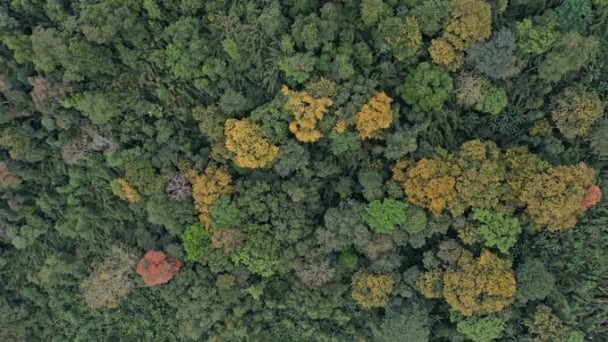
(VAN) Viet Nam's forestry sector is shifting from resource extraction to the development of strategic ecological infrastructure, opening new drivers for the green economy and the carbon market.
![Scientists' strength: [8] Fairness and creative motivation](https://t.ex-cdn.com/nongnghiepmoitruong.vn/608w/files/content/2026/07/16/pgsts-dang-van-dong-cham-soc-hoa-lay-on-103239_191-082039.jpg)
(VAN) Scientists must enjoy proportionate benefits from the intellectual products they create.

(VAN) The sugarcane industry is shifting its focus from expanding cultivation area to improving the quality of raw material zones in order to build sustainable competitive advantage.
![Scientists' strength: [7] Waiting for a broad mechanism](https://t.ex-cdn.com/nongnghiepmoitruong.vn/608w/files/anhntk/2026/06/23/1119-dsc00323-nongnghiep-081103.jpeg)
(VAN) Besides developing new rice varieties, scientists also have to worry about finances, resources, and research aspirations.
![Scientists' strength: [6] Need a medicine strong enough](https://t.ex-cdn.com/nongnghiepmoitruong.vn/608w/files/benlc/2026/07/12/1618-chatgpt-image-12_15_17-10-thg-7-2026-122814_896.jpeg)
(VAN) Retaining scientists requires not only income but also a conducive research environment, a meritocratic mechanism, and trust.
![Scientists' strength: [5] Heavy burden of livelihood](https://t.ex-cdn.com/nongnghiepmoitruong.vn/608w/files/chinq/2026/07/17/2452-dsc_0566-081739_259-065506.jpg)
(VAN) Behind the research projects lies the arduous life of scientists, those who persistently cling to their profession amidst the pressure of making a living.

![HCMC fisheries complies with the law: [2] Digitalization for fisheries transparency](https://t.ex-cdn.com/nongnghiepmoitruong.vn/resize/174x104/files/huyenvt (e)/2026/07/16/1738-4-181433_89.jpg)
![HCMC fisheries complies with the law: [1] Breakfast with fisherfolk](https://t.ex-cdn.com/nongnghiepmoitruong.vn/resize/174x104/files/huyenvt (e)/2026/07/15/2203-5-121921_245.jpg)