July 21, 2026 | 16:33 GMT +7
Hotline: 0913.378.918

July 21, 2026 | 16:33 GMT +7
Hotline: 0913.378.918
Prof. Dr. Pham Xuan Hoi, who stepped down as the Director of the Agricultural Genetics Institute less than a year ago, shared his heartfelt concerns regarding the current state of Viet Nam's agricultural science sector. While agricultural scientists are highly revered abroad, especially in African and Latin American countries, for helping Viet Nam transition from a food-deficient nation to a global agricultural exporter, their reality at home is starkly different.
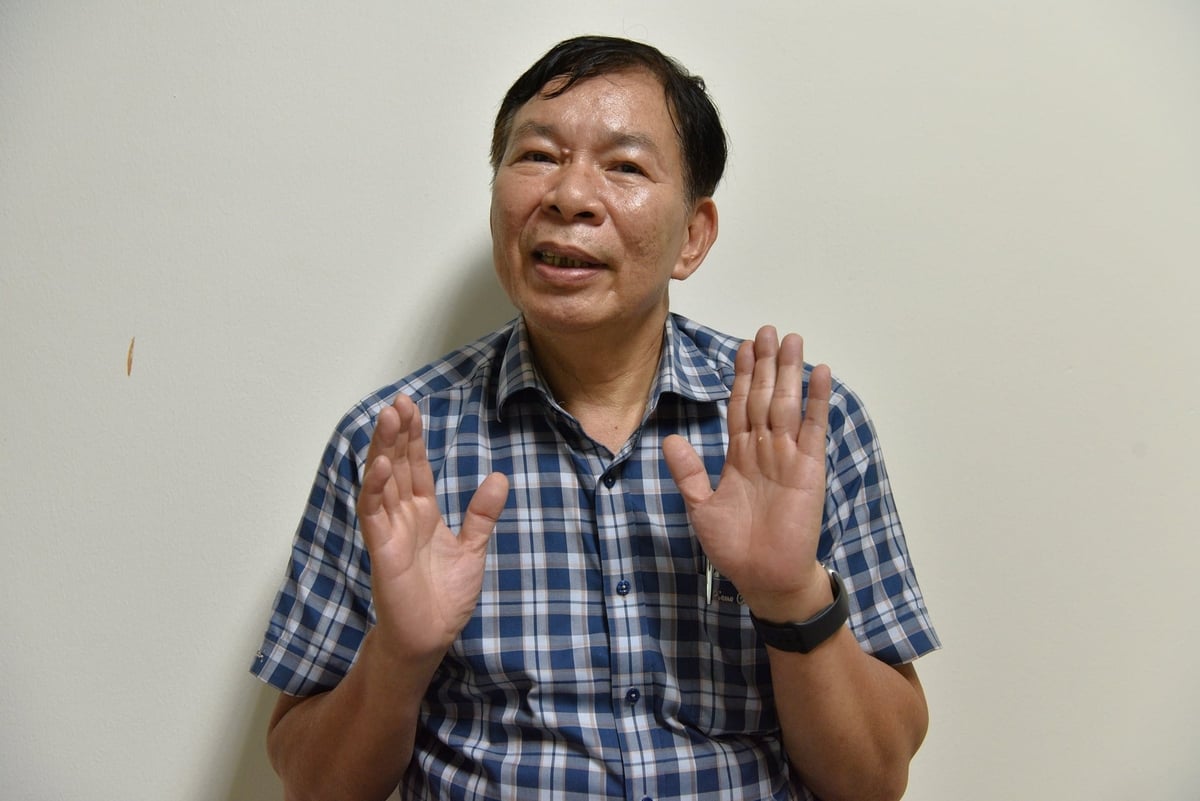
Prof. Dr. Pham Xuan Hoi: "I want to speak about this so that science can improve." Photo: Duong Dinh Tuong.
Within the Viet Nam Academy of Agricultural Sciences system, the Agricultural Genetics Institute stands at the top because of its large number of professors, associate professors, doctors, and masters. When it comes to gene-editing technology, this is the place with the most achievements, featuring gene-edited rice variants capable of resisting bacterial leaf blight. However, mechanisms and policies mean these variants currently remain only in laboratories rather than being put into actual production.
The Institute's scientists no longer have the motivation to work because their salaries are insufficient, and there are very few research topics. Besides six months of state-funded salary, the departments must cover the remaining six months. Whichever department has research topics, projects, or a well-connected department head who can secure work, the staff still receive their full salary. Otherwise, they only have the six months provided by the State; when divided equally across the whole year, it averages only a few million VND per month.
"When I was still leading the Institute, I also tried to share resources in a 'the intact leaf covers the torn leaf' manner; whichever department had more revenue would transfer a small portion to the department lacking revenue, but now that is no longer the case. If we could shelter each other and persist for one or two years, and the difficulties would pass, then it would be fine. But now, people also determine that the near future will be even more difficult, so it is every man for himself."
Departments close to production, such as mutation and hybrid vigor, which have variants deployed on the fields, or the High-Tech Agriculture Center, can still earn funding and cover salaries. Departments that only do basic research, such as molecular pathology, molecular biology, and genetic engineering, are facing an increasingly worse situation.
In the past, everyone was passionate about science because at that time, everyone faced the same difficulties. But now society is highly stratified; some people earn hundreds of millions of VND per month, while others earn only a few million VND per month. If the income is insufficient, scientists cannot do research with peace of mind because everyone has personal expenses and families to support.
"It is just like a person being exposed to the cold. At first, they still try to endure it, but the temperature keeps dropping until they can no longer bear it. That is why many talented people have applied to leave. Of course, saying so does not mean there are no talented people left, but their dedication is gradually draining..."
"I served as Director for eight years. According to policy, we had to reduce personnel by about 10% each year, so we were not allowed to recruit permanent staff to ensure the number of retirees matched the reduction quota. Recently, the unit posted recruitment notices in the newspapers but had to stop due to the merger. However, even if we were allowed to recruit, we would not get anyone of exceptional caliber because it is very difficult with this kind of compensation policy."
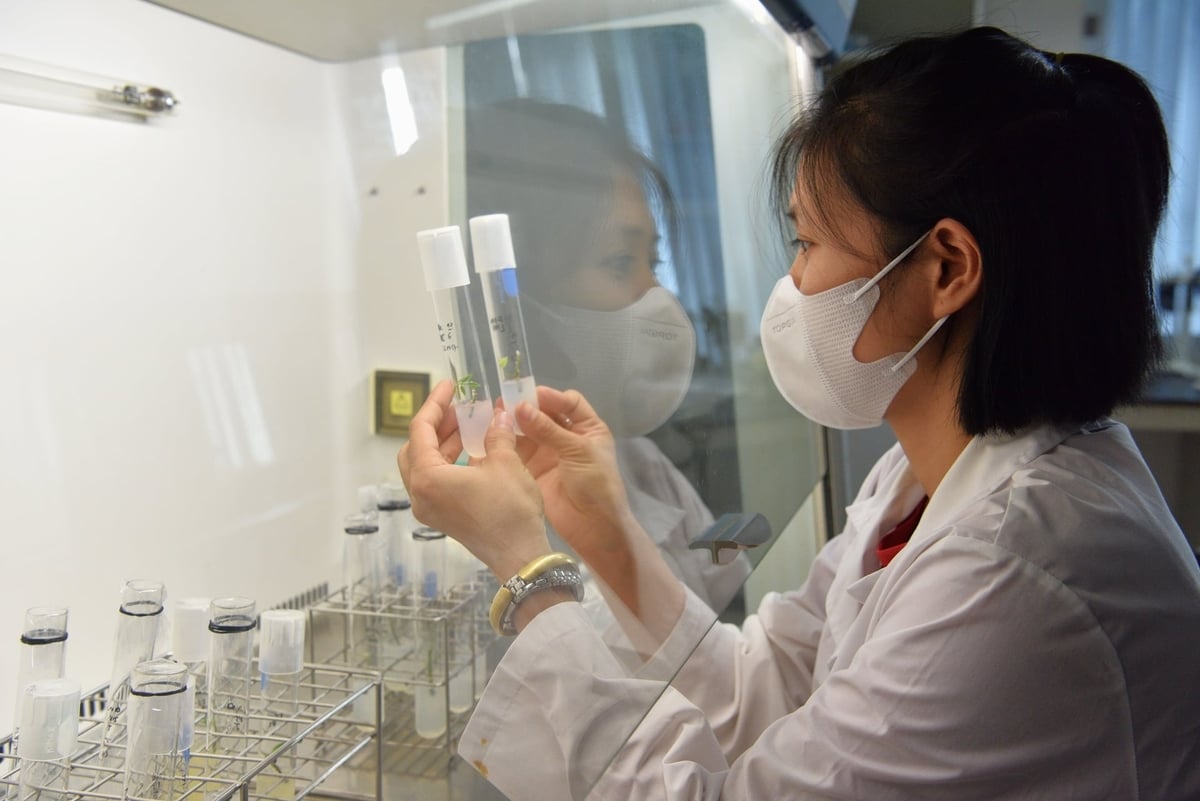
Scientific research at the Agricultural Genetics Institute. Photo: Duong Dinh Tuong.
"I remember 15 - 20 years ago, the education sector faced great difficulties. After the State changed its policies, the entry scores for the education sector are now very high, attracting many talented people. As for me, I am a professor, a doctor, and used to be the Institute Director, yet my salary capped out at only 18 million VND, while some village school teachers already earn much more, not to mention extra tutoring."
"When I took office as Director, the unit had 124 permanent staff and about 80 contract workers; now there are only about 90 permanent staff and over 20 contract workers. Previously, when there were many research topics and projects, we could draw money from them to pay contract workers. Now that those sources are scarce, contract workers are decreasing. This type of self-reliance has completely broken down the scientific research system; restoring it will probably take decades."
There needs to be a change in society's overall perception of science's role, as well as in that flawed financial self-reliance model. Only then can we recruit young, capable people who are passionate about scientific research. Otherwise, with those who currently remain at the research institutes, I find it very difficult to achieve anything.
Now, China's scientific sector is developing very strongly, with some fields rivaling the US because they put correct policies in place 20 years ago. When I was doing my post-doc in Japan from 2004 to 2006, I had two Chinese friends. They said their country had a policy that anyone returning from post-doctoral studies abroad would be immediately appointed as a professor, paid over 1.000 USD per month, and granted research topics and projects. In general, they differentiated the compensation for capable people entirely from ordinary people.
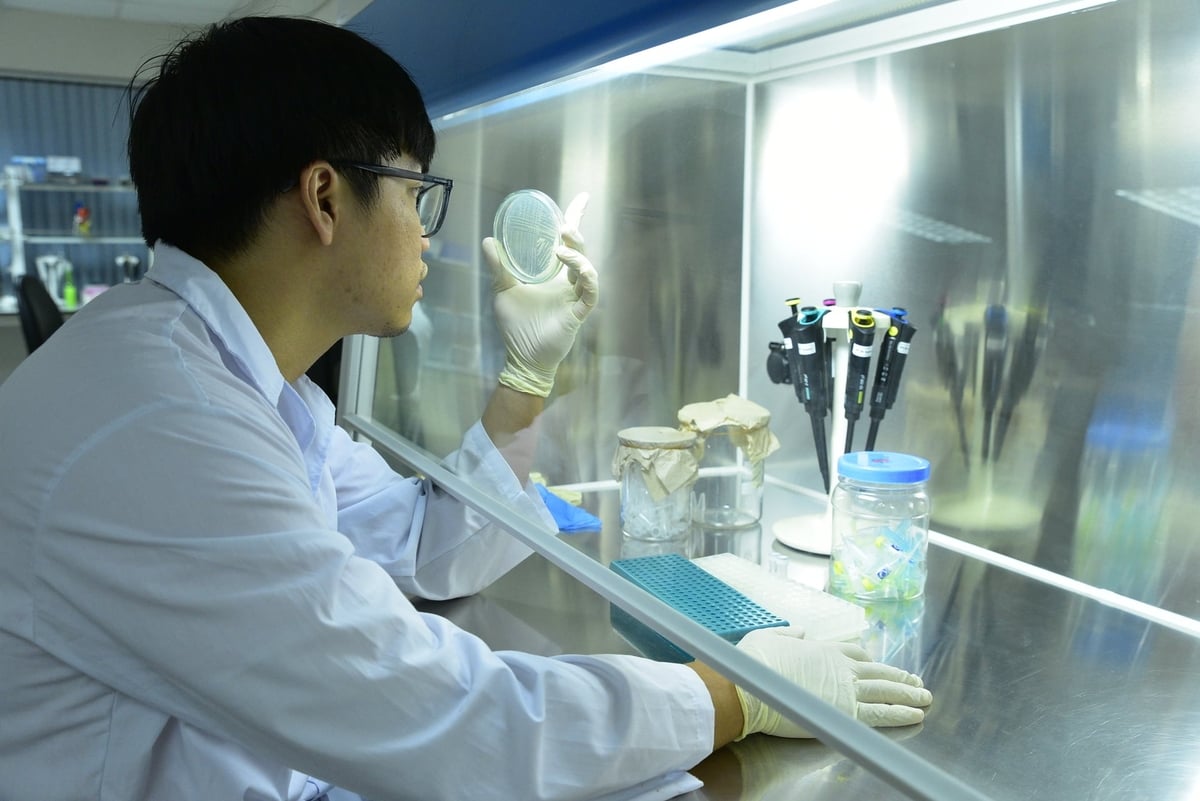
The Agricultural Genetics Institute currently has only about 90 permanent staff and over 20 contract workers left. Photo: Duong Dinh Tuong.
Before that, Chinese scientists also faced many difficulties in life, having to disperse to various countries, but then the government recognized their role and lured them back. It took 5 to 15 years after that for China's science to become strong; it could not happen overnight.
"We recently passed Resolution 57 on breakthroughs in science and technology, which is very good, but it will take some time, about 5 to 10 years from now, to yield achievements. To do that, on one hand, we must have policies to lure back Vietnamese scientists currently abroad, and on the other hand, we must attract young domestic scientists, pay them fully, and create a good working environment so they can conduct research with peace of mind."
In the past, international cooperation was a very strong segment of the Agricultural Genetics Institute, bringing in large financial resources for scientists. But after Vietnam became a middle-income country, "pulling" foreign projects back became very difficult.
Currently, the Agricultural Genetics Institute has a joint international project with the Institute of Agricultural Chemistry and Soil Science on breeding mutant cassava to reduce carbon emissions. In addition, the Institute has a few other international collaborations, but they only assist with training and support some machinery, while the funding is very limited.
Translated by Ha Chi
(VAN) Viet Nam's forestry sector is shifting from resource extraction to the development of strategic ecological infrastructure, opening new drivers for the green economy and the carbon market.
![Scientists' strength: [8] Fairness and creative motivation](https://t.ex-cdn.com/nongnghiepmoitruong.vn/608w/files/content/2026/07/16/pgsts-dang-van-dong-cham-soc-hoa-lay-on-103239_191-082039.jpg)
(VAN) Scientists must enjoy proportionate benefits from the intellectual products they create.

(VAN) The sugarcane industry is shifting its focus from expanding cultivation area to improving the quality of raw material zones in order to build sustainable competitive advantage.
![HCMC fisheries complies with the law: [Final] Technology fills the gaps](https://t.ex-cdn.com/nongnghiepmoitruong.vn/608w/files/huytd/2026/07/17/1455-3-133654_171.jpg)
(VAN) Through smart vessel positioning solutions and the digitalization of fishing logbooks, HCMC is proactively tightening control of inactive fishing vessels, closing management loopholes from shore.
![Scientists' strength: [7] Waiting for a broad mechanism](https://t.ex-cdn.com/nongnghiepmoitruong.vn/608w/files/anhntk/2026/06/23/1119-dsc00323-nongnghiep-081103.jpeg)
(VAN) Besides developing new rice varieties, scientists also have to worry about finances, resources, and research aspirations.
![Scientists' strength: [6] Need a medicine strong enough](https://t.ex-cdn.com/nongnghiepmoitruong.vn/608w/files/benlc/2026/07/12/1618-chatgpt-image-12_15_17-10-thg-7-2026-122814_896.jpeg)
(VAN) Retaining scientists requires not only income but also a conducive research environment, a meritocratic mechanism, and trust.
![Scientists' strength: [5] Heavy burden of livelihood](https://t.ex-cdn.com/nongnghiepmoitruong.vn/608w/files/chinq/2026/07/17/2452-dsc_0566-081739_259-065506.jpg)
(VAN) Behind the research projects lies the arduous life of scientists, those who persistently cling to their profession amidst the pressure of making a living.
