July 21, 2026 | 16:46 GMT +7
Hotline: 0913.378.918

July 21, 2026 | 16:46 GMT +7
Hotline: 0913.378.918
Amid new developments in rice prices and export markets, the Viet Nam Agriculture and Nature Newspaper spoke with Nguyen Quoc Manh, Deputy Director of the Plant Production and Protection Department (PPPD-MAE), about the new direction for Viet Nam's rice sector.

Nguyen Quoc Manh, Deputy Director of the Plant Production and Protection Department. Photo: TD.
How would you update us on rice export performance, particularly in the high-quality segment, so far this year?
In 2026, Vietnamese rice exports are facing downward price pressure compared with the high price levels of 2023–2024. However, the high-quality and aromatic rice segment continues to play an important role in the export mix.
Viet Nam has exported approximately 2.3 million metric tons of rice to date, with the Dai Thom 8 and OM18 varieties alone accounting for nearly 50 percent of total export volume, demonstrating that demand for high-quality Vietnamese rice remains stable. The factors sustaining prices in this segment include improving seed quality, a structural shift toward aromatic and specialty rice, better-organized raw material zones, and reliable supply capacity for major markets including the Philippines, China, and Malaysia.
What standards must a grain of high-quality rice meet before it reaches the world market? What is Viet Nam's greatest competitive advantage?
A high-quality grain of rice must satisfy a continuous chain of standards from production through to export, not simply taste well or look appealing. Seed varieties must be clearly traceable, suited to market requirements, and must deliver the right milling quality, fragrance, whiteness, whole-grain ratio, and cooked texture. During cultivation, farmers must follow technical protocols, use safe fertilizers and crop protection products, control residue levels, manage water appropriately, and minimize post-harvest losses.
At the post-harvest stage, timely harvesting at the right maturity level, drying, storage, milling, grading, and packaging must all meet technical specifications. Finally, products must satisfy importing market requirements covering traceability, food safety, plant quarantine, residue control, and increasingly, environmental and emissions standards. Only when all of these stages are properly managed can a grain of rice compete credibly on the international market.
Viet Nam's greatest competitive advantage lies in its ability to supply high-quality rice varieties consistently, particularly soft, aromatic rice that suits the preferences of many Asian markets. The Mekong Delta provides a large-scale commercial production base, seed systems are steadily improving, milling and processing capacity is strong, delivery times are fast, and the country has decades of export experience. Compared with India, Viet Nam holds a clear advantage in aromatic and high-quality rice segments. Compared with Thailand, Vietnamese rice competes more effectively on supply flexibility, price, and order fulfillment speed.
How can Vietnamese rice sustain its value over the long term, not just achieve good prices in the short run?
Sustaining long-term value requires the sector to shift from a "sell more" mindset to one focused on selling to the right segments, at the right quality, under a recognized brand. That requires five main areas of action.
First, stabilizing and developing high-quality raw material zones through close linkages between enterprises, cooperatives, and farmers. Second, maintaining consistent quality control across seeds, cultivation practices, harvesting, storage, processing, and export. Third, continuing to reduce production costs without compromising quality, improving production efficiency, and raising incomes for rice growers. Fourth, increasing the share of aromatic, specialty, high-quality, and low-emission rice in the export mix to raise export value rather than competing on volume and low price. Fifth, building the Vietnamese rice brand around quality, environmental responsibility, traceability, and sustainable development.
Beyond technical and production organization factors, market information and communication also play a critical role. Major importing countries frequently deploy strategies to manage market information, shape public perception, or create psychological pressure to influence purchase prices and commercial negotiations. Viet Nam's rice sector therefore needs its own market management strategy and must strengthen the supply of information that supports favorable market and export conditions, avoiding one-sided coverage that focuses only on short-term price declines, which can create damaging sentiment among producers and businesses.
Protecting the reputation, position, and brand value of Vietnamese rice is not only a matter of production and export. It is also a matter of market information management, trust-building, and strengthening governance across the entire rice value chain.

For high-quality rice, the market is buying the production process, not just the final product. Photo: TD.
The Ministry of Finance is seeking input on a proposal to abolish rice export business licenses. Would removing this requirement open up markets?
This issue requires comprehensive research and assessment, as it touches on multiple dimensions including market development, production organization, supply chain integration, export management, and sector stability.
Recent experience shows that many enterprises have invested significantly in storage, processing, logistics, and raw-material zone development, and have established production linkages with farmers to meet export market requirements. The range of business models participating in the market is also becoming more diverse, alongside rising demands for competitiveness and international integration.
Any reform of the management framework for rice export business activities must therefore be considered on the basis of a full assessment of its impact on enterprises, producers, supply chain linkages, the domestic market, and the requirements for sustainable development of Viet Nam's rice sector in the period ahead.
What role do raw material zones and upstream quality control play for high-quality rice?
Raw material zones are the foundational determinant of quality and export credibility. Without stable raw material zones, enterprises struggle to control seed varieties, residue levels, product consistency, and traceability.
For high-quality rice, the market is buying the production process, not just the final product. Farm-level control reduces the risk of shipment rejections, strengthens price-negotiation capacity, and builds long-term relationships with importers.
This is precisely why the Plant Production and Protection Department is directing the reorganization of production along a full chain model, enterprise, cooperative, farmer, linked to defined raw material zones, cultivation protocols, growing area codes, traceability systems, and emissions reduction.
What new requirements are demanding markets such as the EU, the United States, and Japan placing on Vietnamese rice?
These markets are raising the bar continuously on food safety, pesticide residue limits, traceability, plant quarantine, environmental responsibility, and carbon emissions.
The EU, the United States, and Japan are not only interested in price. They want to know how the product was produced, whether its origin is transparent, and whether it meets safety and sustainability standards. This requires the Vietnamese rice sector to operate more systematically, maintain more complete records, control inputs more rigorously, and progressively meet green and low-emission standards. The market is buying the entire production process, not just the grain.
What transformation does the One Million Hectares of High-Quality, Low-Emission Rice program aim to achieve? Will "green, low-emission rice" become a mandatory requirement for export markets?
The One Million Hectares of High-Quality, Low-Emission Rice program in the Mekong Delta represents a critically important transition for Viet Nam's rice sector. The program is not only about creating a large raw material zone, it is about changing the entire production model: reducing seeding rates, cutting fertilizer and crop protection product use, saving water, lowering emissions, strengthening supply chain linkages, and improving rice quality.
For exports, the program will provide Viet Nam with a more stable, consistent, and traceable supply base and open access to higher market segments. It is the foundation on which Viet Nam can build an image as a supplier of high-quality, green, and responsible rice.
In the short term, green and low-emission standards may not yet be mandatory requirements across all markets. But this trend is almost certain to grow in importance. Major importing markets are progressively shifting from product quality requirements to process quality requirements. Low emissions, resource efficiency, transparent origin, and environmental responsibility will become competitive advantages and, in some premium segments, are likely to become mandatory conditions in the future. Viet Nam moving early in this direction will carry significant long-term benefit.
In the face of climate change and intensifying competition, what direction must the rice sector take to maintain export leadership?
Viet Nam's rice sector needs to move toward higher quality, lower costs, lower emissions, and tighter supply chain integration. That means reducing fragmented production in favor of organized raw material zones; reducing dependence on low-grade rice exports in favor of aromatic and high-quality varieties; cutting input costs while improving returns for farmers; and strengthening market intelligence to manage production more flexibly. The goal is not to export at any cost, but to raise the value of each grain of rice and the income of the people who grow it.
What is your expectation for Viet Nam's position on the global rice map in the next five to ten years?
In five to ten years, the aspiration is for Vietnamese rice to be recognized not simply as a large supply source but as a supplier of high-quality, safe, low-emission, and responsibly produced rice. If raw material zones are well organized, quality is properly controlled, and the brand is systematically built, Viet Nam can absolutely elevate itself from a high-volume rice exporter to a high-value one, with Vietnamese rice known in global markets not only for its presence, but for its quality, sustainability, and trustworthiness.
Thank you!
Translated by Linh Linh
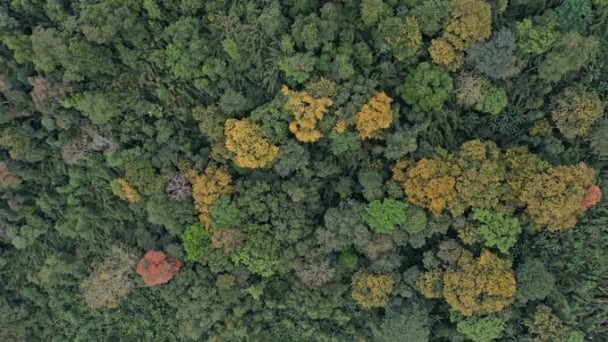
(VAN) Viet Nam's forestry sector is shifting from resource extraction to the development of strategic ecological infrastructure, opening new drivers for the green economy and the carbon market.
![Scientists' strength: [8] Fairness and creative motivation](https://t.ex-cdn.com/nongnghiepmoitruong.vn/608w/files/content/2026/07/16/pgsts-dang-van-dong-cham-soc-hoa-lay-on-103239_191-082039.jpg)
(VAN) Scientists must enjoy proportionate benefits from the intellectual products they create.

(VAN) The sugarcane industry is shifting its focus from expanding cultivation area to improving the quality of raw material zones in order to build sustainable competitive advantage.
![HCMC fisheries complies with the law: [Final] Technology fills the gaps](https://t.ex-cdn.com/nongnghiepmoitruong.vn/608w/files/huytd/2026/07/17/1455-3-133654_171.jpg)
(VAN) Through smart vessel positioning solutions and the digitalization of fishing logbooks, HCMC is proactively tightening control of inactive fishing vessels, closing management loopholes from shore.
![Scientists' strength: [7] Waiting for a broad mechanism](https://t.ex-cdn.com/nongnghiepmoitruong.vn/608w/files/anhntk/2026/06/23/1119-dsc00323-nongnghiep-081103.jpeg)
(VAN) Besides developing new rice varieties, scientists also have to worry about finances, resources, and research aspirations.
![Scientists' strength: [6] Need a medicine strong enough](https://t.ex-cdn.com/nongnghiepmoitruong.vn/608w/files/benlc/2026/07/12/1618-chatgpt-image-12_15_17-10-thg-7-2026-122814_896.jpeg)
(VAN) Retaining scientists requires not only income but also a conducive research environment, a meritocratic mechanism, and trust.
![Scientists' strength: [5] Heavy burden of livelihood](https://t.ex-cdn.com/nongnghiepmoitruong.vn/608w/files/chinq/2026/07/17/2452-dsc_0566-081739_259-065506.jpg)
(VAN) Behind the research projects lies the arduous life of scientists, those who persistently cling to their profession amidst the pressure of making a living.
