July 21, 2026 | 10:40 GMT +7
Hotline: 0913.378.918

July 21, 2026 | 10:40 GMT +7
Hotline: 0913.378.918
The European Union's Deforestation Regulation (EUDR) is placing new requirements on the supply chains of numerous export commodities, including coffee and rubber. In response, the Lam Dong Provincial People's Committee has issued a plan to support production, procurement, and export stakeholders in gradually preparing to meet these conditions.

Coffee growers in Lam Dong are gradually preparing the conditions needed to meet export market requirements. Photo: Pham Hoai.
Support activities will focus on businesses, cooperatives, purchasing agents, and producers seeking to join supply chains that comply with EUDR. The selection of areas, acreage, and implementing units will be based on the current state of information, priority levels, market requirements, and each party's capacity to allocate resources.
The work will be carried out according to a roadmap aligned with guidance from the Ministry of Agriculture and Environment, while building on and connecting to relevant national and sector-specific data systems. This approach will allow units to gradually adapt to the new requirements, ease pressure in the early stages, and align with practical conditions on the ground.
During implementation, state agencies will provide guidance, information, cross-checking, and verification within the scope of their assigned management authority. Businesses will be responsible for collecting, managing, and protecting their own data, as well as fulfilling due diligence obligations regarding the legality of their supply chains and EUDR documentation, as required by importing markets.
This clear division of responsibility will help management agencies carry out their proper functions while ensuring businesses remain the driving force in organizing their supply chains. Cooperatives, purchasing agents, and producers will coordinate by providing information, participating in training, and fulfilling related requirements within their scope of responsibility.

Support activities are aimed at businesses, cooperatives, and producers participating in the coffee export supply chain. Photo: Pham Hoai.
The province will not allocate a separate budget for this work. Funding will instead be integrated into related programs and tasks, while also drawing on socialized funding sources, support from businesses, international organizations, programs, projects, and other legitimate sources.
Mobilizing resources from multiple channels is intended to strengthen implementation capacity while promoting the role of businesses and supporting organizations as partners in the process. Participation will be voluntary, based on assigned tasks or written agreements, with clearly defined purposes, scope, and responsibilities for each party.
Activities will involve state management agencies, commune-level People's Committees, businesses, cooperatives, purchasing agents, producer households, associations, international organizations, and projects related to the coffee and rubber industries.
Within this structure, management agencies will focus on guidance and coordination. Commune-level authorities will help with communication and support for local stakeholders. Businesses will take the initiative to identify needs, areas for implementation, and resources for participation. Cooperatives, purchasing agents, and producers will coordinate to fulfill requirements within the supply chain.
To ensure unified coordination, the province will establish a provincial EUDR Coordination Group, chaired by the Department of Agriculture and Environment. Its operating regulations will specify membership, tasks, working procedures, coordination mechanisms, methods for resolving issues, and principles for information security and sharing.

Preparation starting at the production stage helps meet the increasingly stringent requirements of importing markets. Photo: Pham Hoai.
Alongside this coordination mechanism, training courses will be organized for officials, businesses, cooperatives, purchasing agents, and residents. The content will focus on EUDR requirements for the coffee and rubber industries, the responsibilities of each stakeholder, methods for collecting information, records management, data security, and handling discrepancies.
Training will be organized by target group. Management officials and local authorities will be guided on coordination procedures, the scope of support, and their responsibility for verifying information within their authority. Businesses, cooperatives, and purchasing agents will focus on organizing supply chains, managing records, and due diligence obligations.
For producers, training will focus on the basic requirements for participating in an EUDR-compliant supply chain. Raising awareness starting at the production stage will help reduce discrepancies, limit information gaps, and create consistency throughout implementation.
Results will be tracked through indicators including cultivated area, number of plots, number of participating households, completeness of information, number of discrepancies detected and resolved, processing time for records, number of people trained, and resources mobilized.

Coordination among management agencies, businesses, and producers forms the foundation for implementing EUDR adaptation support activities. Photo: Pham Hoai.
Based on these results, organizational and coordination methods will be adjusted to ensure that organizations and individuals can access the information needed for EUDR compliance while meeting safety and data-security requirements.
Implementation will run from the third quarter of 2026 through 2027, with specific tasks assigned to each agency and unit. The results of each phase will serve as a basis for improving organizational methods, strengthening coordination effectiveness, and enhancing the adaptability of the coffee and rubber supply chains to new requirements from international markets.
The Department of Agriculture and Environment has been assigned to lead implementation, propose establishing the provincial EUDR Coordination Group, develop detailed implementation content, and compile results. Other departments, commune-level People's Committees, businesses, cooperatives, and supporting organizations will coordinate in accordance with their assigned functions and tasks, participating in communication, training, and related implementation activities. Any difficulties or obstacles that arise will be reported to the Department of Agriculture and Environment for consolidation and reporting to the Provincial People's Committee for review and direction.
Translated by Linh Linh
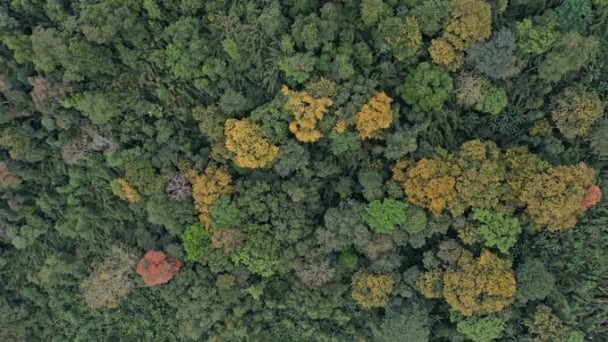
(VAN) Viet Nam's forestry sector is shifting from resource extraction to the development of strategic ecological infrastructure, opening new drivers for the green economy and the carbon market.
![Scientists' strength: [8] Fairness and creative motivation](https://t.ex-cdn.com/nongnghiepmoitruong.vn/608w/files/content/2026/07/16/pgsts-dang-van-dong-cham-soc-hoa-lay-on-103239_191-082039.jpg)
(VAN) Scientists must enjoy proportionate benefits from the intellectual products they create.

(VAN) The sugarcane industry is shifting its focus from expanding cultivation area to improving the quality of raw material zones in order to build sustainable competitive advantage.
![HCMC fisheries complies with the law: [Final] Technology fills the gaps](https://t.ex-cdn.com/nongnghiepmoitruong.vn/608w/files/huytd/2026/07/17/1455-3-133654_171.jpg)
(VAN) Through smart vessel positioning solutions and the digitalization of fishing logbooks, HCMC is proactively tightening control of inactive fishing vessels, closing management loopholes from shore.
![Scientists' strength: [7] Waiting for a broad mechanism](https://t.ex-cdn.com/nongnghiepmoitruong.vn/608w/files/anhntk/2026/06/23/1119-dsc00323-nongnghiep-081103.jpeg)
(VAN) Besides developing new rice varieties, scientists also have to worry about finances, resources, and research aspirations.
![Scientists' strength: [6] Need a medicine strong enough](https://t.ex-cdn.com/nongnghiepmoitruong.vn/608w/files/benlc/2026/07/12/1618-chatgpt-image-12_15_17-10-thg-7-2026-122814_896.jpeg)
(VAN) Retaining scientists requires not only income but also a conducive research environment, a meritocratic mechanism, and trust.
![Scientists' strength: [5] Heavy burden of livelihood](https://t.ex-cdn.com/nongnghiepmoitruong.vn/608w/files/chinq/2026/07/17/2452-dsc_0566-081739_259-065506.jpg)
(VAN) Behind the research projects lies the arduous life of scientists, those who persistently cling to their profession amidst the pressure of making a living.
