July 21, 2026 | 16:03 GMT +7
Hotline: 0913.378.918

July 21, 2026 | 16:03 GMT +7
Hotline: 0913.378.918
As mist still blankets the hillsides of Buon Ma Thuot, Ms. Van Thi My Dung and her husband, Mr. Do Ngoc Anh, begin their familiar daily routine. For their family, coffee has been the primary income stream since the 1990s. Their 10-hectare intercropped coffee and pepper farm is the fruit of decades spent cultivating the basalt red soil. Yet, like many smallholders in the Central Highlands, their early years were marked by more than just the joy of a ripe harvest. Steep terrain, a lack of specialized machinery, and limited safety knowledge meant that heavy labor was consistently tied to occupational hazards.

Participating in the NESCAFÉ Plan, Ms. Dung and Mr. Ngoc Anh gained the knowledge and skills to boost productivity while improving coffee quality. Photo: ILO Linh Pham.
These stories highlight a reality rarely seen from behind a coffee cup: for the sector to thrive sustainably, farmers need more than just higher yields and better prices, they need safer working conditions. According to the International Labour Organization (ILO), Viet Nam's coffee industry relies heavily on smallholder households in the Central Highlands, supporting over 1,4 million workers, 44% of whom are women. Despite its economic significance, the sector faces systemic challenges, including informal employment, gender disparities, limited access to social protection, safety hazards, and climate volatility.

Participating in the NESCAFÉ Plan, Ms. Dung and Mr. Ngoc Anh gained the knowledge and skills to boost productivity while improving coffee quality. Photo: ILO Linh Pham.
To address these vulnerabilities, Ms. Dung’s family and thousands of other growers joined the NESCAFÉ Plan in 2014, adopting regenerative agricultural practices to improve yields and bean quality. Moving beyond purely agronomic techniques, a joint initiative between Nestlé and the ILO’s Vision Zero Fund has expanded the program's focus to encompass Occupational Safety and Health (OSH) and labor rights directly on the farms.

Mr. Nguyen Trong Tuong, NESCAFÉ Plan Project Manager in Vietnam, leading a WIND_PAOT training session, reflecting Nestlé's growing capacity in local training. Photo: ILO Vu Khoi Nguyen.
The project bypasses abstract theories in favor of practical, action-oriented interventions. Utilizing the ILO’s Work Improvement in Neighborhood Development (WIND) and Participatory Action-Oriented Training (PAOT) methodologies, farmers learn to audit their own work environments. They inspect garden pathways, tool storage, fertilizer handling, and awkward working postures, implementing low-cost adjustments. These minor tweaks, such as organizing tools neatly, identifying hazard zones, or correcting lifting techniques, significantly lower daily injury risks.

Under the guidance of the Vietnam Red Cross, the trainees practiced first aid and response skills in real-life situations. Photo: ILO Linh Pham.
In parallel, first-aid training sessions are equipping agricultural networks with emergency response skills. During an intensive course in Dak Lak, 30 farmers and agricultural officers from Dak Lak, Dak Nong, and Lam Dong practiced wound dressing, bone immobilization, and safe casualty transport using everyday farm items like scarves, ties, and jackets.
"Everyone hopes accidents won't happen, but it's best to be actively prepared," shared Mr. Lam Dzy Long, a coffee farmer from Lam Dong. This proactive mindset underpins a localized culture of prevention. Correctly managing a minor cut prevents infection, and a trained individual can support family members or seasonal laborers before professional medical help arrives, embedding safety as a community habit.

Ms. Hoang Thi Trang, a core farmer in the NESCAFÉ program in Gia Nghia, applies the WIND checklist at her coffee farm according to training guidelines. Photo: ILO Vu Khoi Nguyen.
Beyond physical well-being, the project guides farmers through labor rights and social protection, accelerating the formalization of agricultural work. In December 2025, simulation exercises in Buon Ma Thuot gathered 30 smallholders from Dak Lak and Dak Nong to navigate common harvest-season scenarios: hiring seasonal pickers without clear agreements, withholding identification documents, or involving underage children in hazardous labor.
Through interactive dialogue, orchard owners realized that informal habits generate legal and operational risks for both sides. Consequently, compliance is no longer viewed as an administrative burden but as a shield protecting worker rights and securing farm operations during peak seasons. This transparency forms the baseline of responsible sourcing, where bean quality is inseparable from the ethical treatment of the hands that harvest it.

Trainees review common real-world scenarios, turning every discussion on labor organization and work environments into an interactive learning opportunity. Photo: ILO Linh Pham.
A major milestone was achieved when OSH management capacities were fully handed over to local teams. According to the ILO, a refresher training course concluded on May 22, 2026, in Gia Nghia and Lam Dong was implemented entirely by local partner personnel without direct external instruction. Gathering 30 core growers under the NESCAFÉ Plan, the course utilized the WIND/PAOT framework to build leadership confidence.
"This refresher course goes beyond reviewing knowledge; it empowers core farmers to confidently lead discussions on safety and health, encouraging practical improvements among their peer groups," stated Mr. Nguyen Trong Tuong, NESCAFÉ Plan Project Manager.
By the end of 2025, the project had reached 21.872 farmers through 455 OSH training sessions, with 21.513 receiving labor law education. As of May 2026, 628 farms had successfully implemented 2.256 documented safety and health improvements.
From a corporate standpoint, Nestlé's alliance with the ILO emphasizes a broader commitment to building a responsible supply chain where farmer livelihoods and health are recognized as prerequisites for long-term growth. This approach balances economic output with social value. Ultimately, a sustainable coffee sector is measured not merely by export metrics or volume, but by ensuring every worker returns home safely at the end of the day.
Translated by Ha Chi
/2026/07/20/1547-1-180442_204.jpg)
(VAN) A farmer in Can Tho has found the secret to raising giant water bugs that produce intensely aromatic essence, earning annual profits of hundreds of millions of dong.

(VAN) From crop conversion to deep processing, Ba Che Commune in Quang Ninh Province is building a comprehensive cinnamon value chain that creates sustainable livelihoods while strengthening the local forestry economy.

(VAN) The ACIAR-SunRice public-private partnership, rooted in science and sustainable development, is expected to support rice farmers in the Mekong Delta.

(VAN) Linking the shrimp, rice, and coffee sectors through a circular economy model is opening up a new pathway for Viet Nam's agriculture.

(VAN) HCMC is accelerating the transition to circular industry by transforming industrial parks into eco-industrial zones, fostering industrial symbiosis, and expanding international partnerships for green manufacturing.
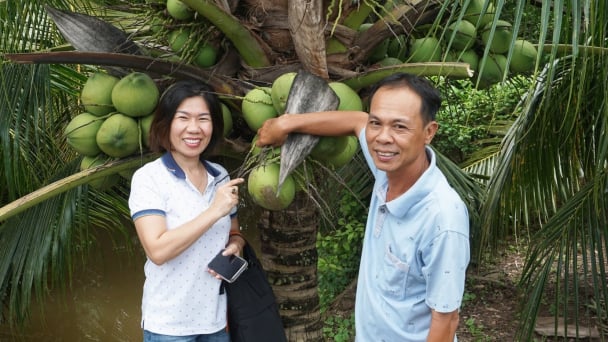
(VAN) The digital map of raw material zones is expected to resolve overlapping investments, ensure production transparency, and accelerate deep processing in the coconut industry.
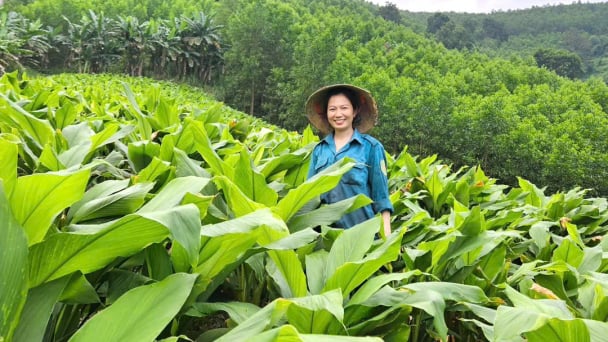
(VAN) Transforming barren hills once dedicated only to acacia and cassava, the Anh Mai Medicinal Plant Cooperative has found a new direction with red turmeric, opening up sustainable livelihoods for local residents.
