July 21, 2026 | 17:03 GMT +7
Hotline: 0913.378.918

July 21, 2026 | 17:03 GMT +7
Hotline: 0913.378.918
The Government Office has issued Notice No. 368, conveying the conclusions of Prime Minister Le Minh Hung, Head of the Central Steering Committee for the Implementation of the National Target Programs, at the committee's first meeting.
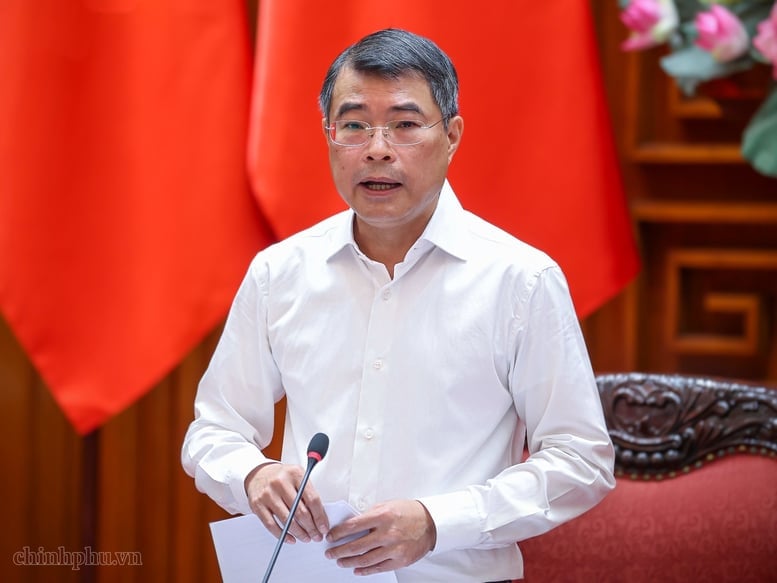
Prime Minister Le Minh Hung addresses the meeting. Photo: VGP/Nhat Bac.
In the conclusion notice, the Prime Minister commended the Ministry of Agriculture and Environment for effectively serving as the standing agency of the Central Steering Committee and for working closely with relevant agencies to prepare the first meeting of the committee.
Following the National Assembly's adoption of resolutions approving investment policies for the National Target Programs, the Government, the Prime Minister, ministries, and relevant agencies promptly launched implementation efforts. Initial efforts focused on issuing implementation mechanisms, policies and guidance documents, allocating funding and carrying out the first program activities.
However, the Prime Minister noted that implementation has fallen significantly behind schedule, with several 2026 tasks at risk of missing their targets, particularly the disbursement of program funds.
The Prime Minister called for more decisive, substantive and effective implementation to ensure timely execution and fund disbursement. Agencies assigned to lead each program will be fully accountable for its progress, quality and outcomes. Ministries and agencies responsible for specific program components must proactively direct, monitor and inspect implementation, taking full responsibility throughout the process without shifting or avoiding accountability.
He also stressed the need for integrated coordination across all four National Target Programs to maximize their development impact. Resources must be allocated and used for the right objectives and beneficiaries, with clear priorities, while avoiding duplication, fragmentation, waste and corruption. The Government aims to fully disburse 100% of the central budget allocated for 2026, including funds carried over from the 2021-2025 period.
The Prime Minister emphasized the principles of clearly defining responsibilities, tasks, timelines and expected outcomes. Implementation results and progress in fund disbursement will serve as key indicators for evaluating the performance of both agencies and their leaders. Deputy Prime Minister Ho Quoc Dung, Permanent Deputy Head of the Steering Committee, was assigned to oversee overall coordination, while other deputy prime ministers will directly supervise implementation within their respective portfolios.

Integration of four National Target Programs into a single program. Photo: VAN.
The Prime Minister assigned the Ministry of Agriculture and Environment (MAE) to urge ministries, sectors and local authorities to accelerate the implementation of the National Target Programs on New Rural Development, Sustainable Poverty Reduction, and Socio-economic Development in Ethnic Minority and Mountainous Areas. The ministry is tasked with preparing project portfolios and launching implementation immediately after funding is allocated, while coordinating with relevant ministries to promptly address bottlenecks and ensure the full disbursement of funds carried over from the 2021–2025 period during 2026.
The ministry is also required to strengthen inspections of agencies and localities with slow implementation or low disbursement rates, promptly address issues within its authority, or report them to the Government for corrective action where implementation is ineffective, fragmented or fails to reach the intended beneficiaries.
In addition, the Ministry of Agriculture and Environment must incorporate comments from Steering Committee members and submit the committee's 2026 work program for approval before July 20, 2026. It will monitor implementation progress, coordinate with the Ministry of Finance and other lead agencies to oversee institutional reforms, fund allocation and disbursement, and compile reports identifying agencies behind schedule, along with the causes and responsibilities, for submission to the Steering Committee leadership.
Prime Minister Le Minh Hung instructed the Ministry of Culture, Sports and Tourism to finalize the medium-term public investment allocation plan for the 2026-2030 National Target Program on Cultural Development and to submit it to the Ministry of Finance for review and consolidation before presenting it to the competent authorities by July 25, 2026. The ministry must also ensure that all remaining implementation guidelines are completed by July 20, prepare an implementation handbook during July, and monitor the detailed allocation and implementation of 2026 funding by ministries and central agencies.
The Ministry of Health and the Ministry of Education and Training were directed to work with relevant agencies to finalize regulations on allocation principles, criteria, funding norms and local counterpart funding ratios for the National Target Programs on Modernizing and Improving Education and Training, and on Healthcare, Population and Development by July 15, 2026.
The two ministries are also required to complete medium-term public investment allocation plans for 2026-2030 and the 2026 central budget allocation plan, submit them to the Ministry of Finance during July, issue implementation circulars within the month, oversee the issuance of detailed guidance for program components under their responsibility, and prepare implementation handbooks.
The Prime Minister also assigned the Ministry of Ethnic and Religious Affairs to continue providing guidance and resolving implementation challenges related to the National Target Programs on New Rural Development, Sustainable Poverty Reduction, and Socio-economic Development in Ethnic Minority and Mountainous Areas, ensuring that policies are delivered to the right locations, beneficiaries and priority needs.
The ministry will also coordinate with the Ministry of Finance and the Ministry of Agriculture and Environment to supervise the disbursement of funds carried over from the 2021-2025 program period into 2026. Priority will be given to addressing urgent needs in ethnic minority and mountainous communities, including residential land, housing, production land, electricity, clean water and sustainable livelihoods.
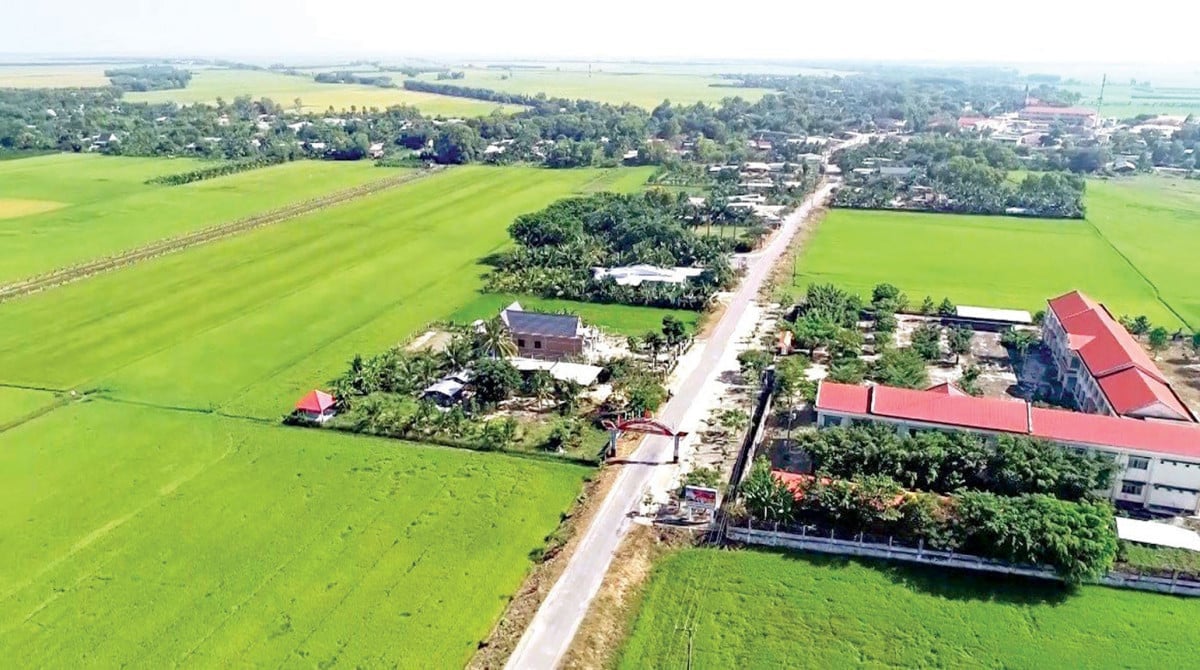
The Prime Minister assigned MAE to oversee and accelerate the disbursement of funds for the National Target Program on Socio-economic Development in Ethnic Minority and Mountainous Areas, including funding carried over from the 2021-2025 period into 2026. Photo: VAN.
The Ministry of Finance was tasked with consolidating medium-term public investment allocation plans, recurrent expenditure estimates and the 2026 public investment budget for the three National Target Programs, and submitting them to the competent authorities for approval. Once all requirements are met, funding must be allocated to localities without delay. Specifically, funding for the National Target Programs on New Rural Development, Sustainable Poverty Reduction, and Socio-economic Development in Ethnic Minority and Mountainous Areas must be allocated before July 15, 2026, while funding for the health and education programs must be allocated within July 2026.
The ministry will also coordinate with the Ministry of Health and the Ministry of Education and Training to finalize and issue regulations governing the management, use and settlement of recurrent expenditures under the programs. In addition, it will monitor fund allocation, disbursement and implementation progress, and prepare monthly reports detailing the performance of each program and implementing agency, as well as any challenges, shortcomings, underlying causes, accountability measures and proposed solutions. These reports will be submitted to the Standing Agency of the Central Steering Committee for consolidation and reporting to the committee's head.
Ministries and agencies responsible for individual program components and subprojects were instructed to promptly complete all implementation guidelines, project documentation and budget estimates within their respective mandates. They are expected to proactively resolve issues within their authority rather than referring them to the lead agencies or the Steering Committee. They will be held accountable for implementation progress, quality, efficient use of funds and the accuracy of reported data, while ensuring full compliance with reporting requirements. They must also promptly review and carry out the tasks assigned in the appendix attached to the Government Office's notice.
Prime Minister Le Minh Hung approved the proposal to study integrating the four existing National Target Programs into a single overarching program. The current programs include: the National Target Programs on New Rural Development, Sustainable Poverty Reduction, and Socio-economic Development in Ethnic Minority and Mountainous Areas; Modernizing and Improving Education and Training; Cultural Development; and Healthcare, Population and Development. The integrated program is intended to improve implementation efficiency while ensuring the fulfillment of objectives approved by the National Assembly.
The new program's name should reflect its comprehensive nature and carry strong humanitarian and political significance, with a focus on improving living standards in rural areas, particularly in remote, ethnic minority and mountainous communities.
The Prime Minister also requested a review of transitional arrangements to ensure that integrating the programs does not interrupt the implementation or objectives of any existing program. Greater decentralization will be granted to local authorities, allowing them to make decisions and take responsibility for implementation, while the central Government will focus on supervision, evaluation and guidance throughout the process.
The Ministry of Finance was assigned to urgently submit to the Prime Minister a proposal to establish a task force to study the integration. The task force will be headed by a Ministry of Finance leader, with a Ministry of Agriculture and Environment leader serving as deputy head, and representatives from relevant ministries and agencies participating as members.
The task force will assess the implementation of the current National Target Programs, prepare a report on the proposed integration, and draft the new unified National Target Program.
The Ministry of Finance will consolidate the task force's findings and recommendations and submit a report to the Government by July 25, 2026. A final report will then be completed and submitted to the competent authorities for consideration no later than October 2026.
Deputy Prime Minister Pham Thi Thanh Tra was assigned to lead the integration process, working in coordination with Deputy Prime Ministers Ho Quoc Dung and Le Tien Chau to oversee the development of the draft unified National Target Program.
Translated by Phuong Linh

(VAN) Viet Nam's forestry sector is shifting from resource extraction to the development of strategic ecological infrastructure, opening new drivers for the green economy and the carbon market.
![Scientists' strength: [8] Fairness and creative motivation](https://t.ex-cdn.com/nongnghiepmoitruong.vn/608w/files/content/2026/07/16/pgsts-dang-van-dong-cham-soc-hoa-lay-on-103239_191-082039.jpg)
(VAN) Scientists must enjoy proportionate benefits from the intellectual products they create.

(VAN) The sugarcane industry is shifting its focus from expanding cultivation area to improving the quality of raw material zones in order to build sustainable competitive advantage.
![HCMC fisheries complies with the law: [Final] Technology fills the gaps](https://t.ex-cdn.com/nongnghiepmoitruong.vn/608w/files/huytd/2026/07/17/1455-3-133654_171.jpg)
(VAN) Through smart vessel positioning solutions and the digitalization of fishing logbooks, HCMC is proactively tightening control of inactive fishing vessels, closing management loopholes from shore.
![Scientists' strength: [7] Waiting for a broad mechanism](https://t.ex-cdn.com/nongnghiepmoitruong.vn/608w/files/anhntk/2026/06/23/1119-dsc00323-nongnghiep-081103.jpeg)
(VAN) Besides developing new rice varieties, scientists also have to worry about finances, resources, and research aspirations.
![Scientists' strength: [6] Need a medicine strong enough](https://t.ex-cdn.com/nongnghiepmoitruong.vn/608w/files/benlc/2026/07/12/1618-chatgpt-image-12_15_17-10-thg-7-2026-122814_896.jpeg)
(VAN) Retaining scientists requires not only income but also a conducive research environment, a meritocratic mechanism, and trust.
![Scientists' strength: [5] Heavy burden of livelihood](https://t.ex-cdn.com/nongnghiepmoitruong.vn/608w/files/chinq/2026/07/17/2452-dsc_0566-081739_259-065506.jpg)
(VAN) Behind the research projects lies the arduous life of scientists, those who persistently cling to their profession amidst the pressure of making a living.
