July 21, 2026 | 16:30 GMT +7
Hotline: 0913.378.918

July 21, 2026 | 16:30 GMT +7
Hotline: 0913.378.918
The Government has issued Decree No. 180/2026/ND-CP on forest carbon sequestration and storage services. While the decree establishes the legal framework for Viet Nam's forest carbon market, the questions raised by local authorities, businesses, and international organizations at the outset of its implementation have focused less on carbon credit prices or market size than on a more fundamental issue: When can emission reductions be recognized as carbon credits, and who is actually eligible to participate in this market?
Many forest owners still assume that simply protecting or planting forests using conventional practices to increase carbon sequestration is sufficient to generate tradable carbon credits. However, according to government authorities, this is only the starting point of a much more comprehensive technical and legal process.

Decree No. 180/2026/ND-CP establishes the legal framework for Viet Nam's forest carbon market. Photo: Tung Dinh.
One of the key questions raised by local authorities to the Department of Forestry and Forest Protection during discussions on the implementation of Decree No. 180/2026/ND-CP concerns the distinction between emission reductions and carbon credits.
According to Nghiem Phuong Thuy of the Division of Science, Technology and International Cooperation, emission reductions represent only the initial stage of the process. Only after completing all required procedures under the applicable regulations can verified emission reductions or carbon sequestration be considered for conversion into carbon credits eligible for trading in the market.

Nghiem Phuong Thuy of the Division of Science, Technology and International Cooperation under the Department of Forestry and Forest Protection. Photo: Bao Thang.
This distinction also forms the foundation of Decree No. 180/2026/ND-CP. Under the decree, a forest carbon project must undergo a series of procedures, including project design and registration, measurement, reporting, validation, and verification, before the competent authority can certify the emission reductions or issue carbon credits. Only after this certification can emission reductions or carbon credits be traded or transferred through contracts or on a carbon trading exchange.
Accordingly, many of the questions raised by international organizations have focused on how to determine whether carbon sequestration or emission reductions qualify for carbon credits, rather than on carbon prices or trading mechanisms.
A representative of the International Fund for Agricultural Development (IFAD) in Viet Nam asked whether agroforestry models or scattered trees outside designated forest land could be recognized as forest carbon projects. The representative also sought clarification on how projects would be handled in areas where previous emission reduction programs have already been implemented.

To Xuan Phuc, a forest policy expert from Forest Trends, raises questions regarding household-owned plantation forests. Photo: Bao Thang.
Meanwhile, the World Wide Fund for Nature (WWF) Viet Nam sought clarification on how emission reductions would be accounted for under Viet Nam's Nationally Determined Contributions (NDCs) if a project has not yet been issued carbon credits. Forest Trends, for its part, raised questions about the role of household-owned plantation forests in contributing to national emission reduction targets and the ability of these forest owners to participate in the carbon market.
According to experts, these are the types of questions that naturally arise as the carbon market shifts from policy development to on-the-ground implementation, where forests differ in their origins, ownership structures, and management arrangements.
Beyond differences in carbon sequestration potential, forest types also vary in terms of management entities, land-use rights, and mechanisms for participating in the carbon market.
Responding to Forest Trends' question, Nghiem Phuong Thuy said that the current legal framework governing carbon market development, including Decree No. 180/2026/ND-CP, applies to organizations rather than individuals. As a result, individual households cannot directly register forest carbon projects. Instead, they may participate by partnering with or authorizing a legally established organization to implement the project on their behalf.
This approach is also reflected in the implementation plan for the decree. For forests under public ownership that are managed by households, individuals, or local communities, carbon projects must be developed and implemented through cooperation or partnership with a legal entity. For forests that are not publicly owned, forest owners may either implement projects independently or participate through partnerships or authorization arrangements in accordance with the regulations.
Another issue attracting considerable attention from local authorities concerns how to deal with forest areas whose conditions or status change during the course of project implementation and management.

Nguyen Van Bong (right), Director of the Quang Ninh Forest Protection Sub-Department. Photo: Bao Thang.
Nguyen Van Bong, Director of the Quang Ninh Forest Protection Sub-Department, cited cases where land previously allocated to households was not classified as natural forest but, following years of natural regeneration, has since been reclassified as natural forest.
Responding to this issue, Pham Hong Luong, Deputy Director General of the Department of Forestry and Forest Protection, explained that the classification of forest status falls under the authority of provincial governments and is officially announced on an annual basis. Once an area is designated as natural forest, the applicable policies and management mechanisms are determined based on its officially recognized status.
He also referred to the provisions of Decree No. 58/2024/ND-CP, which allow forest owners to receive lawful sources of income, including payments for forest environmental services, as an additional revenue stream alongside state budget support.
During discussions on the development of Viet Nam's national standards for forest carbon credits, participants also proposed a number of technical recommendations. A representative of CARE Viet Nam suggested that the standards should provide more detailed guidance on information disclosure and transparency, rather than relying solely on broad principles.
In response, the Department of Forestry and Forest Protection explained that the minimum project duration requirement is intended to ensure adequate monitoring of environmental and social safeguards. Risks associated with the reversal of emission reductions will be addressed through a buffer reserve mechanism, rather than being assessed solely on the basis of individual forest harvesting activities.
"Most of the comments focused on areas where more detailed implementation guidance is needed," Deputy Director General Pham Hong Luong concluded. He added that Decree No. 180/2026/ND-CP, having only recently been issued, builds upon the existing legal framework governing greenhouse gases, carbon markets, and forestry. The Department will therefore continue developing step-by-step technical guidance to facilitate implementation by local authorities and forest owners.
The questions raised at the conference underscore that Viet Nam's forest carbon market has entered a new phase. The challenge is no longer whether a legal framework exists, but how to translate that framework into practical, sufficiently detailed guidance that addresses the diverse circumstances of individual forests, forest owners, and carbon projects.
As these implementation gaps are gradually addressed, verified emission reductions will be able to evolve into carbon credits that meet the requirements for trading in both domestic and international carbon markets.
Decree No. 180/2026/ND-CP sets out regulations on the beneficiaries, payment mechanisms, payment rates, and the management and use of revenues generated from forest carbon sequestration and storage services. It also establishes provisions governing forest carbon projects, the determination of greenhouse gas emission reductions, and the issuance of forest carbon credits eligible for market supply. The decree will take effect on 15 July 2026.
Translated by Phuong Linh
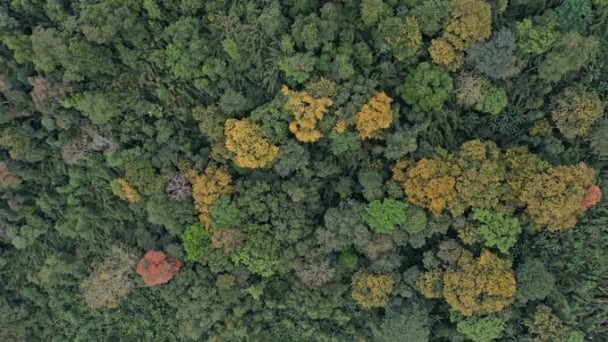
(VAN) Viet Nam's forestry sector is shifting from resource extraction to the development of strategic ecological infrastructure, opening new drivers for the green economy and the carbon market.
![Scientists' strength: [8] Fairness and creative motivation](https://t.ex-cdn.com/nongnghiepmoitruong.vn/608w/files/content/2026/07/16/pgsts-dang-van-dong-cham-soc-hoa-lay-on-103239_191-082039.jpg)
(VAN) Scientists must enjoy proportionate benefits from the intellectual products they create.

(VAN) The sugarcane industry is shifting its focus from expanding cultivation area to improving the quality of raw material zones in order to build sustainable competitive advantage.
![HCMC fisheries complies with the law: [Final] Technology fills the gaps](https://t.ex-cdn.com/nongnghiepmoitruong.vn/608w/files/huytd/2026/07/17/1455-3-133654_171.jpg)
(VAN) Through smart vessel positioning solutions and the digitalization of fishing logbooks, HCMC is proactively tightening control of inactive fishing vessels, closing management loopholes from shore.
![Scientists' strength: [7] Waiting for a broad mechanism](https://t.ex-cdn.com/nongnghiepmoitruong.vn/608w/files/anhntk/2026/06/23/1119-dsc00323-nongnghiep-081103.jpeg)
(VAN) Besides developing new rice varieties, scientists also have to worry about finances, resources, and research aspirations.
![Scientists' strength: [6] Need a medicine strong enough](https://t.ex-cdn.com/nongnghiepmoitruong.vn/608w/files/benlc/2026/07/12/1618-chatgpt-image-12_15_17-10-thg-7-2026-122814_896.jpeg)
(VAN) Retaining scientists requires not only income but also a conducive research environment, a meritocratic mechanism, and trust.
![Scientists' strength: [5] Heavy burden of livelihood](https://t.ex-cdn.com/nongnghiepmoitruong.vn/608w/files/chinq/2026/07/17/2452-dsc_0566-081739_259-065506.jpg)
(VAN) Behind the research projects lies the arduous life of scientists, those who persistently cling to their profession amidst the pressure of making a living.
