July 21, 2026 | 21:35 GMT +7
Hotline: 0913.378.918

July 21, 2026 | 21:35 GMT +7
Hotline: 0913.378.918
This information was shared by Mr. Le Thanh Son with VAN News regarding the future direction of carbon credit development in Lam Dong.

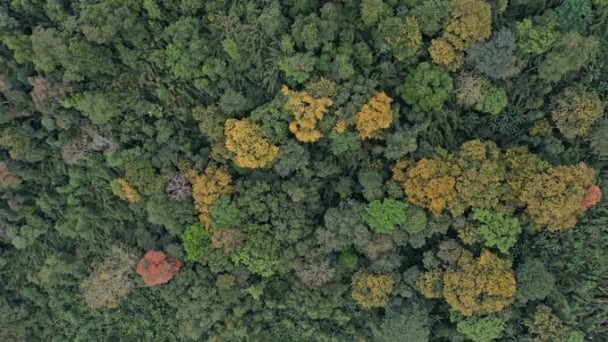
Lam Dong currently has more than 1.1 million hectares of forest, offering significant potential for carbon credit development. Photo: KS.
As Vietnam accelerates efforts to fulfill its commitment to achieving Net Zero emissions by 2050, forestry has been identified as a key sector thanks to forests’ strong capacity to absorb and store carbon. Following the recent administrative merger, Lam Dong now has more than 1.1 million hectares of forest, including nearly 1 million hectares of natural forest. This resource creates major opportunities for the province to generate financial resources from forest environmental services and carbon credits.
Recognizing this potential, the Lam Dong Department of Agriculture and Environment has actively advised provincial authorities on accessing both domestic and international carbon markets. Domestically, the province is coordinating with ministries and agencies to complete the legal framework and trading platform under Decree No. 29/2026/ND-CP issued on January 19, 2026. In addition, the Government issued Decree No. 180/2026/ND-CP on May 21, 2026, which regulates forest carbon absorption and storage services and provides an important legal basis for implementation.
Internationally, Lam Dong is one of five provinces in the South Central and Central Highlands regions participating in the ERPA Program, which is signed with the Emergent Forest Finance Accelerator. The program is expected to transfer around 5.15 million tons of CO2 during 2021-2025 at negotiated prices of USD 10-15 per tCO₂e under the ART-TREES international standard.
Through the program, Lam Dong is expected to generate revenues of VND 300-500 billion for the local budget. The legal framework for international carbon trading was further strengthened when the Government issued Decree No. 112/2026/ND-CP on April 1, 2026, regulating international exchanges of greenhouse gas emission reductions and carbon credits.

Forest management agencies have made continuous efforts to protect and develop forests in recent years. Photo: KS.
Since 2021, authorities in Lam Dong have simultaneously implemented a range of preparatory activities for REDD+ negotiations, achieving encouraging initial results. All data related to forest status, emissions and carbon sequestration have been successfully integrated into the national Measurement, Reporting and Verification (MRV) system to support international verification.
Initial emission reduction results have also been recognized under the ART-TREES standard and aligned with the province’s recent administrative restructuring. However, because the program is still in the negotiation stage, no actual revenue has yet been generated for disbursement. In addition, the MRV technical system remains heavily dependent on central authorities, local human resource capacity is still limited and specific benefit-sharing mechanisms have not yet been officially issued.
To transform this potential into tangible resources and make carbon credit development a key task for generating stable additional financing during the 2026-2030 period, Mr. Le Thanh Son said the agriculture and environment sector of Lam Dong is focusing on several synchronized strategic solutions.
First, the province will continue coordinating closely with the Ministry of Agriculture and Environment to accelerate negotiations and finalize procedures for the official implementation of the ERPA Program in the South Central and Central Highlands regions. At the same time, the sector will gradually improve forest databases and optimize the MRV system by applying digital technologies and advanced remote sensing imagery to ensure accurate forest monitoring.
The province is also conducting a comprehensive review of forest areas with high carbon potential, giving top priority to natural forests, watershed forests and areas with high biodiversity value. In addition, carbon credit development will be closely integrated with major programs such as REDD+, Payment for Forest Environmental Services (PFES), sustainable forest management, forest restoration and the development of climate-resilient ecological agriculture.

The Lam Dong Department of Agriculture and Environment is working toward sustainable green finance. Photo: KS.
At the same time, Lam Dong is proactively preparing all necessary conditions to develop local-level carbon programs and projects in accordance with Decree No. 112/2026/ND-CP, while ensuring they do not affect Vietnam’s Nationally Determined Contribution (NDC) targets and strictly avoiding double counting. The province is also focusing on researching and developing a balanced benefit-sharing mechanism to ensure fair distribution among the State, forest owners, local communities and other stakeholders.
Efforts are also being strengthened to organize training programs and capacity-building courses for management officials, forest owners and businesses operating in the province. In addition, Lam Dong continues to expand international cooperation to attract technical and financial resources from climate funds and major domestic and international financial institutions.
The province’s consistent guiding principle in developing the carbon credit market is “cautious, transparent, effective, and sustainable.” Rather than rushing into superficial commercialization, Lam Dong prioritizes building a strong legal, technical and governance foundation. Its long-term goal is to establish a stable source of green finance to improve the livelihoods of forest protection forces, promote the circular economy, and reinforce the multi-functional value of the province’s forest ecosystems.
$1 = VND 26,394 (Source: Vietcombank).
Translated by Huong Giang

(VAN) International resource mobilization for energy transition investment projects has yet to keep pace with Vietnam’s efforts to improve its energy policy framework.
(VAN) Viet Nam's forestry sector is shifting from resource extraction to the development of strategic ecological infrastructure, opening new drivers for the green economy and the carbon market.
![Scientists' strength: [8] Fairness and creative motivation](https://t.ex-cdn.com/nongnghiepmoitruong.vn/608w/files/content/2026/07/16/pgsts-dang-van-dong-cham-soc-hoa-lay-on-103239_191-082039.jpg)
(VAN) Scientists must enjoy proportionate benefits from the intellectual products they create.

(VAN) The sugarcane industry is shifting its focus from expanding cultivation area to improving the quality of raw material zones in order to build sustainable competitive advantage.
![HCMC fisheries complies with the law: [Final] Technology fills the gaps](https://t.ex-cdn.com/nongnghiepmoitruong.vn/608w/files/huytd/2026/07/17/1455-3-133654_171.jpg)
(VAN) Through smart vessel positioning solutions and the digitalization of fishing logbooks, HCMC is proactively tightening control of inactive fishing vessels, closing management loopholes from shore.
![Scientists' strength: [7] Waiting for a broad mechanism](https://t.ex-cdn.com/nongnghiepmoitruong.vn/608w/files/anhntk/2026/06/23/1119-dsc00323-nongnghiep-081103.jpeg)
(VAN) Besides developing new rice varieties, scientists also have to worry about finances, resources, and research aspirations.
![Scientists' strength: [6] Need a medicine strong enough](https://t.ex-cdn.com/nongnghiepmoitruong.vn/608w/files/benlc/2026/07/12/1618-chatgpt-image-12_15_17-10-thg-7-2026-122814_896.jpeg)
(VAN) Retaining scientists requires not only income but also a conducive research environment, a meritocratic mechanism, and trust.
