July 21, 2026 | 17:03 GMT +7
Hotline: 0913.378.918

July 21, 2026 | 17:03 GMT +7
Hotline: 0913.378.918
Medicinal herbs have long been regarded as a competitive advantage for many mountainous localities and ethnic minority areas. However, in many places, their economic efficiency has yet to be commensurate with their potential because production remains fragmented and largely focused on the sale of raw materials, while processing, brand development, and market linkage remain limited.

Medicinal herbs have long been regarded as a competitive advantage for many mountainous localities and ethnic minority communities. Photo: VAN.
As part of a series of training sessions on implementing the National Criteria Set for New Rural Development for the 2026–2030 period and new regulations under the National Target Program, organized by the Central Coordination Office for the National Target Program under the Ministry of Agriculture and Environment, the Ministry of Health introduced Phase I (2026–2030) of the Program to Support the Development of Precious and High-Value Medicinal Herb Plantations, pursuant to Decision No. 1102/QD-BYT dated April 21, 2026.
Under Decision No. 1102/QD-BYT, the Ministry of Health provides guidance on implementing support measures for the development of precious and high-value medicinal herb plantations within the Ministry's jurisdiction within the National Target Program on New Rural Development, Sustainable Poverty Reduction, and Socio-Economic Development in Ethnic Minority and Mountainous Areas for the 2026–2035 period (Phase I: 2026–2030).
The program aims to support the development of medicinal herb plantations in association with raising incomes for people living in ethnic minority and mountainous regions, contributing to the goal of increasing the average income in these areas to at least half of the national average. Its core focus is the synchronous development of the entire value chain, from raw material areas and production infrastructure to breeding, scientific research and technology transfer, vocational training, primary processing, processing, brand building, trade promotion, traceability, digital transformation, and value chain linkages.
In parallel, the Traditional Medicine Administration under the Ministry of Health is responsible for providing technical guidance, developing training materials, organizing training courses, and conducting inspections and supervision of implementation. Local authorities are tasked with proactively formulating implementation plans, integrating resources, and carrying out activities suited to local conditions. The expanded support measures for the 2026–2030 period are designed to complete the medicinal herb value chain, enabling raw material areas to integrate more closely with processing industries and markets, thereby increasing the products' added value.
The need to develop medicinal herbs along a value chain approach also stems from practical realities. Speaking at the Conference on Commodity Agriculture and Medicinal Herb Development Towards a Green Economy, jointly organized by the Ministry of Agriculture and Environment and the Lai Chau Provincial People's Committee, Mr. Nguyen Van Dien, Deputy Director General of the Department of Forestry and Forest Protection, said Lai Chau currently has around 23,070 hectares of medicinal herbs, including many high-value species such as Lai Chau ginseng, Paris polyphylla, codonopsis, angelica, cinnamon, black cardamom, and amomum. However, cultivation areas remain relatively small, and output has yet to meet market demand, making it difficult to promote deep processing and build product brands.

Supporting the development of medicinal herb plantations is closely linked to improving incomes for people living in ethnic minority and mountainous regions. Photo: VAN.
According to Mr. Nguyen Van Dien, localities need to establish concentrated raw material areas, conserve genetic resources, promote deep processing, build product brands, and integrate medicinal herbs with experiential tourism. These orientations indicate that, for medicinal herbs to become a high-value commodity, it is essential to establish a linkage chain from raw material areas to processing and consumption, rather than merely expanding cultivation areas.
In response to this need, many localities have proactively translated these orientations into their own policy mechanisms. In Da Nang, the City People's Council issued Resolution No. 50/2026/NQ-HDND, introducing incentives for the conservation and development of Ngoc Linh ginseng and other medicinal plants during the 2026–2030 period. The resolution aims to promote the development of medicinal herb areas associated with forest protection, genetic resource conservation, the application of science and technology, product traceability, brand building, and the establishment of production-to-consumption linkages.
Meanwhile, Lao Cai is drafting a resolution on policies to encourage and support medicinal herb development, moving toward expanding areas that have competitive advantages, attracting businesses to participate in production, processing, and consumption linkages, and unlocking the full potential of medicinal herbs to drive economic development in upland regions.
From the strategic direction set out under the National Target Program to the policies currently being implemented by local authorities, medicinal herb development is increasingly being approached from the perspective of completing the entire production value chain. By connecting raw material areas with processing, trade, and markets, the medicinal herb sector will be better positioned to enhance product value, create jobs, increase people’s incomes, and contribute to the sustainable development of rural economies.
Translated by Thu Huyen
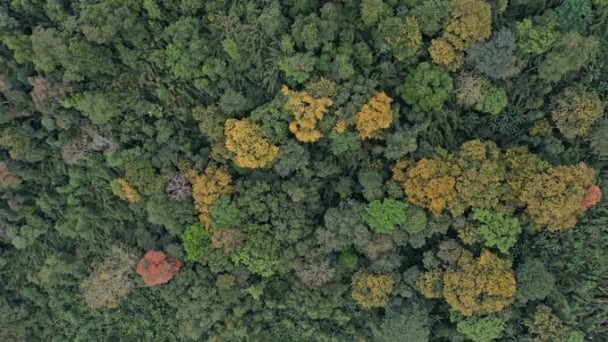
(VAN) Viet Nam's forestry sector is shifting from resource extraction to the development of strategic ecological infrastructure, opening new drivers for the green economy and the carbon market.
![Scientists' strength: [8] Fairness and creative motivation](https://t.ex-cdn.com/nongnghiepmoitruong.vn/608w/files/content/2026/07/16/pgsts-dang-van-dong-cham-soc-hoa-lay-on-103239_191-082039.jpg)
(VAN) Scientists must enjoy proportionate benefits from the intellectual products they create.

(VAN) The sugarcane industry is shifting its focus from expanding cultivation area to improving the quality of raw material zones in order to build sustainable competitive advantage.
![HCMC fisheries complies with the law: [Final] Technology fills the gaps](https://t.ex-cdn.com/nongnghiepmoitruong.vn/608w/files/huytd/2026/07/17/1455-3-133654_171.jpg)
(VAN) Through smart vessel positioning solutions and the digitalization of fishing logbooks, HCMC is proactively tightening control of inactive fishing vessels, closing management loopholes from shore.
![Scientists' strength: [7] Waiting for a broad mechanism](https://t.ex-cdn.com/nongnghiepmoitruong.vn/608w/files/anhntk/2026/06/23/1119-dsc00323-nongnghiep-081103.jpeg)
(VAN) Besides developing new rice varieties, scientists also have to worry about finances, resources, and research aspirations.
![Scientists' strength: [6] Need a medicine strong enough](https://t.ex-cdn.com/nongnghiepmoitruong.vn/608w/files/benlc/2026/07/12/1618-chatgpt-image-12_15_17-10-thg-7-2026-122814_896.jpeg)
(VAN) Retaining scientists requires not only income but also a conducive research environment, a meritocratic mechanism, and trust.
![Scientists' strength: [5] Heavy burden of livelihood](https://t.ex-cdn.com/nongnghiepmoitruong.vn/608w/files/chinq/2026/07/17/2452-dsc_0566-081739_259-065506.jpg)
(VAN) Behind the research projects lies the arduous life of scientists, those who persistently cling to their profession amidst the pressure of making a living.
