July 21, 2026 | 17:04 GMT +7
Hotline: 0913.378.918

July 21, 2026 | 17:04 GMT +7
Hotline: 0913.378.918
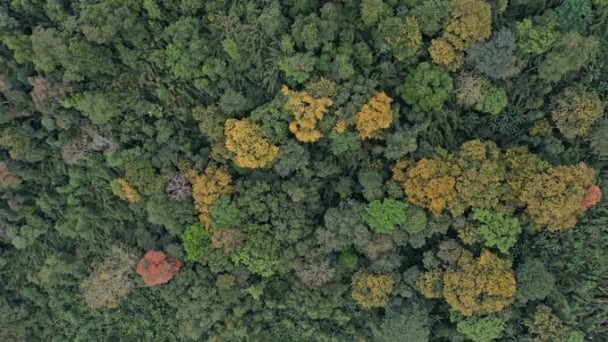
After being recognized by UNESCO as a Global Geopark in 2020, the Dak Nong UNESCO Global Geopark became one of the Central Highlands region's internationally significant heritage sites. Following the recent restructuring of administrative units, the geopark now spans an area of about 4,760 square kilometers across 22 communes and wards in western Lam Dong province.

The Dak Nong UNESCO Global Geopark spans western Lam Dong, encompassing a distinctive system of geological, landscape and ecological heritage. Photo: Pham Hoai.
Within this space, geological, natural, historical and cultural assets are distributed across a wide area, linked to numerous heritage routes and sites. Alongside the task of conservation, the process of promoting the geopark's value continues to call for stronger connections between destinations, a more complete information system and improved accessibility for visitors, particularly as the region works to position itself as a cohesive destination rather than a collection of scattered sites.
A range of review, assessment and improvement activities have been carried out within the geopark to support management and conservation work. This is also part of the local effort to prepare for the geopark's re-evaluation, expected to take place in 2027.

Natural landscape values within the Dak Nong UNESCO Global Geopark continue to be conserved, connected and promoted in tandem with sustainable tourism development. Photo: Nguyen Dung/VNA.
During a working session with experts from the Vietnam UNESCO Global Geoparks Network this past June, a review was conducted covering infrastructure, landscape, signage and interpretive panel systems, and connectivity between heritage sites. The review covered three tourism routes comprising 41 heritage and visitor sites, while additional heritage sites and potential destinations were also surveyed.
The results of the review will serve as a basis for the locality to continue improving the conditions needed for managing, conserving and promoting the value of the heritage area going forward.
Alongside maintaining UNESCO's criteria, communication and promotion are increasingly seen as an important part of the geopark's work. Bringing heritage values closer to communities, visitors and international organizations is also a requirement in preparing for the re-evaluation.
Tran Tan Van, chairman of the Vietnam UNESCO Global Geoparks Network, said management of the Dak Nong UNESCO Global Geopark still has certain shortcomings that need to be addressed urgently. With limited time remaining before the re-evaluation, he said the locality needs to roll out solutions in a coordinated way, from strengthening the management apparatus and assigning dedicated staff to improving infrastructure, information centers and visitor sites, and stepping up communication efforts.

Review and improvement activities for the management and promotion of the Dak Nong UNESCO Global Geopark are underway ahead of the 2027 re-evaluation. Photo: Pham Hoai.
"Promotion of the Dak Nong UNESCO Global Geopark across the entire province following the merger needs to be strengthened to leave a clear impression on visitors and international expert delegations. The locality also needs to promptly issue an appropriate management and operating mechanism to enable businesses to take part in promoting heritage value alongside conservation," Van said.
Drawing on the expert delegation's recommendations, Lam Dong's Department of Culture, Sports and Tourism continues to advise on solutions for improving infrastructure, enhancing management effectiveness and strengthening connections between heritage sites.

Conserving indigenous cultural values in connection with local communities is an important part of promoting the value of the Dak Nong UNESCO Global Geopark. Photo: Pham Hoai.
According to Le Thi Truc Linh, deputy director of the Lam Dong Department of Culture, Sports and Tourism, the department has fully taken on board the expert delegation's recommendations and will report to the provincial People's Committee to implement key solutions. The department is advising the provincial People's Committee to prioritize resources for addressing UNESCO's recommendations and for improving infrastructure and heritage sites in order to meet the re-evaluation criteria.
"Lam Dong will strengthen decentralization to commune and ward authorities in managing and protecting heritage sites, alongside stronger efforts to connect and promote the region's tourism and cultural image," Linh said.
From reviewing infrastructure and connecting heritage sites to stepping up promotion of the geopark's image, Lam Dong continues to incorporate these UNESCO-recognized values into the ongoing conservation and management of the heritage area.
Translated by Linh Linh
(VAN) Viet Nam's forestry sector is shifting from resource extraction to the development of strategic ecological infrastructure, opening new drivers for the green economy and the carbon market.
![Scientists' strength: [8] Fairness and creative motivation](https://t.ex-cdn.com/nongnghiepmoitruong.vn/608w/files/content/2026/07/16/pgsts-dang-van-dong-cham-soc-hoa-lay-on-103239_191-082039.jpg)
(VAN) Scientists must enjoy proportionate benefits from the intellectual products they create.

(VAN) The sugarcane industry is shifting its focus from expanding cultivation area to improving the quality of raw material zones in order to build sustainable competitive advantage.
![HCMC fisheries complies with the law: [Final] Technology fills the gaps](https://t.ex-cdn.com/nongnghiepmoitruong.vn/608w/files/huytd/2026/07/17/1455-3-133654_171.jpg)
(VAN) Through smart vessel positioning solutions and the digitalization of fishing logbooks, HCMC is proactively tightening control of inactive fishing vessels, closing management loopholes from shore.
![Scientists' strength: [7] Waiting for a broad mechanism](https://t.ex-cdn.com/nongnghiepmoitruong.vn/608w/files/anhntk/2026/06/23/1119-dsc00323-nongnghiep-081103.jpeg)
(VAN) Besides developing new rice varieties, scientists also have to worry about finances, resources, and research aspirations.
![Scientists' strength: [6] Need a medicine strong enough](https://t.ex-cdn.com/nongnghiepmoitruong.vn/608w/files/benlc/2026/07/12/1618-chatgpt-image-12_15_17-10-thg-7-2026-122814_896.jpeg)
(VAN) Retaining scientists requires not only income but also a conducive research environment, a meritocratic mechanism, and trust.
![Scientists' strength: [5] Heavy burden of livelihood](https://t.ex-cdn.com/nongnghiepmoitruong.vn/608w/files/chinq/2026/07/17/2452-dsc_0566-081739_259-065506.jpg)
(VAN) Behind the research projects lies the arduous life of scientists, those who persistently cling to their profession amidst the pressure of making a living.
