July 18, 2026 | 02:47 GMT +7
Hotline: 0913.378.918

July 18, 2026 | 02:47 GMT +7
Hotline: 0913.378.918
Amid increasingly complex climate change impacts and rising water demand, water resources are becoming a major challenge to sustainable development. Despite relatively abundant supplies, Viet Nam faces risks of shortages, degradation, and limited capacity to proactively regulate and manage.
Marking World Water Day (March 22, 2026), Deputy Minister Nguyen Hoang Hiep discussed key issues and strategic directions to safeguard national water security, seen as a cornerstone of future sustainable growth.
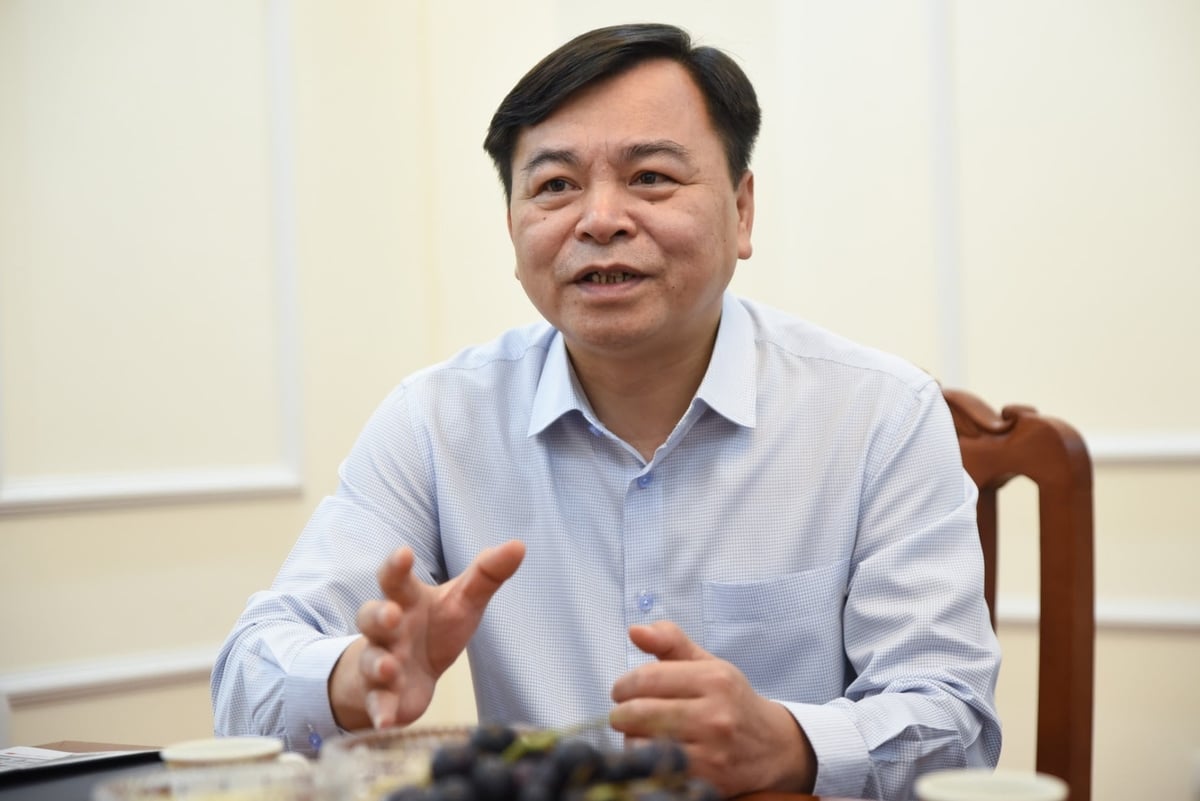
Deputy Minister Nguyen Hoang Hiep shares strategic solutions to ensure national water security. Photo: Tung Dinh.
Deputy Minister, what major challenges are Viet Nam’s water resources currently facing?
Ensuring national water security is a central objective of the 2023 Law on Water Resources. However, achieving this goal requires a candid, comprehensive, and responsible assessment of existing challenges.
Viet Nam’s total annual water volume is relatively large, nearly 936 billion cubic meters. However, distribution is highly uneven. About 75% of water is concentrated in the rainy season, while prolonged dry seasons often bring severe shortages. This imbalance places significant pressure on water regulation and use.
Spatial disparities are also pronounced. Water resources are concentrated in major river basins such as the Red-Thai Binh and Mekong systems, while other regions frequently face scarcity. This uneven distribution further complicates allocation.
A critical concern is Viet Nam’s heavy reliance on transboundary water sources, with roughly 60-65% of surface water originating upstream, outside national borders. This means that water security is not entirely within the country’s control.
At the same time, socio-economic development has intensified pressure on water resources. Over the past 50 years, water demand has tripled and is expected to continue rising sharply. When demand grows faster than supply, shortages and conflicts become increasingly likely.
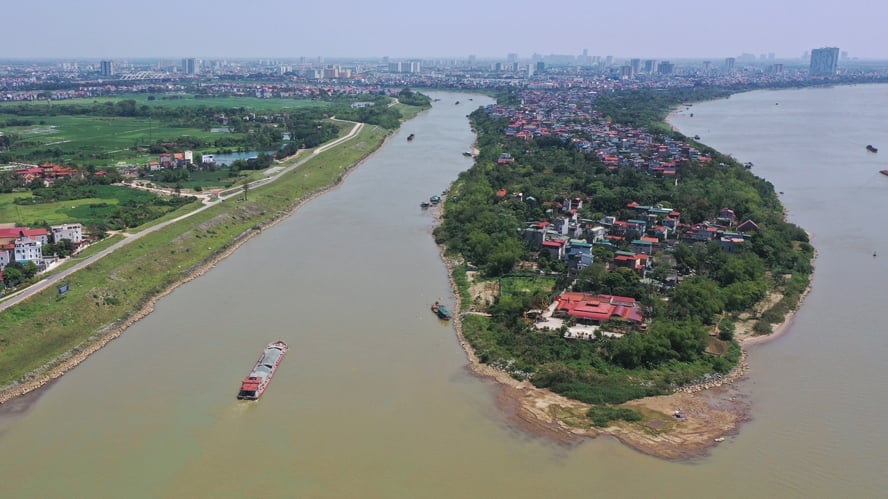
Urbanization, industrialization, and agricultural development have increased wastewater volumes. Photo: HNM.
Water pollution is another visible consequence. Rapid urbanization, industrialization, and agricultural expansion have increased wastewater discharge, while treatment capacity remains limited. Many rivers are experiencing declining water quality, with some nearing ecological collapse.
Water use efficiency also remains a major issue. Losses and waste are widespread, particularly in agriculture and urban supply systems, reflecting a broader failure to treat water as a valuable resource.
Climate change further exacerbates these challenges. Droughts, saltwater intrusion, and flooding are becoming more extreme, directly affecting water availability and livelihoods.
In sum, the core challenge is not absolute scarcity, but governance, how to allocate, use, and protect water resources effectively and sustainably.
What breakthrough solutions are needed to ensure water security in the coming years?
Addressing water security requires a comprehensive, cross-sectoral, and long-term approach, not isolated solutions.
First, governance reform is essential, with digital transformation playing a central role. The Ministry of Agriculture and Environment is building a national water resources information system and database. With accurate, real-time data, water allocation and management can become more proactive and efficient.
A key initiative is the development and public release of annual water resource scenarios for interprovincial river basins. These will enable local authorities to better plan production, daily use, and responses to risks such as drought and salinity intrusion.

Investing in the upgrade of irrigation systems, reservoirs, water supply and drainage networks, and wastewater treatment to ensure national water security. Photo: Tung Dinh.
In all circumstances, the highest priority remains ensuring access to safe water for domestic use, an unchanging principle.
At the same time, greater investment is needed in infrastructure: upgrading irrigation systems, reservoirs, water supply and drainage networks, and wastewater treatment facilities. Expanding water storage and inter-regional regulation systems will also enhance resilience.
A notable strategic shift is the recognition of water as an economic sector. Proper valuation of water will incentivize more efficient use and attract private investment.
On the technology front, expanding the use of automated monitoring, forecasting models, and artificial intelligence will strengthen management capacity. Equally important is investing in human capital to develop a skilled workforce in water resource management.
Finally, public awareness is indispensable. Without changes in individual behavior, even the best policies will have limited impact.
How important is international cooperation in enhancing Viet Nam’s water security?
International cooperation is critical, especially for a country with multiple transboundary river basins like Viet Nam.
Viet Nam participates in key frameworks, including the 1997 UN Watercourses Convention, the 1995 Mekong Agreement, and various regional forums. These platforms facilitate data sharing, technology transfer, and the exchange of management experience.
Looking ahead, cooperation will be strengthened in a more proactive, substantive, and mutually beneficial direction, focusing on information sharing, coordinated river basin management, climate adaptation, and balanced interests among countries.
Water security cannot be achieved within national borders alone; it requires collective regional and global efforts.
On World Water Day 2026, themed “Water and Gender Equality,” what message would you like to share?
This year’s theme carries profound human significance. Water is not only a resource for development but also a matter of social equity.
Access to clean water is a fundamental human right. Where such access is lacking, women and girls, especially in disadvantaged areas, are often the most affected.
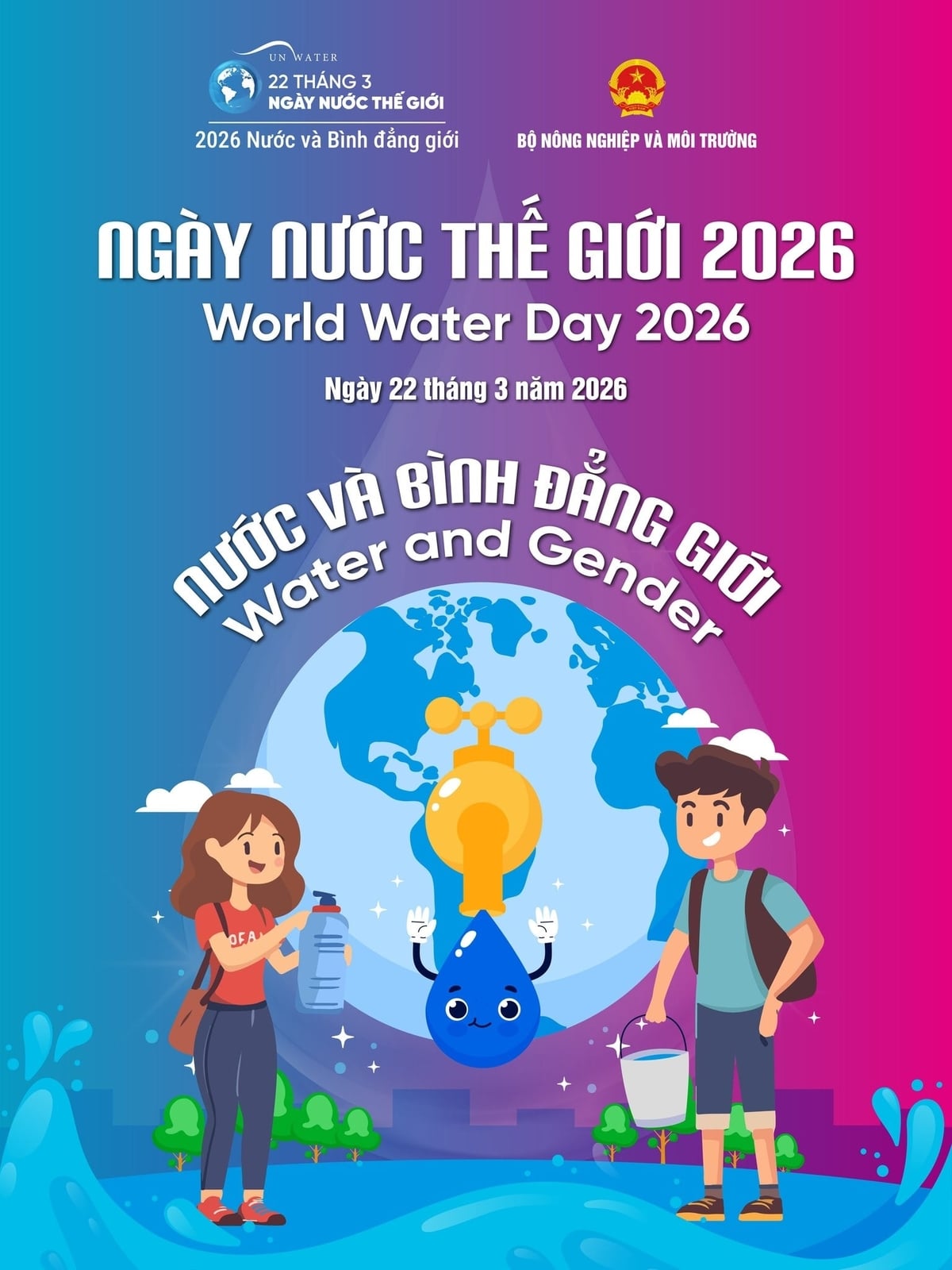
World Water Day 2026 message: “Water and Gender Equality.” Photo: UN.
Ensuring equitable access to water is therefore essential to improving the quality of life and narrowing development gaps. It is also important to strengthen women’s roles in water management and decision-making.
On this occasion, I would emphasize a simple message: water is a precious, finite, and irreplaceable resource. Protecting water means protecting our future.
Young people have a particularly important role, not only as beneficiaries, but as future stewards. Small actions such as conserving water, reducing pollution, and participating in environmental protection can collectively drive meaningful change.
Every individual and every business must treat water conservation and protection as a shared responsibility. When millions act together, the impact is powerful.
We cannot wait until scarcity becomes a crisis. Protecting water resources must begin today, with the smallest actions.
Thank you, Deputy Minister!
Translated by Linh Linh

(VAN) The sugarcane industry is shifting its focus from expanding cultivation area to improving the quality of raw material zones in order to build sustainable competitive advantage.
![HCMC fisheries complies with the law: [Final] Technology fills the gaps](https://t.ex-cdn.com/nongnghiepmoitruong.vn/608w/files/huytd/2026/07/17/1455-3-133654_171.jpg)
(VAN) Through smart vessel positioning solutions and the digitalization of fishing logbooks, HCMC is proactively tightening control of inactive fishing vessels, closing management loopholes from shore.
![Scientists' strength: [7] Waiting for a broad mechanism](https://t.ex-cdn.com/nongnghiepmoitruong.vn/608w/files/anhntk/2026/06/23/1119-dsc00323-nongnghiep-081103.jpeg)
(VAN) Besides developing new rice varieties, scientists also have to worry about finances, resources, and research aspirations.
![Scientists' strength: [6] Need a medicine strong enough](https://t.ex-cdn.com/nongnghiepmoitruong.vn/608w/files/benlc/2026/07/12/1618-chatgpt-image-12_15_17-10-thg-7-2026-122814_896.jpeg)
(VAN) Retaining scientists requires not only income but also a conducive research environment, a meritocratic mechanism, and trust.
![Scientists' strength: [5] Heavy burden of livelihood](https://t.ex-cdn.com/nongnghiepmoitruong.vn/608w/files/chinq/2026/07/17/2452-dsc_0566-081739_259-065506.jpg)
(VAN) Behind the research projects lies the arduous life of scientists, those who persistently cling to their profession amidst the pressure of making a living.
![HCMC fisheries complies with the law: [2] Digitalization for fisheries transparency](https://t.ex-cdn.com/nongnghiepmoitruong.vn/608w/files/huyenvt (e)/2026/07/16/1738-4-181433_89.jpg)
(VAN) By integrating technology into fleet management, HCMC is steadily improving the transparency of fisheries data, meeting the EC's on-site inspection requirements.
![Scientists' strength: [3] Cold shivers in the gene bank](https://t.ex-cdn.com/nongnghiepmoitruong.vn/608w/files/benlc/2026/07/08/2901-20210901_101217-100306_940.jpg)
(VAN) The National Crop Gene Bank currently preserves over 28.000 genetic resources of 172 seed-reproducing species.
