July 21, 2026 | 11:41 GMT +7
Hotline: 0913.378.918

July 21, 2026 | 11:41 GMT +7
Hotline: 0913.378.918
China, the world's largest producer and consumer of pork, is going through a difficult period as live hog prices have fallen to their lowest level in 16 years. According to market research organizations, the main cause is not a sudden drop in demand but rather a prolonged period of production expansion following the African swine fever outbreak.

Developments in China are seen as a valuable lesson for many countries with developed livestock sectors, including Viet Nam. Photo: Viet Nam Feed Magazine.
After the disease caused a sharp decline in the national sow herd, many businesses and localities across China simultaneously invested in building large-scale livestock complexes. Supply recovered quickly and even exceeded consumer demand amid slowing economic growth and shifting consumption trends. As a result, live hog prices have continued to fall, many businesses have suffered losses, and the Chinese government has been forced to intervene by regulating output and purchasing pork for reserves.
In recent years, Viet Nam's pig farming sector has recovered quickly from African swine fever. According to data from specialized agencies, the country's total pig herd continues to grow, with many localities recording sharp increases driven by the expansion of large-scale farms. As of early 2026, the country had 29 large-scale pig farming enterprises with a combined herd of about 9.58 million head, equivalent to more than 30 percent of the national total. This group of enterprises alone supplied about 44 percent of the country's total volume of market-ready pigs in 2025.
Alongside this restructuring process, small-scale household farming models are gradually shrinking, giving way to farms that apply high technology, control disease more effectively, and manage production more professionally. This is considered an inevitable trend that helps raise productivity, cut costs, and improve product quality.
However, the pace of herd expansion is also raising questions about the market's capacity to absorb supply. After holding at a high level early in the year, domestic live hog prices have trended downward since early June 2026 and are now fluctuating around 64,000 to 68,000 VND per kilogram (approximately 2.50 to 2.65 USD per kilogram). Beyond seasonal factors, many experts believe supply is growing faster than the recovery in purchasing power.
Although Viet Nam's market has not yet reached the oversupply situation seen in China, these signals indicate that closely monitoring supply and demand trends is necessary to limit the risk of imbalance in the coming years.
Another factor drawing the attention of industry experts is the wave of investment into large-scale livestock farming. As markets in some countries have become saturated, many foreign enterprises continue to seek opportunities to expand operations in Viet Nam through high-tech farming projects or partnerships with domestic companies. At the same time, there have been reports of investors interested in acquiring or forming partnerships with existing farms.

It is time for us to consider quotas in livestock farming to avoid oversupply. Photo: Bao Khang.
Attracting investment is necessary to raise technological standards, management capacity, and competitiveness in the livestock sector. However, if the scale of development is not tied to demand forecasts, pressure from oversupply could increase over the medium to long term.
The group typically affected first is small-scale households and medium-sized enterprises. Compared with large corporations that operate closed production chains from breeding stock and feed to farming, slaughter, and processing, this segment has higher production costs and a weaker ability to withstand price fluctuations. When live hog prices fall below the break-even threshold, the risk of losses and production cutbacks increases.
Meanwhile, the export prospects for Vietnamese pork remain limited, as production costs are higher than in major exporting countries, and strict requirements for disease-safe zones must be met. This means that if domestic supply continues to grow rapidly, most of that output will still need to be absorbed by the domestic market.
Many experts say the issue at hand is not about restricting the development of the livestock sector, but about building an appropriate regulatory mechanism to ensure long-term balance between supply and demand.
In practice, the sector's production capacity has already increased significantly. Total capacity at animal feed plants now exceeds actual demand, while the size of the sow herd has essentially met the requirements of domestic market development. If new projects continue to be rolled out at a rapid pace, the risk of oversupply could well materialize if consumption does not increase at a corresponding rate.
Drawing on international practice, many countries not only control imports but also apply tools to manage livestock farming scale through zoning plans, environmental conditions, waste treatment capacity, or licensing mechanisms for new projects.
South Korea, for example, tightly manages livestock density and environmental conditions. China, following its period of oversupply, has strengthened control over sow herd size and required large enterprises to adjust their production plans. Many European countries apply limits on livestock density tied to land area and environmental standards. These solutions help curb overheated development while ensuring a balance between production growth and market demand.
Drawing on this experience, a number of associations, including the Viet Nam Animal Husbandry Association and the Viet Nam Feed Association, along with several other associations and domestic experts, have proposed studying a mechanism to regulate livestock farming scale, including options for building quotas or herd development targets by stage and by locality. The goal is not to restrict investment but to control the pace of herd growth in line with supply and demand forecasts, avoiding a situation where supply grows too quickly, leading to price volatility that disadvantages farmers.
However, this proposal has also drawn differing views. Some experts argue that if a quota mechanism lacks transparency or is not allocated based on clear criteria, the policy could inadvertently favor enterprises that already hold large market shares, reducing incentives for investment, technological innovation, and fair competition. For this reason, if such a mechanism is studied and applied, it needs to be built on principles of openness, transparency, and close oversight.
In addition, many opinions suggest that a combination of synchronized solutions is needed, including building an updated database on total herd size to forecast supply and demand, reviewing large-scale livestock projects before licensing, tying development planning to environmental criteria, biosecurity, and waste treatment capacity, and prioritizing conditions for household farms and medium-sized operations to join value chains with enterprises. Alongside this, the sector should promote deeper processing, build disease-safe zones, and expand official export markets to reduce pressure on domestic consumption.
Viet Nam's pig farming sector is entering a new stage of development with steadily growing production capacity. This is an important foundation for strengthening food supply self-sufficiency. However, the experience of many countries shows that growth is only truly sustainable when paired with effective forecasting, regulation, and market management. Proactively balancing supply and demand now will help the livestock sector avoid major fluctuations in the future while safeguarding farmers' livelihoods and maintaining the sector's competitiveness.
$ 1 = VND 26,466 (Source: Vietcombank)
Translated by Linh Linh
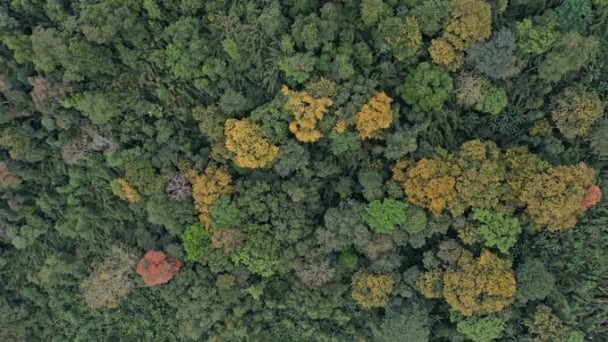
(VAN) Viet Nam's forestry sector is shifting from resource extraction to the development of strategic ecological infrastructure, opening new drivers for the green economy and the carbon market.
![Scientists' strength: [8] Fairness and creative motivation](https://t.ex-cdn.com/nongnghiepmoitruong.vn/608w/files/content/2026/07/16/pgsts-dang-van-dong-cham-soc-hoa-lay-on-103239_191-082039.jpg)
(VAN) Scientists must enjoy proportionate benefits from the intellectual products they create.

(VAN) The sugarcane industry is shifting its focus from expanding cultivation area to improving the quality of raw material zones in order to build sustainable competitive advantage.
![HCMC fisheries complies with the law: [Final] Technology fills the gaps](https://t.ex-cdn.com/nongnghiepmoitruong.vn/608w/files/huytd/2026/07/17/1455-3-133654_171.jpg)
(VAN) Through smart vessel positioning solutions and the digitalization of fishing logbooks, HCMC is proactively tightening control of inactive fishing vessels, closing management loopholes from shore.
![Scientists' strength: [7] Waiting for a broad mechanism](https://t.ex-cdn.com/nongnghiepmoitruong.vn/608w/files/anhntk/2026/06/23/1119-dsc00323-nongnghiep-081103.jpeg)
(VAN) Besides developing new rice varieties, scientists also have to worry about finances, resources, and research aspirations.
![Scientists' strength: [6] Need a medicine strong enough](https://t.ex-cdn.com/nongnghiepmoitruong.vn/608w/files/benlc/2026/07/12/1618-chatgpt-image-12_15_17-10-thg-7-2026-122814_896.jpeg)
(VAN) Retaining scientists requires not only income but also a conducive research environment, a meritocratic mechanism, and trust.
![Scientists' strength: [5] Heavy burden of livelihood](https://t.ex-cdn.com/nongnghiepmoitruong.vn/608w/files/chinq/2026/07/17/2452-dsc_0566-081739_259-065506.jpg)
(VAN) Behind the research projects lies the arduous life of scientists, those who persistently cling to their profession amidst the pressure of making a living.
