July 21, 2026 | 20:52 GMT +7
Hotline: 0913.378.918

July 21, 2026 | 20:52 GMT +7
Hotline: 0913.378.918
From offshore wind power and liquefied natural gas (LNG) to hydrogen production and carbon capture, utilization and storage (CCUS), a wide range of emerging industries is driving demand for marine space.
The rapid expansion of these sectors is fundamentally reshaping how coastal and offshore areas are used. As a result, governments face a new governance challenge: moving beyond managing individual sectors and standalone projects toward integrated marine spatial governance that recognizes marine space as a strategic national resource.
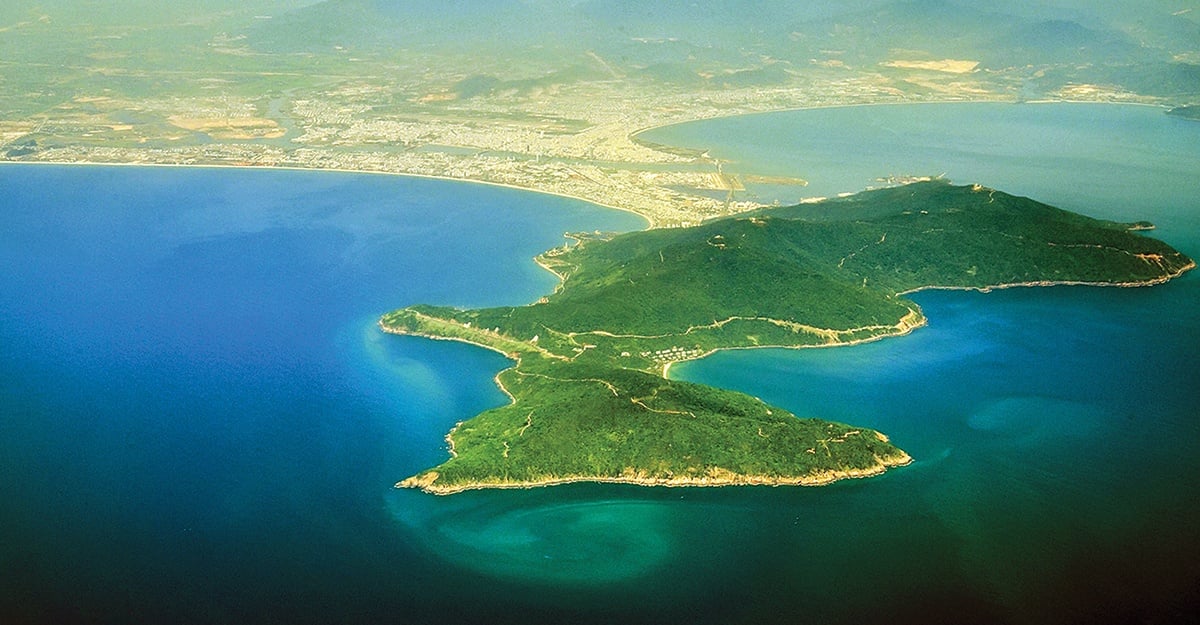
Marine spatial governance is set to become one of the nation's key strategic challenges in the new era of development. Photo: PetroTimes.
In practice, marine space is becoming increasingly multi-functional. A single offshore area may simultaneously accommodate oil and gas exploration and production, subsea gas pipeline networks, offshore wind farms, LNG terminals, subsea power transmission cables, carbon storage sites, and offshore technical service hubs. Without an integrated planning framework, overlapping uses, competing interests, and inefficient resource allocation are inevitable.
This is why many experts argue that amendments to Vietnam's Petroleum Law should be viewed beyond the scope of regulating the conventional oil and gas industry. In today's evolving energy landscape, petroleum is no longer a standalone sector but an integral part of a broader, interconnected energy ecosystem.
According to Dr. Du Van Toan of the Institute of Meteorology, Hydrology, Environment and Marine Sciences under the Ministry of Agriculture and Environment, the global trend is toward developing multi-purpose offshore energy and industrial clusters, where oil and gas, offshore wind, hydrogen, carbon capture, utilization and storage (CCUS), and marine logistics services operate side by side, share infrastructure, and generate greater economic value. The challenge for the future, therefore, is not simply how much oil can be extracted or how many additional megawatts of offshore wind capacity can be installed, but how marine space can be effectively organized and governed to support long-term national development.
Vietnam is well-positioned to participate in this transition. After more than five decades of development, the country's petroleum industry has built a relatively comprehensive infrastructure network, including offshore facilities, gas pipelines, marine engineering bases, offshore fabrication yards, and a highly skilled workforce of engineers and technical specialists. These assets represent not only the foundation of the oil and gas industry but also strategic resources that can support the growth of emerging energy sectors.
According to Associate Professor Nguyen Chu Hoi, former Deputy Director General of the Vietnam Administration of Seas and Islands, the greatest challenge today is no longer the extraction of additional natural resources but the strengthening of governance capacity. The ocean is a multi-use domain where resource extraction, maritime transport, tourism, marine aquaculture, ecosystem conservation, and emerging industries such as offshore wind power all coexist.
For that reason, governance must evolve from a sector-by-sector approach to an integrated, cross-sector, ecosystem-based model. As marine energy industries continue to expand, marine spatial planning must become a central policy tool for coordinating development, resolving competing demands for marine space, and maximizing the efficient use of the nation's marine resources.
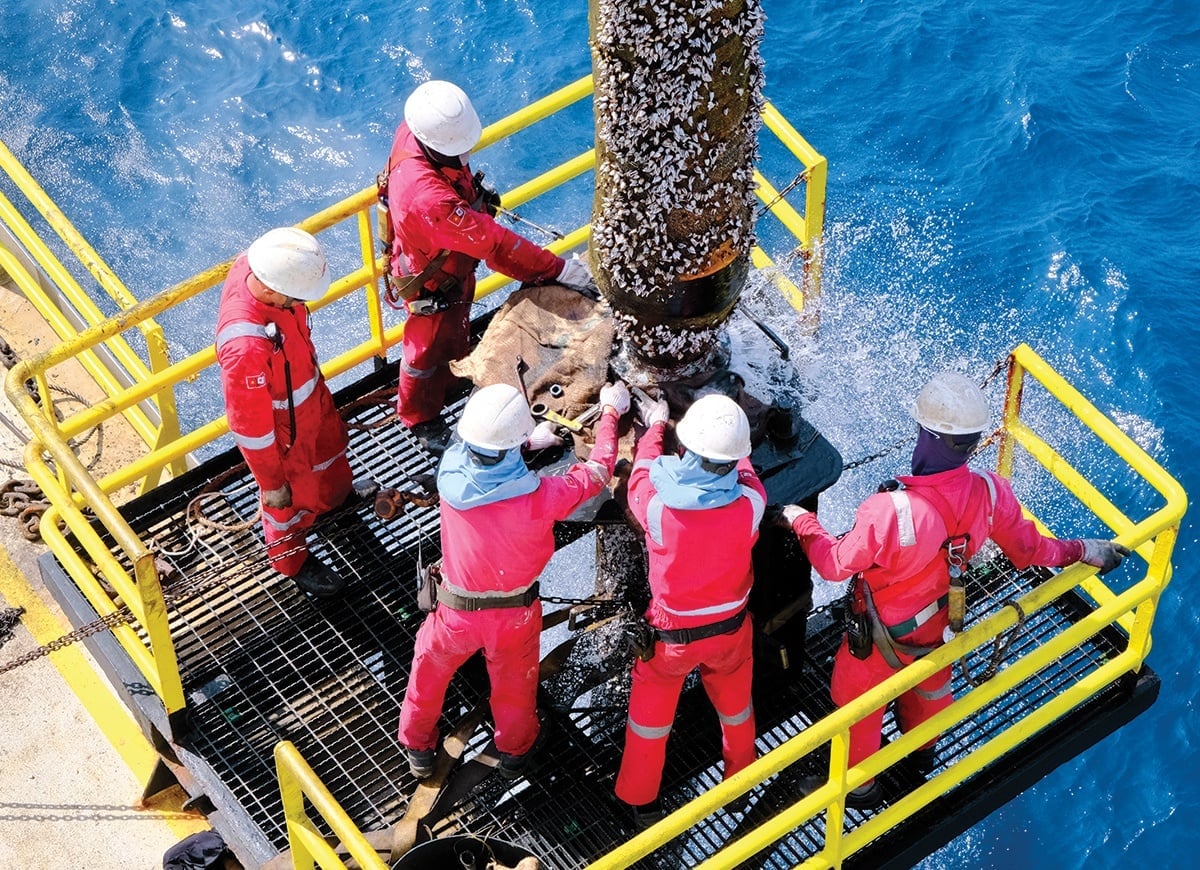
Petrovietnam personnel work at an offshore oil and gas facility, a vital component of Vietnam's marine economy and offshore energy ecosystem. Photo: Tran Van Quynh.
Achieving this vision, however, will ultimately depend on the strength of the institutional framework. Marine space cannot be governed through a fragmented approach in which different sectors, industries, and levels of government operate independently. Instead, it requires an integrated governance model that aligns marine spatial planning with energy planning, infrastructure development, national defense and security priorities, and environmental protection.
As Vietnam pursues ambitious economic growth targets, demand for electricity, natural gas, and emerging energy sources is expected to rise sharply. If energy infrastructure and the regulatory framework fail to keep pace with these needs, they could become bottlenecks to economic development. Conversely, establishing a modern system of marine spatial governance would not only strengthen the country's energy security but also create new engines of growth based on the blue economy and next-generation energy industries.
Against this backdrop, amending the Petroleum Law is about far more than addressing challenges facing the traditional oil and gas sector. It is an opportunity to build the institutional foundation for the next stage of national development, in which marine space becomes a strategic asset underpinning a modern energy industry. In that future, effective marine spatial governance will be one of Vietnam's defining strategic priorities in a new era of development.
Translated by Huong Giang

(VAN) International resource mobilization for energy transition investment projects has yet to keep pace with Vietnam’s efforts to improve its energy policy framework.

(VAN) Viet Nam's forestry sector is shifting from resource extraction to the development of strategic ecological infrastructure, opening new drivers for the green economy and the carbon market.
![Scientists' strength: [8] Fairness and creative motivation](https://t.ex-cdn.com/nongnghiepmoitruong.vn/608w/files/content/2026/07/16/pgsts-dang-van-dong-cham-soc-hoa-lay-on-103239_191-082039.jpg)
(VAN) Scientists must enjoy proportionate benefits from the intellectual products they create.

(VAN) The sugarcane industry is shifting its focus from expanding cultivation area to improving the quality of raw material zones in order to build sustainable competitive advantage.
![HCMC fisheries complies with the law: [Final] Technology fills the gaps](https://t.ex-cdn.com/nongnghiepmoitruong.vn/608w/files/huytd/2026/07/17/1455-3-133654_171.jpg)
(VAN) Through smart vessel positioning solutions and the digitalization of fishing logbooks, HCMC is proactively tightening control of inactive fishing vessels, closing management loopholes from shore.
![Scientists' strength: [7] Waiting for a broad mechanism](https://t.ex-cdn.com/nongnghiepmoitruong.vn/608w/files/anhntk/2026/06/23/1119-dsc00323-nongnghiep-081103.jpeg)
(VAN) Besides developing new rice varieties, scientists also have to worry about finances, resources, and research aspirations.
![Scientists' strength: [6] Need a medicine strong enough](https://t.ex-cdn.com/nongnghiepmoitruong.vn/608w/files/benlc/2026/07/12/1618-chatgpt-image-12_15_17-10-thg-7-2026-122814_896.jpeg)
(VAN) Retaining scientists requires not only income but also a conducive research environment, a meritocratic mechanism, and trust.
