July 21, 2026 | 20:13 GMT +7
Hotline: 0913.378.918

July 21, 2026 | 20:13 GMT +7
Hotline: 0913.378.918
On average, around 80,000 poultry, 5,000 pigs, and 150 buffaloes and cows are slaughtered each day across the city under the supervision of relevant authorities, accounting for approximately 65% of the total output. The remaining animals are slaughtered at small-scale facilities. The habit of buying at traditional markets, along with consumers’ preference for hot meat that is freshly slaughtered, even processed on-site, rather than chilled or processed meat products, continues to pose persistent food safety risks.
According to Mr. Ta Van Tuong, Deputy Director of the Hanoi Department of Agriculture and Environment, before the implementation of Plan No. 283 on the management of slaughtering, transportation, and business of animals and animal products in Hanoi, the city had a total of 701 slaughterhouses. To date, Hanoi has shut down 273 small-scale facilities across 32 communes and wards, representing a 40.9% reduction. The city now has 428 slaughter establishments remaining, including nine industrial slaughterhouses, 26 semi-industrial facilities, and 393 small-scale or temporarily centralized slaughter sites.

A poultry stall at a night market. Photo: Tran Thi Hien.
In recent times, the Department has organized interdisciplinary inspection delegations and coordinated with communes and wards to develop plans for restructuring slaughtering activities toward centralized operations. Small-scale slaughter households that fail to meet the required conditions and sign the commitments must cease operations before June 30, 2026.
Phuc Loc and Tran Phu communes have piloted temporary centralized slaughter zones to receive small-scale slaughter households in their localities. Currently, three temporary centralized pig slaughter areas in these two communes are operating steadily, with veterinary personnel conducting regular slaughter inspections in accordance with regulations.
After a period of implementation, these pilot models have proven effective in reducing the number of small-scale slaughter facilities located within residential areas while enabling stricter control over slaughter procedures, disease prevention, food safety, and product traceability. At the same time, they provide practical models for other localities to replicate in addressing the longstanding challenges associated with small-scale slaughtering operations.
However, several shortcomings and constraints remain in the implementation of Plan No. 283. A number of communes and wards still have a high concentration of small-scale slaughter facilities, including Chuong Duong, Binh Minh, Dai Xuyen, Van Dinh, Phuc Son, and Yen Lang, while progress in eliminating small-scale slaughtering operations has lagged behind the required schedule. In addition, some temporary centralized slaughter facilities continue to face limitations in terms of land area, infrastructure, machinery, technical equipment, and processing capacity. Spontaneous trading points for animal products also remain scattered within residential neighborhoods and public areas.

Shifting from the consumption of hot meat to chilled meat helps ensure food safety. Photo: Tran Thi Hien.
To comprehensively address these issues, Hanoi strives to eliminate all small-scale slaughter sites by June 30, 2026, retaining only 80 temporary centralized slaughter facilities. At the same time, the city plans to establish 25-27 centralized slaughterhouses equipped with modern technologies to ensure food safety, protect the environment, and promote sustainable development. During this transition period, all temporary slaughter sites must remain under strict supervision by the competent authorities, with 100% verification of the origin of input products, assurance of food safety, and effective control of environmental pollution.
The city has also stepped up public awareness campaigns, advising residents that animals may only be slaughtered at licensed slaughter facilities; animals must have clear and traceable origins; animals must undergo veterinary inspection before and after slaughter; slaughtering animals at unauthorized locations is subject to penalties; and the transportation and trading of meat products lacking official slaughter inspection stamps are subject to severe penalties.
At an online meeting with municipal departments, agencies, and local authorities, Mr. Bui Duy Cuong, Vice Chairman of the Hanoi City People's Committee, recently stated that the city would provide incentives to communes and wards that effectively implement the plan, including those making good progress in site clearance. At the same time, the trade in animal meat products of unknown origin must be addressed urgently and thoroughly. The Hanoi Department of Agriculture and Environment was requested to continue guiding, inspecting, and urging localities to implement the plan while reviewing existing policies to develop support mechanisms for temporary and centralized slaughter facilities.
In addition, the Department was tasked with coordinating with the Hanoi Department of Science and Technology to develop databases and software systems to monitor, supervise, and evaluate the operations of temporary and centralized slaughter facilities, thereby modernizing management practices. Other relevant departments and agencies were urged to coordinate closely with the Hanoi Department of Agriculture and Environment to carry out food safety tasks and ensure adequate food supplies for the city.
This article was produced in coordination with the Hanoi Department of Agriculture and Environment.
Translated by Thu Huyen
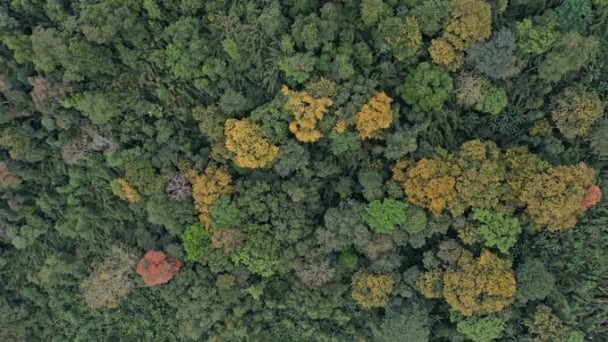
(VAN) Viet Nam's forestry sector is shifting from resource extraction to the development of strategic ecological infrastructure, opening new drivers for the green economy and the carbon market.
![Scientists' strength: [8] Fairness and creative motivation](https://t.ex-cdn.com/nongnghiepmoitruong.vn/608w/files/content/2026/07/16/pgsts-dang-van-dong-cham-soc-hoa-lay-on-103239_191-082039.jpg)
(VAN) Scientists must enjoy proportionate benefits from the intellectual products they create.

(VAN) The sugarcane industry is shifting its focus from expanding cultivation area to improving the quality of raw material zones in order to build sustainable competitive advantage.
![HCMC fisheries complies with the law: [Final] Technology fills the gaps](https://t.ex-cdn.com/nongnghiepmoitruong.vn/608w/files/huytd/2026/07/17/1455-3-133654_171.jpg)
(VAN) Through smart vessel positioning solutions and the digitalization of fishing logbooks, HCMC is proactively tightening control of inactive fishing vessels, closing management loopholes from shore.
![Scientists' strength: [7] Waiting for a broad mechanism](https://t.ex-cdn.com/nongnghiepmoitruong.vn/608w/files/anhntk/2026/06/23/1119-dsc00323-nongnghiep-081103.jpeg)
(VAN) Besides developing new rice varieties, scientists also have to worry about finances, resources, and research aspirations.
![Scientists' strength: [6] Need a medicine strong enough](https://t.ex-cdn.com/nongnghiepmoitruong.vn/608w/files/benlc/2026/07/12/1618-chatgpt-image-12_15_17-10-thg-7-2026-122814_896.jpeg)
(VAN) Retaining scientists requires not only income but also a conducive research environment, a meritocratic mechanism, and trust.
![Scientists' strength: [5] Heavy burden of livelihood](https://t.ex-cdn.com/nongnghiepmoitruong.vn/608w/files/chinq/2026/07/17/2452-dsc_0566-081739_259-065506.jpg)
(VAN) Behind the research projects lies the arduous life of scientists, those who persistently cling to their profession amidst the pressure of making a living.
