July 21, 2026 | 14:16 GMT +7
Hotline: 0913.378.918

July 21, 2026 | 14:16 GMT +7
Hotline: 0913.378.918
Nearly a decade after the adoption of Resolution 36-NQ/TW on the sustainable development strategy for Vietnam’s marine economy and the implementation of the Law on Marine and Island Resources and Environment, new opportunities have emerged alongside growing challenges related to overlapping marine uses, limitations in sea allocation mechanisms, and the transition toward a blue economy model.
In the past, coastal waters in provinces such as Khanh Hoa and Quang Ninh were crowded with spontaneous aquaculture cages. Today, industrial offshore farming clusters using HDPE materials are gradually appearing farther from shore, accompanied by digital technologies, positioning systems, and closed production processes.

New policies aim to foster the development of large corporations and enterprises expanding into the marine economy, promoting multi-layered marine development associated with environmental protection, livelihoods, and conservation. Photo: Hong Tham.
Off the coasts of Binh Thuan and Bac Lieu, waters once associated mainly with fishing are now being planned as multi-billion-dollar offshore wind power zones. Meanwhile, Da Nang is positioning itself as a modern marine economic hub centered on three pillars: seaports and logistics, marine tourism, and high-tech marine industries.
Since the issuance of Resolution 36-NQ/TW in 2018, Vietnam’s seas have become an increasingly important growth space for the national economy.
According to the Ministry of Agriculture and Environment, the marine economy currently contributes around 50% of the country’s GDP, while many coastal localities rank among the nation’s leaders in per capita income.
The structure of the marine economy is also changing rapidly. Previously dominated by oil and gas extraction and capture fisheries, the sector is now expanding into emerging marine industries with substantial growth potential.
The oil and gas industry continues to contribute more than 8% of total state budget revenue, with estimated reserves across the continental shelf reaching around 4.4 billion cubic meters of oil equivalent.
The maritime and logistics sector has grown quickly, with 320 port terminals and a total berth length of 102 kilometers. Cargo throughput at Vietnamese seaports reached 1.17 billion tons in 2025. Vietnam’s merchant fleet now ranks tenth globally in cargo transport capacity, operating 1,434 vessels with a total tonnage of approximately 9.4 million DWT.
Marine aquaculture has also expanded significantly. Cage farming volume has reached 9.7 million cubic meters, while output climbed to 832,000 tons, nearly 39% higher than in 2020. Seafood export turnover in 2025 was estimated at USD 11.3 billion.
Offshore renewable energy is increasingly viewed as a future “blue gold mine.” Vietnam possesses extensive marine areas suitable for offshore wind power, wave energy, and other emerging marine industries.
Marine space is also opening new opportunities for coastal logistics, marine urban development, free trade centers, and offshore economic infrastructure. These sectors are expected to become new growth drivers as development space on land becomes increasingly limited.
Vietnam’s more than one million square kilometers of sea area offer enormous development potential for the country’s next growth phase. Yet many strategic sectors, including offshore wind power, industrial marine aquaculture, logistics, and maritime services, still face shortages of development space.
For many years, Vietnam’s marine development approach was based mainly on sector-specific resource exploitation such as oil and gas, fisheries, ports, and tourism. This led to overlapping marine uses, conflicts of interest among industries, and degradation of coastal ecosystems.
In practice, competition for marine space among shipping, oil and gas, renewable energy, conservation, tourism, aquaculture, and national defense activities has become increasingly intense.

Marine aquaculture has grown strongly, with cage farming volume reaching 9.7 million cubic meters and output totaling 832,000 tons, nearly 39% higher than in 2020. Seafood export turnover in 2025 was estimated at around USD 11.3 billion. Photo: Hong Tham.
Vietnam’s marine economy still relies largely on traditional resource extraction. The transition toward a blue economy remains slow, while mechanisms to attract investment into new sectors such as offshore wind power, industrial marine aquaculture, and circular marine industries remain insufficient.
According to a report reviewing the implementation of the Law on Marine and Island Resources and Environment, many of the current bottlenecks stem from institutional gaps. These include the lack of mechanisms to promote the blue economy, insufficient incentives for emerging marine industries, and the absence of effective inter-sectoral and inter-regional coordination tools for allocating marine resources.
Against this backdrop, the planned amendment of the Law on Marine and Island Resources and Environment in 2025 is considered an important step toward shifting from “resource management” to “marine spatial governance.” This represents not only a legislative adjustment but also a fundamental change in development thinking.
Under the proposed amendments, the allocation, leasing, and use of marine areas will be closely linked with marine spatial planning. The revised law is also expected to establish mechanisms for resolving conflicts and overlaps in marine use while promoting multi-purpose marine development.
Mr. Nguyen Thanh Tung, Deputy Director General of the Vietnam Agency of Seas and Islands, said the draft amendments are being developed at a time when the world is undergoing major transformations and Vietnam is entering a new development era.
According to Mr. Tung, the drafting agency is reviewing and institutionalizing new orientations and policies set by the Party for the sustainable development of Vietnam’s marine economy in the coming period.
Translated by Huong Giang
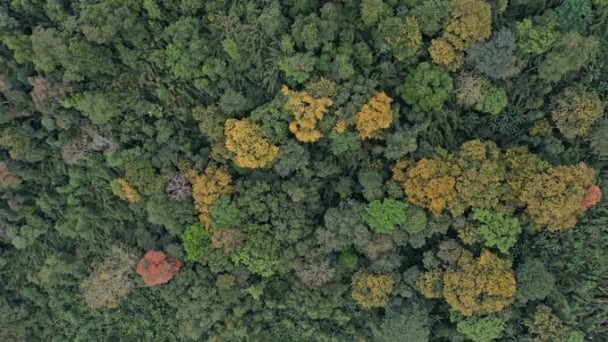
(VAN) Viet Nam's forestry sector is shifting from resource extraction to the development of strategic ecological infrastructure, opening new drivers for the green economy and the carbon market.
![Scientists' strength: [8] Fairness and creative motivation](https://t.ex-cdn.com/nongnghiepmoitruong.vn/608w/files/content/2026/07/16/pgsts-dang-van-dong-cham-soc-hoa-lay-on-103239_191-082039.jpg)
(VAN) Scientists must enjoy proportionate benefits from the intellectual products they create.

(VAN) The sugarcane industry is shifting its focus from expanding cultivation area to improving the quality of raw material zones in order to build sustainable competitive advantage.
![HCMC fisheries complies with the law: [Final] Technology fills the gaps](https://t.ex-cdn.com/nongnghiepmoitruong.vn/608w/files/huytd/2026/07/17/1455-3-133654_171.jpg)
(VAN) Through smart vessel positioning solutions and the digitalization of fishing logbooks, HCMC is proactively tightening control of inactive fishing vessels, closing management loopholes from shore.
![Scientists' strength: [7] Waiting for a broad mechanism](https://t.ex-cdn.com/nongnghiepmoitruong.vn/608w/files/anhntk/2026/06/23/1119-dsc00323-nongnghiep-081103.jpeg)
(VAN) Besides developing new rice varieties, scientists also have to worry about finances, resources, and research aspirations.
![Scientists' strength: [6] Need a medicine strong enough](https://t.ex-cdn.com/nongnghiepmoitruong.vn/608w/files/benlc/2026/07/12/1618-chatgpt-image-12_15_17-10-thg-7-2026-122814_896.jpeg)
(VAN) Retaining scientists requires not only income but also a conducive research environment, a meritocratic mechanism, and trust.
![Scientists' strength: [5] Heavy burden of livelihood](https://t.ex-cdn.com/nongnghiepmoitruong.vn/608w/files/chinq/2026/07/17/2452-dsc_0566-081739_259-065506.jpg)
(VAN) Behind the research projects lies the arduous life of scientists, those who persistently cling to their profession amidst the pressure of making a living.
