July 21, 2026 | 21:31 GMT +7
Hotline: 0913.378.918

July 21, 2026 | 21:31 GMT +7
Hotline: 0913.378.918
On June 24, the Government, in coordination with the Viet Nam Farmers' Union and the Viet Nam Women's Union, held a signing ceremony for the coordination program on communication, advocacy, and supervision of safe, high-quality agricultural, forestry, and fishery production and trade. The program aims to strengthen protection, care, and public health improvement while promoting sustainable development during the 2026-2030 period.
The event is significant, reflecting the Party's and the State's attention to ensuring food quality and safety. It also affirms the pivotal role of socio-political organizations in mobilizing and engaging the public in sustainable agricultural development, protecting community health, and improving the quality of life for the people.

The signing ceremony for the coordination program on communication, advocacy, and supervision of safe, high-quality agricultural, forestry, and fishery production and trade is aimed at strengthening the protection, care, and improvement of public health and promoting sustainable development during the 2026-2030 period. Photo: VGP/Thu Giang.
Speaking at the ceremony, Deputy Minister of Agriculture and Environment Vo Van Hung said that under the 2021-2025 coordination program, ministries, sectors, local authorities, and the unions had proactively and creatively implemented various activities, achieving numerous positive results.
Millions of farmers, women members, and residents have gained access to knowledge on safe food production and trading. The sense of responsibility among producers, traders, and consumers has gradually improved. Many models of safe, organic, circular, and low-emission agriculture, along with value chains linking production and consumption of safe agricultural products and food, have been established and replicated.

Deputy Prime Minister Pham Thi Thanh Tra and delegates witness the signing ceremony. Photo: VGP/Thu Giang.
According to Deputy Minister Vo Van Hung, the achievements attained have contributed to improving the quality of agricultural products, protecting public health, and fostering a culture of safe food production and consumption. They have also helped accelerate the transition from an agricultural production mindset to an agricultural economic mindset.
However, ensuring food quality and safety continues to face numerous difficulties and challenges. Production in many areas remains small-scale and fragmented, while quality control and traceability systems in certain localities are still limited.

Deputy Minister of Agriculture and Environment Vo Van Hung reports on the outcomes of the 2021-2025 coordination program. Photo: VGP/Thu Giang.
Meanwhile, market requirements are becoming increasingly stringent regarding product quality, information transparency, green production, emissions reduction, and environmental responsibility. Particularly, in the context of deep international economic integration, increasingly complex climate change, and the strong growth of the digital economy and e-commerce, food quality and safety management must continue to be innovated on the basis of science and technology, innovation, and digital transformation.
Speaking at the signing ceremony, Secretary of the Party Central Committee and Deputy Prime Minister Pham Thi Thanh Tra emphasized that for many years, food safety has received close attention and direction from the Party Central Committee, the National Assembly, the Government, the Prime Minister, as well as the active participation of the entire political system and the public.

Deputy Prime Minister Pham Thi Thanh Tra delivers remarks at the signing ceremony. Photo: VGP/Thu Giang.
On behalf of the Government, the Deputy Prime Minister expressed deep appreciation to the Viet Nam Fatherland Front Central Committee, the Viet Nam Farmers' Union, and the Viet Nam Women's Union for their coordination in implementing numerous programs focused on communication, advocacy, and the supervision of food safety practices for public health.
According to the Deputy Prime Minister, the Government, together with the Viet Nam Farmers' Union and the Viet Nam Women's Union, successfully implemented two coordination programs during the 2017-2020 and 2021-2025 periods. Through these programs, many new approaches and effective models for food production and business developed by farmers and women members have been replicated, generating thousands of high-quality and safe OCOP products.
The Deputy Prime Minister stressed that improving quality and ensuring food safety are both urgent and long-term strategic solutions to enhance public healthcare, protection, and health promotion. Human life and people's health must be regarded as the foremost priority, serving as the foundation and benchmark for implementing socio-economic development objectives, sustainable growth, and green growth in line with the spirit of the Resolution of the 14th National Party Congress.
"Ensuring food safety means protecting public health and communities while also safeguarding the country's vital agricultural economy," the Deputy Prime Minister emphasized. According to her, this is an area that requires the efforts of the entire political system, including the important contributions of the Viet Nam Fatherland Front, particularly the Viet Nam Farmers' Union and the Viet Nam Women's Union.
To ensure the coordination program delivers practical results, the Deputy Prime Minister called on state agencies, authorities at all levels, and relevant sectors to continue proactively and actively collaborating closely with the Viet Nam Farmers' Union and the Viet Nam Women's Union at all levels throughout the implementation process, ensuring innovation, effectiveness, and practical relevance.
For the two mass organizations, the Deputy Prime Minister called for the continued promotion of their key role in communication, advocacy, guidance, and support for households, cooperatives, cooperative groups, and small-scale production establishments.

MAE to ensure food safety means protecting public health and agricultural economy.
The unions at all levels should continue to innovate both the content and methods of their activities, shifting from traditional communication and advocacy approaches to one centered on guiding, supporting, and accompanying farmers. They should intensify communication by developing safe agricultural and food production, processing, and business models; expand results-based and output support; ensure compliance with the criteria for "green, clean, and traceable" production; and promote branding and the establishment of “passports” for agricultural products.
The Deputy Prime Minister also urged the Ministry of Culture, Sports and Tourism to coordinate efforts to strengthen awareness-raising campaigns among women regarding safe food consumption and daily family meals, taking the family and each family member as the foundation for the transition toward smart and safe food consumption.
At the same time, ministries and sectors should continue improving institutions and policies; support citizens, particularly small-scale producers, in applying science and technology, digital transformation, and production-consumption linkages; and enhance the effectiveness and efficiency of state management of food safety to meet the development requirements in the new period.
Translated by Thu Huyen

(VAN) International resource mobilization for energy transition investment projects has yet to keep pace with Vietnam’s efforts to improve its energy policy framework.
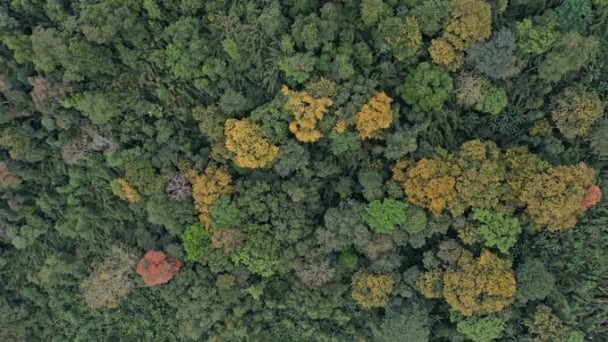
(VAN) Viet Nam's forestry sector is shifting from resource extraction to the development of strategic ecological infrastructure, opening new drivers for the green economy and the carbon market.
![Scientists' strength: [8] Fairness and creative motivation](https://t.ex-cdn.com/nongnghiepmoitruong.vn/608w/files/content/2026/07/16/pgsts-dang-van-dong-cham-soc-hoa-lay-on-103239_191-082039.jpg)
(VAN) Scientists must enjoy proportionate benefits from the intellectual products they create.

(VAN) The sugarcane industry is shifting its focus from expanding cultivation area to improving the quality of raw material zones in order to build sustainable competitive advantage.
![HCMC fisheries complies with the law: [Final] Technology fills the gaps](https://t.ex-cdn.com/nongnghiepmoitruong.vn/608w/files/huytd/2026/07/17/1455-3-133654_171.jpg)
(VAN) Through smart vessel positioning solutions and the digitalization of fishing logbooks, HCMC is proactively tightening control of inactive fishing vessels, closing management loopholes from shore.
![Scientists' strength: [7] Waiting for a broad mechanism](https://t.ex-cdn.com/nongnghiepmoitruong.vn/608w/files/anhntk/2026/06/23/1119-dsc00323-nongnghiep-081103.jpeg)
(VAN) Besides developing new rice varieties, scientists also have to worry about finances, resources, and research aspirations.
![Scientists' strength: [6] Need a medicine strong enough](https://t.ex-cdn.com/nongnghiepmoitruong.vn/608w/files/benlc/2026/07/12/1618-chatgpt-image-12_15_17-10-thg-7-2026-122814_896.jpeg)
(VAN) Retaining scientists requires not only income but also a conducive research environment, a meritocratic mechanism, and trust.
