July 21, 2026 | 21:18 GMT +7
Hotline: 0913.378.918

July 21, 2026 | 21:18 GMT +7
Hotline: 0913.378.918
Some ambitions originate on land, but many aspirations are born from the sea. Among them is the desire to develop industrial marine farming-conquering the ocean through science, technology, and modern development mindsets to transform Viet Nam into a nation that is strong and wealthy from the sea.
Beyond generating substantial economic value, the future industrial marine aquaculture sector must balance growth and conservation, harmonizing economic development with ecological preservation.
According to Assoc. Prof. Dr. Nguyen Huu Dung, chairman of the Viet Nam Marine Aquaculture Association, establishing marine farming industrial clusters or modern marine farming villages is a breakthrough production structure and a revolutionary solution to develop marine aquaculture into a large-scale commodity economy.
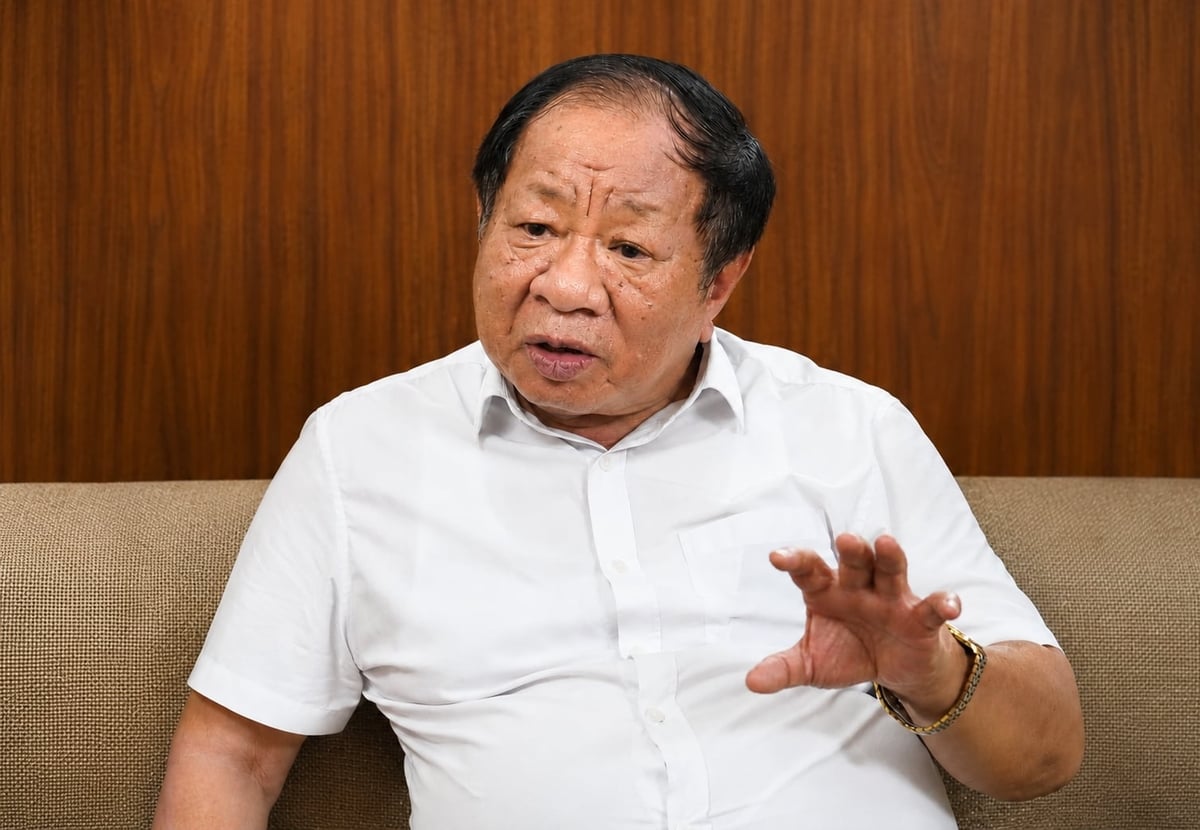
Assoc. Prof. Dr. Nguyen Huu Dung, chairman of the Vietnam Marine Aquaculture Association. Photo: Hong Tham.
Marine farming industrial clusters are concentrated aquaculture zones with clearly defined geographical boundaries, featuring synchronized investments in modern infrastructure alongside production support services. Large corporations and enterprises invest in this infrastructure professionally to allow businesses, cooperatives, and farming households to sub-lease sections for their marine cultivation and business operations.
These clusters comprise two tightly linked and inseparable components: offshore aquaculture production infrastructure and onshore integrated service infrastructure, which form the core foundation for efficient cluster operations.
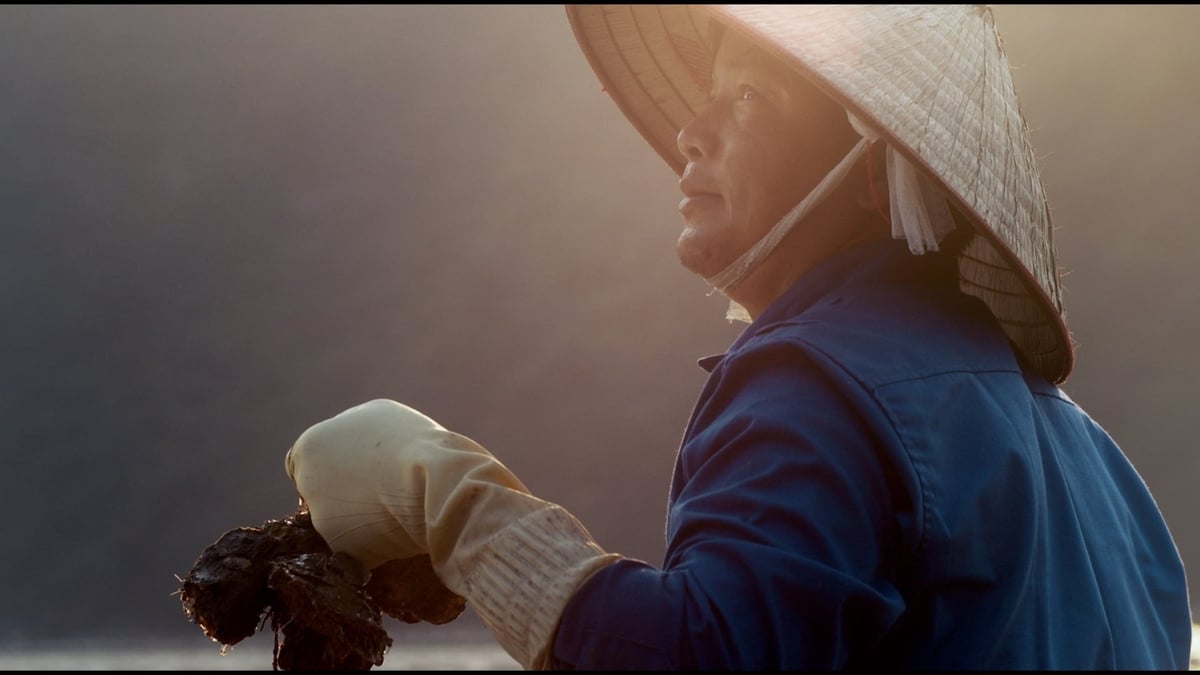
The journey to conquer the sea extends beyond expanding production space to creating a future that harmonizes economy, environment, and people. Photo: Duy Hoc.
Offshore production infrastructure includes technical structures placed at sea within the clusters, featuring floating works such as floating cage frames, operational platforms, service decks, and docking wharves. It also covers community structures including management offices, dining halls, rest areas, toilets, and floating walkways, alongside buoys, signage, and submerged infrastructure like mooring cables and interlocking rope systems. Submerged or semi-submerged cage systems, surveillance cameras, and technical networks for electricity, fresh water, public lighting, communications, waste collection, and treatment ensure security and safety throughout operations.
Onshore integrated service infrastructure includes technical works located on land or major islands to support production, processing, and logistics. This system encompasses seafood cleaning and preliminary processing facilities, aquaculture feed mills, cold storage, freezing plants, and specialized marine farming equipment.
Additionally, support services such as wholesale markets, seafood auction floors, banking, finance, research and technology transfer centers, human resource training facilities, residential areas, and public works for laborers create a synchronized foundation for the industrial marine farming sector.
The developers of these marine farming industrial clusters-whether enterprises, cooperatives, industrial cluster management boards, or cluster development centers-build, manage, and exploit the technical infrastructure under two main developer models.
Assoc. Prof. Dr. Nguyen Huu Dung emphasized: “Developing marine farming industrial clusters can help untangle many existing bottlenecks in current marine aquaculture practices.”
First, because they are thoroughly surveyed and licensed within designated planning zones, these models will help end spontaneous, unregulated marine farming-a factor currently causing imbalances and impacting economics, environments, and ecosystems.
Leasing modern, pre-built infrastructure within industrial clusters also reduces initial capital pressures for enterprises, cooperatives, collaborative groups, and fishing households, easing the financial burden of investing in cages and production equipment.
Spontaneous offshore residency will also step-by-step be brought under better control. Laborers in marine farming industrial clusters will work professionally, mirroring standards found in land-based industrial parks.
The cluster model drives the adoption of good manufacturing practices across the entire zone, helping to generate a large, concentrated volume of seafood with uniform quality standards, thereby enhancing the capacity to meet both domestic and international market requirements.
Marine environmental overloading will be gradually mitigated by maintaining reasonable stocking densities, developing multi-trophic integrated aquaculture models to minimize organic waste, and implementing automated marine environmental monitoring systems.
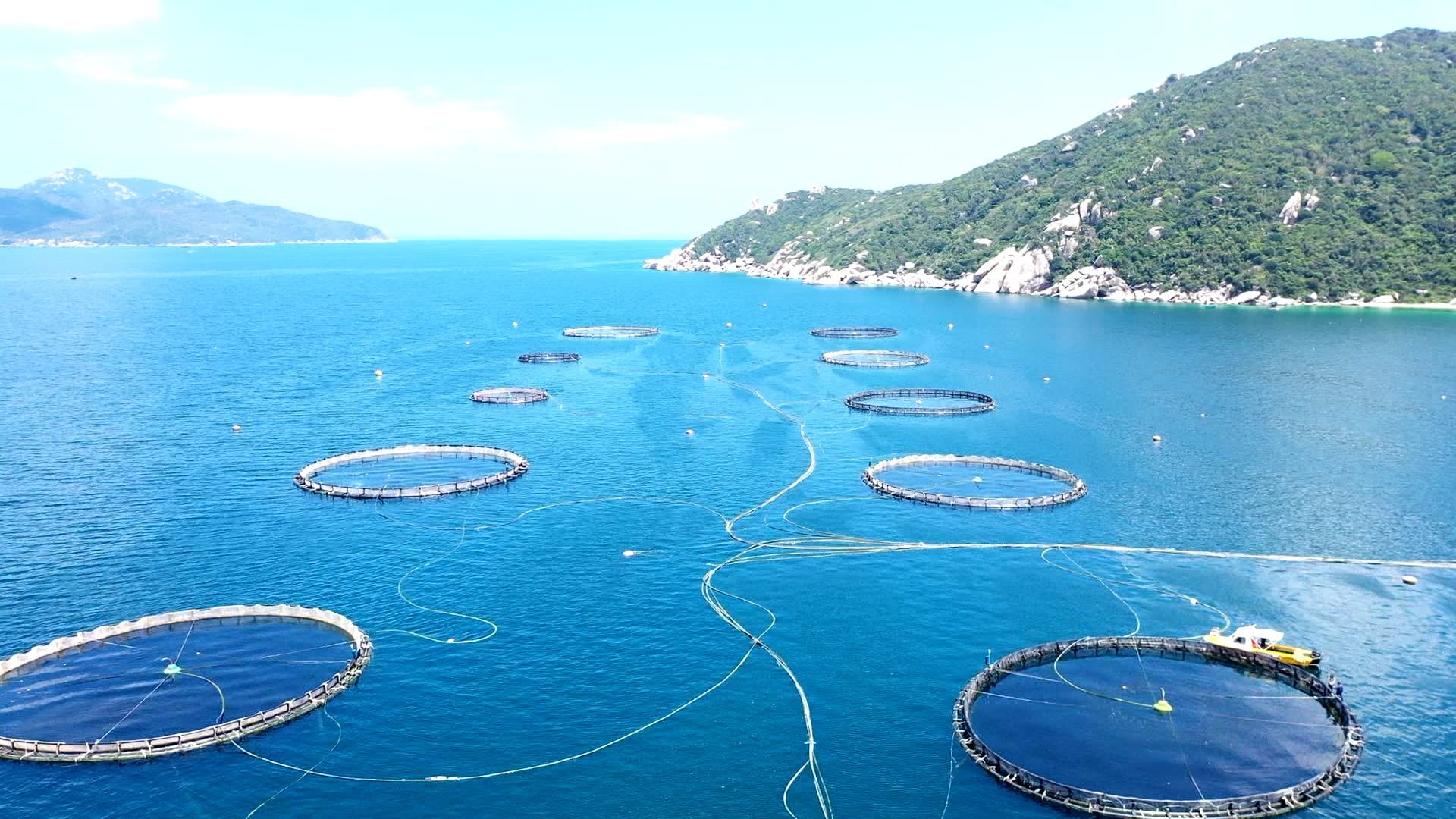
The marine farming industrial cluster or modern marine farming village model represents an inevitable development trend. Photo: Hong Tham.
Furthermore, these clusters will be assessed and certified by competent authorities, establishing a basis for marine farming operations to be recognized as legal assets eligible for insurance, mortgages, pledges, partnerships, capital contributions, or inheritance. This grants farmers better access to bank loans instead of bearing all risks alone under current manual farming methods.
Additionally, marine farming industrial clusters enable the application of digital technology, automation, and other advanced techniques, especially when integrated with other marine economic sectors such as tourism, wind energy, oil and gas, marine mining, and shipping.
Dr. Dung affirmed that developing Viet Nam's industrial marine farming is a breakthrough revolution for the marine economy. It is not an isolated story for the fisheries sector but a collective mission for the entire marine economic ecosystem.
Modern aquaculture industrial clusters or villages are not only the aspiration of the aquaculture industry, but also a vision for a Vietnam that is strong in maritime resources, prosperous from the sea, and confidently reaching out to the ocean with the will, belief in conquering the seas, and a new-era development mindset.
Translated by Ha Chi

(VAN) International resource mobilization for energy transition investment projects has yet to keep pace with Vietnam’s efforts to improve its energy policy framework.
(VAN) Viet Nam's forestry sector is shifting from resource extraction to the development of strategic ecological infrastructure, opening new drivers for the green economy and the carbon market.
![Scientists' strength: [8] Fairness and creative motivation](https://t.ex-cdn.com/nongnghiepmoitruong.vn/608w/files/content/2026/07/16/pgsts-dang-van-dong-cham-soc-hoa-lay-on-103239_191-082039.jpg)
(VAN) Scientists must enjoy proportionate benefits from the intellectual products they create.

(VAN) The sugarcane industry is shifting its focus from expanding cultivation area to improving the quality of raw material zones in order to build sustainable competitive advantage.
![HCMC fisheries complies with the law: [Final] Technology fills the gaps](https://t.ex-cdn.com/nongnghiepmoitruong.vn/608w/files/huytd/2026/07/17/1455-3-133654_171.jpg)
(VAN) Through smart vessel positioning solutions and the digitalization of fishing logbooks, HCMC is proactively tightening control of inactive fishing vessels, closing management loopholes from shore.
![Scientists' strength: [7] Waiting for a broad mechanism](https://t.ex-cdn.com/nongnghiepmoitruong.vn/608w/files/anhntk/2026/06/23/1119-dsc00323-nongnghiep-081103.jpeg)
(VAN) Besides developing new rice varieties, scientists also have to worry about finances, resources, and research aspirations.
![Scientists' strength: [6] Need a medicine strong enough](https://t.ex-cdn.com/nongnghiepmoitruong.vn/608w/files/benlc/2026/07/12/1618-chatgpt-image-12_15_17-10-thg-7-2026-122814_896.jpeg)
(VAN) Retaining scientists requires not only income but also a conducive research environment, a meritocratic mechanism, and trust.
