July 21, 2026 | 21:53 GMT +7
Hotline: 0913.378.918

July 21, 2026 | 21:53 GMT +7
Hotline: 0913.378.918
The Ho Chi Minh City People’s Committee has issued a directive implementing the conclusions of Deputy Prime Minister Tran Hong Ha at the 33rd meeting of the National Steering Committee on combating illegal, unreported and unregulated fishing (IUU) fishing, requiring the resolution of outstanding issues in the management of the city’s fishing fleet.

Ho Chi Minh City will review and fully resolve all violation cases before April 30, 2026. Photo: Le Binh.
Accordingly, Vice Chairman of the Ho Chi Minh City People’s Committee Bui Minh Thanh assigned the Department of Agriculture and Environment to take the lead, coordinating with relevant agencies such as the Department of Justice, the City Inspectorate, the City Police, and the City Border Guard Command to urgently develop a plan to implement the recommendations of the European Commission (EC).
The plan must clearly define short-term, medium-term and long-term tasks; specify responsibilities and timelines for each agency; and strengthen administrative discipline to ensure consistent law enforcement from the central level to local authorities. An inter-agency task force will also be established in the city, operating under a specific regulation framework to enhance coordination and oversight of IUU prevention and control tasks.
The city requires the issuance of management regulations for fishing vessels that do not meet operational conditions, along with a comprehensive review and final resolution of violations to be completed before April 30, 2026.
Fleet management will also continue to be tightened, particularly for vessels measuring between 12 meters and 15 meters in length, and those operating in nearshore areas and river mouths. Authorities are required to strictly control and thoroughly handle vessels that fail to meet operational requirements, with enforcement carried out regularly and continuously.
Regarding infrastructure, relevant units are tasked with reviewing and upgrading the existing fishing port system, while proposing additional ports that meet regulatory requirements, including privately operated ports, to support monitoring of fishing vessels entering and leaving ports. Vessel allocation among ports must also be organized appropriately to facilitate inspection and supervision.
Another key task is to complete and synchronize fisheries data. The city requires full and timely updates of fishing vessel data, violation handling records and traceability information, ensuring consistency with the system managed by the Ministry of Agriculture and Environment. Failure to update or provide incomplete or inaccurate data will be considered a violation and will be handled in accordance with the regulations.
Alongside management solutions, Ho Chi Minh City also emphasized renewing legal communication and outreach on IUU prevention, combined with inspection, monitoring and strict penalties for violations, particularly involving vessel owners, captains and crew members.
As of March 25, 2026, 52,872 fishing vessels with a length of 6 meters or more nationwide are participating in the Electronic Catch Documentation and Traceability (eCDT) system. Localities have directed relevant agencies to review and guide fishermen in installing and implementing port entry and exit procedures on the eCDT system as regulated. As a result, in the first three months of 2026, the country inspected and controlled 75,310 vessel departures and 66,747 vessel arrivals according to regulations, and monitored 140,107 tons of harvested seafood passing through ports via the eCDT system.
Translated by Samuel Pham

(VAN) International resource mobilization for energy transition investment projects has yet to keep pace with Vietnam’s efforts to improve its energy policy framework.
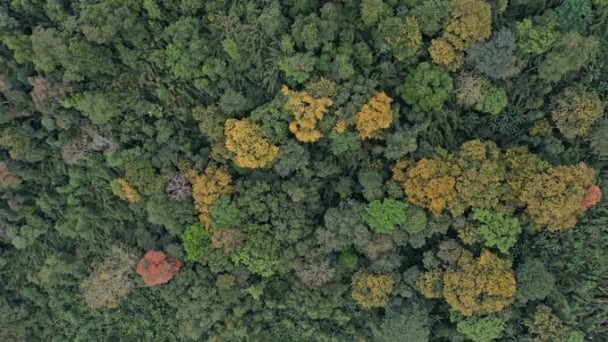
(VAN) Viet Nam's forestry sector is shifting from resource extraction to the development of strategic ecological infrastructure, opening new drivers for the green economy and the carbon market.
![Scientists' strength: [8] Fairness and creative motivation](https://t.ex-cdn.com/nongnghiepmoitruong.vn/608w/files/content/2026/07/16/pgsts-dang-van-dong-cham-soc-hoa-lay-on-103239_191-082039.jpg)
(VAN) Scientists must enjoy proportionate benefits from the intellectual products they create.

(VAN) The sugarcane industry is shifting its focus from expanding cultivation area to improving the quality of raw material zones in order to build sustainable competitive advantage.
![HCMC fisheries complies with the law: [Final] Technology fills the gaps](https://t.ex-cdn.com/nongnghiepmoitruong.vn/608w/files/huytd/2026/07/17/1455-3-133654_171.jpg)
(VAN) Through smart vessel positioning solutions and the digitalization of fishing logbooks, HCMC is proactively tightening control of inactive fishing vessels, closing management loopholes from shore.
![Scientists' strength: [7] Waiting for a broad mechanism](https://t.ex-cdn.com/nongnghiepmoitruong.vn/608w/files/anhntk/2026/06/23/1119-dsc00323-nongnghiep-081103.jpeg)
(VAN) Besides developing new rice varieties, scientists also have to worry about finances, resources, and research aspirations.
![Scientists' strength: [6] Need a medicine strong enough](https://t.ex-cdn.com/nongnghiepmoitruong.vn/608w/files/benlc/2026/07/12/1618-chatgpt-image-12_15_17-10-thg-7-2026-122814_896.jpeg)
(VAN) Retaining scientists requires not only income but also a conducive research environment, a meritocratic mechanism, and trust.
