November 18, 2025 | 23:03 GMT +7
Hotline: 0913.378.918

November 18, 2025 | 23:03 GMT +7
Hotline: 0913.378.918
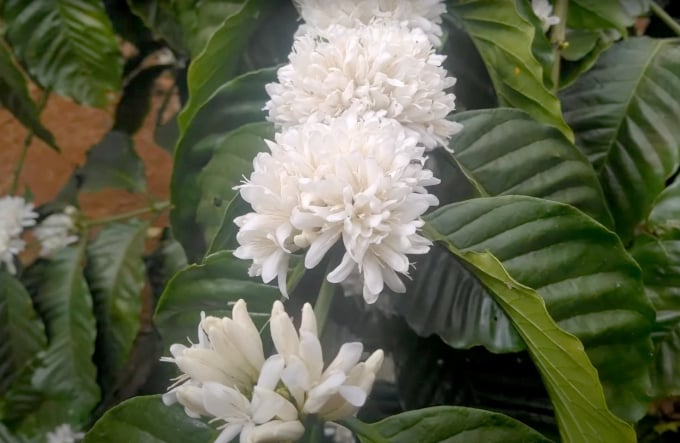
Coffee flower season in the Central Highlands. Photo: Thanh Son.
Tea is traditional drink of Chinese with a very long history of trading between this country with many other countries around the world. But now, coffee is emerging as a potential drink that makes China becoming an important market.
Vietnamese beverage industry is paying more and more attention to this huge market, in which coffee sector sees a bright future if it finds a foothold in the Chinese market.
Over the past time, “the development of diverse agricultural products as a source of raw materials for beverage processing is opening advantages for Vietnamese beverage businesses to diversify product categories to meet the constantly changing needs of consumers around the world, including Chinese consumers,” Mr. Le Hoang Tai, Deputy Director of the Department of Trade Promotion (under the Ministry of Industry and Trade) affirms.
According to the Department of Trade Promotion, in recent years, Vietnam's beverage export has made many new strides and built a reputation in the world market. China, with the largest population in the world, is a very potential market for many Vietnamese products, including beverages. Vietnamese tea and coffee are holding good positions in the Chinese market.
Currently, tea is still China's traditional drink and widely purchased in the country, but demand for coffee is on the rise, especially in developed areas such as Beijing, Shanghai, Guangzhou, etc.
In China, instant coffee is taking a large share thanks to its convenience in use. Besides, China's social development, changing lifestyle and acceptance of new cultural trends by Chinese consumers also contribute to increasing demand for instant coffee in the country. These factors, in addition of close geographical location, can give Vietnam’s beverage industry a very advantageous position in comparison with other producers.
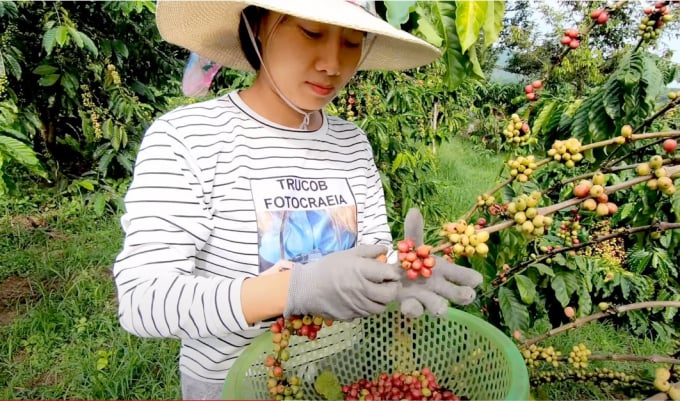
Harvesting coffee in Lam Dong. Photo: Nguyen Thuy.
According to market research firm Mordor Intelligence, the Chinese coffee market is forecasted to grow at an average of 10.42% per year between 2022 and 2027.
Meanwhile, according to the China Coffee Association Beijing (CCAB), coffee consumption in the country is growing at an average annual rate of 15%. Although the country has suffered significant consequences from the Covid-19 pandemic, the consuming demand for coffee has not reduced.
Currently, there are nearly 80 countries and territories supplying coffee and coffee products to China. Among those, Guatemala, Ethiopia, Vietnam, Malaysia, Brazil, etc., are in group of main suppliers.
According to the Department of Trade Promotion, China is a large but highly competitive market. Therefore, in order to export Vietnamese beverages to this market, Vietnamese enterprises are actively promoting trade, innovating product designs and packaging, and improving quality to meet the increasing demand of Chinese consumers. In addition, beverage exporters also focus on promoting their products and brands on communication channels.
There have Vietnamese coffee enterprises penetrate deeply into the Chinese market and have a strong foothold in this market.
Mr. Ly Thanh Hai, Business Development Manager in China of Trung Nguyen Legend Group, says that Trung Nguyen coffee has entered the Chinese market for more than 10 years. Up to now, Trung Nguyen Legend has built a distribution network in China including 15 importers, 300 distributors, 30,000 shops and tens of thousands of online stores.
With more than 15 million Chinese people regularly consuming G7 coffee, Trung Nguyen Legend's G7 brand is the largest instant coffee brand in China. Every year, about 800 million cups of G7 coffee are sold in China. For every 18 cups of coffee of any brand sold in the Chinese market, there will be 1 cup from Trung Nguyen Legend's brands.
According to the General Department of Vietnam Customs, in April 2022, Vietnam exported 157.45 thousand tons of coffee, worthed US$ 362.31 million, up 19.2% in volume and 47% increase in value compared to April 2021. In the first 4 months of 2022, Vietnam's coffee exports reached 739 thousand tons, worthed US$ 1.66 billion, up 26.2% in volume and 57.1% in value over the same period in 2021.
In the first 4 months of 2022 compared to the same period in 2021, coffee exports to most markets increased, except for the Philippines. Notably, coffee exports to the markets of Belgium, the UK, and the Netherlands grew by three figures.
Do Xuan Hien, Chief of Office of the Vietnam Coffee and Cocoa Association, says that from 2019 until now, China has always been in the Top 10 largest import markets of Vietnamese coffee. In 2021, Vietnam's coffee exports to China reached over 53 thousand tons, worthed US$ 128 million. In the first 4 months of 2022, China imported 14.4 thousand tons of Vietnamese coffee, worthed US$ 42 million.
Translated by Duc Thuan

(VAN) 'If we can address disease challenges and properly plan farming zones, Vietnamese shrimp can absolutely rise to lead the world,' Mr. Le Van Quang affirmed.

(VAN) The year 2025 continues to mark a significant footprint for Chanh Thu Fruit Import-Export Group Joint Stock Company (Chanh Thu Group) in the international market.

(VAN) Participating in the exhibition celebrating the 80-year tradition of the Agriculture and Environment sector, Dong Giao Food Export Joint Stock Company (DOVECO) showcased a range of products utilizing new technologies.

(VAN) Vietnam’s pepper export turnover in the first 10 months of 2025 reached $1.39 billion, already surpassing the full-year figure of 2024.

(VAN) AGRITECHNICA 2025 has impressively reaffirmed its position as the world’s leading trade fair for agricultural machinery.
/2025/11/17/4947-2-104601_225.jpg)
(VAN) The international market is growing rapidly, creating major opportunities for Viet Nam's tilapia industry.
/2025/11/17/1234-2-010716_981.jpg)
(VAN) Deputy General Director of Viet Nhat Group Nguyen Dang Ngoc shared experiences on building linkage chains and developing sustainable tilapia farming that meets international standards.
