June 5, 2026 | 07:25 GMT +7
Hotline: 0913.378.918

June 5, 2026 | 07:25 GMT +7
Hotline: 0913.378.918
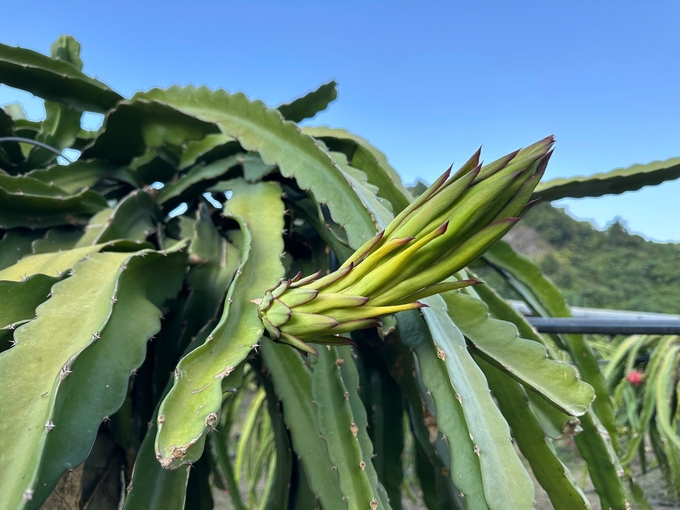
Son La has very favorable conditions for the development of dragon fruit cultivation. Photo: Duc Binh.
After an organic dragon fruit workshop in 2017, foreign traders were astonished by the intense sweetness of the dragon fruit from Ngoc Hoang Cooperative (Na Bo commune, Mai Son, Son La).
Mrs. Nguyen Thi Dung, the Deputy Director of Ngoc Hoang Cooperative, shared with pride, “That year, we displayed six samples from various provinces. While our dragon fruit may not have been the most visually appealing, its exceptional sweetness surprised everyone. The foreign guests devoured every piece and immediately expressed interest in purchasing them because they were so impressed".
One guest from Singapore was particularly eager to find red-fleshed dragon fruit in Son La and was even willing to put down a significant deposit to secure a supply. However, at that time, very few people believed in the potential benefits that dragon fruit cultivation could bring.
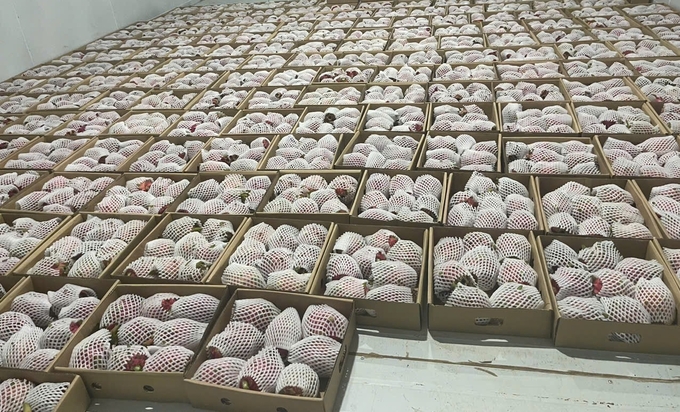
Post-harvest preservation is a crucial step for the export of dragon fruit. Photo: Duc Binh.
Son La is often referred to as a "giant air conditioner" of the Northwest region, characterized by a variety of microclimates where daytime and nighttime temperatures differ by 4 to 5 degrees Celsius. The hilly terrain creates an ideal environment for the cultivation of dragon fruit. Taking advantage of these favorable conditions, Ngoc Hoang Cooperative has successfully produced high-quality dragon fruit that meets the stringent requirements for export to the European Union market.
To facilitate exports, a rigorous inspection process is in place. Numerous foreign delegations travel to Vietnam to collect soil and water samples, meticulously documenting production practices, including the frequency of organic pesticide applications and care procedures. Following the harvest, the cooperative is required to send 6 to 8 samples to Ho Chi Minh City for further testing. Only after these samples meet all necessary standards can the dragon fruit be exported.
Mrs. Nguyen Thi Dung, the Deputy Director of Ngoc Hoang Cooperative, shared her insights, saying: “In the past, when I didn't have a firm grasp of agricultural knowledge, I would resort to using chemical pesticides, spraying them whenever I noticed aphids or pests. However, I have since learned to adapt my practices. Now, I carefully research fertilizers to ensure they do not harm the soil or the plants. The methods I employ to deter insects are quite simple and harmless. For example, I use ingredients like lemongrass, chili, and finely chopped garlic soaked in alcohol, which are effective yet non-toxic.”
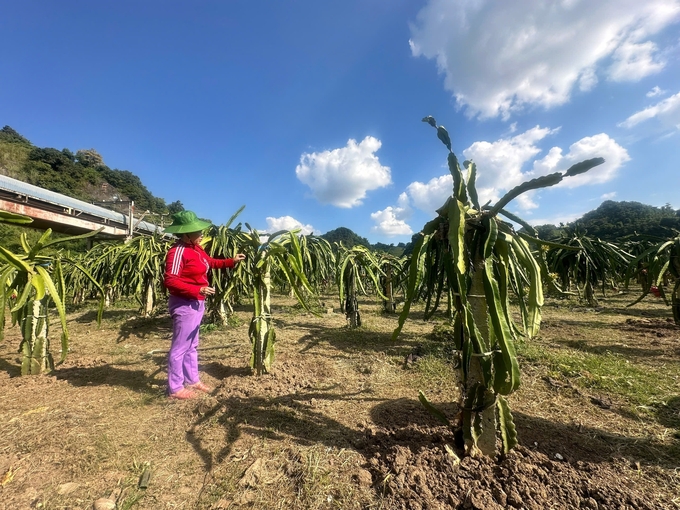
Dragon fruit is cultivated organically at Ngoc Hoang Cooperative. Photo: Duc Binh.
According to Mrs. Dung, after harvesting, dragon fruit must be meticulously sorted by size, categorizing them into groups that weigh between 300 and 800 grams to meet specific market requirements. The process of ensuring hygiene is just as crucial; if any pests or ant eggs are present, they must be carefully removed using a spoon, followed by rinsing the fruit with clean water. Afterward, the fruit is dried with a machine and wiped down with alcohol before it is finally wrapped for export.
The dragon fruit is then packed into foam boxes and transported to storage facilities where the temperature is maintained between 2 to 4 degrees Celsius. It is vital to adhere to every step of this process, as even a small mistake or the presence of insects on the fruit can lead to the entire shipment being returned.
To date, the cooperative has successfully exported hundreds of tons of dragon fruit to various countries in the European Union, as well as to Japan and South Korea via air transport. Despite these successes, exporting to China poses significant challenges, even though it is considered a promising market. To access the Chinese market, it is essential to comply not only with the requirements for a planting area code but also with regulations concerning the packing facility code. Unfortunately, in Son La, there are still not many companies willing to invest in meeting these standards.
Translated by Phuong Linh
/2026/06/04/5514-0-124633_818.jpg)
(VAN) With the largest rubber area nationwide, VRG is stepping up efforts to create green value from rubber forests, playing a vital role in sustainable development.

(VAN) As a pioneering enterprise in developing large-scale production zones, strengthening farmer partnerships, standardizing production practices, and enhancing traceability, PAN Group is elevating the value and global competitiveness of Vietnamese rice.
/2026/06/03/2038-2-111633_44.jpg)
(VAN) Disease outbreaks, competitive pressures, and market requirements force banana exporters to change production methods, invest in technology, and improve the quality of growing areas to sustain export momentum.

(VAN) Agricultural and aquatic products of Can Tho City will increase in value and gain wider access to the South Korean market.
![Transforming through Resolution 57: [2] Businesses lead the way](https://t.ex-cdn.com/nongnghiepmoitruong.vn/608w/files/chinq/2026/06/03/1033-chuyen-minh-tu-nghi-quyet-57-bai-2-doanh-nghiep-dan-loi-152034_231.jpg)
(VAN) Businesses are bringing technology to the fields of Ho Chi Minh City to achieve a modern, green, and sustainable agricultural model.
![Transforming through Resolution 57: [1] ‘Digital farms’ in the heart of a megacity](https://t.ex-cdn.com/nongnghiepmoitruong.vn/608w/files/chinq/2026/06/02/4327-113a0791-210633_906-210635-183212.jpg)
(VAN) From hydroponic vegetables grown in membrane houses to tissue-cultured orchids, Ho Chi Minh City is reshaping agriculture through digital technologies.

(VAN) At Vietnam Dairy 2026, Nestle Viet Nam shared its digital transformation experience, contributing to food safety enhancement, and value chain transparency across the dairy industry.
