July 21, 2026 | 21:57 GMT +7
Hotline: 0913.378.918

July 21, 2026 | 21:57 GMT +7
Hotline: 0913.378.918
From rubber forests stretching across the three Indochinese countries to a system of modern industrial parks, the Viet Nam Rubber Group (VRG) is steadily affirming its role as a leading agricultural enterprise, pioneering in developing a green, circular economy and effectively using land resources.
Beyond being Viet Nam’s largest natural rubber producer, VRG is also creating new drivers of growth through the development of green industrial parks, high-tech agriculture, renewable energy, and digital transformation, thereby contributing to the national goal of sustainable development.

Many ethnic minority workers have secured stable jobs and incomes through VRG’s rubber projects. Photo: VRG.
After nearly a century of development, the rubber industry has not only generated economic value but also helped transform the landscape of many regions across the country. Building on this foundation, VRG has grown into a large-scale economic corporation with charter capital of VND 40 trillion, investing in 115 subsidiaries and affiliated companies operating across a wide range of fields, including rubber growing, tapping and processing, industrial park development, wood processing, renewable energy, and high-tech agriculture.
VRG currently manages more than 377,800 hectares of rubber, including around 264,000 hectares in Viet Nam and over 113,000 hectares in Laos and Cambodia. These plantations are not only important production resources but also serve as “green lungs,” contributing to protecting the environment, maintaining land cover, and absorbing carbon emissions.
VRG’s projects provide stable employment for more than 80,000 workers, including approximately 20,000 ethnic minority employees and 25,000 workers in Laos and Cambodia. In many remote areas that once lacked basic infrastructure, the presence of VRG’s rubber projects has helped bring roads, schools, healthcare facilities, and other essential public works.
Beyond creating livelihoods for local communities, VRG’s projects have also contributed to rural economic development, improved incomes, and laid a solid foundation for new rural construction in many localities.

Rubber tappers at a VRG member company. Photo: VRG.
The Group’s financial performance indicators recorded positive results, with a return on assets (ROA) of 6.95% and a return on equity (ROE) of 12.61%. Average employee income reached over VND 12 million/person/month. These figures reflect VRG’s governance capacity, market adaptability, and efficient capital utilization amid ongoing economic uncertainties.
Notably, in the first four months of 2026 alone, VRG recorded consolidated revenue of VND 12.522 trillion, up 45.5% compared to the same period. Pre-tax profit reached VND 3.611 trillion, an increase of 65.3%, while after-tax profit reached VND 3.063 trillion, up 60% compared to the same period last year. These results underscore the Group’s strong growth momentum and its prospect for surpassing the targets set for 2026.
As global markets impose increasingly stringent requirements on product traceability, environmental protection, and sustainable development, VRG regards the green transition as an inevitable path. The Group implemented sustainable forest management standards and strengthened raw material traceability systems to meet the requirements of major export markets. At the same time, its member companies accelerated mechanization and applied technologies in planting, tapping, and processing to improve productivity, reduce costs, and lower greenhouse gas emissions.

VRG is the largest manager of rubber plantation area in Viet Nam, playing an important role in promoting sustainable agricultural development. Photo: VRG.
One of VRG’s greatest advantages is its vast land fund spanning numerous localities. In recent years, the Group has proactively reviewed, reorganized, and effectively used its land resources in line with local socio-economic development plans. On that basis, many areas have been appropriately converted for industrial park development, enhancing land-use value while creating new growth drivers.
Currently, VRG is managing and operating 14 industrial parks with a total area of more than 4,200 hectares. These parks have attracted over 820 investors and generated employment for approximately 260,000 workers. In addition to fostering industrial growth, they have also contributed to the formation of service, urban, and logistics ecosystems in many localities.
Besides, the Group is continuing to develop five new industrial parks. Once completed, VRG’s industrial park portfolio will expand to 19 parks, with an area of nearly 6,300 hectares. This is expected to provide substantial capacity to capture a new wave of investment and accelerate the transition toward a modern economy.
Alongside its rubber operations, VRG is developing high-tech agricultural models to maximize land-use efficiency and diversify its sources of revenue. Research programs on new crop varieties, biotechnology applications, and mechanization are being implemented at many units. In particular, tissue-cultured banana and high-tech agricultural projects are opening up new development directions for the Group’s agricultural sector.

VRG is developing the renewable energy sector. Photo: VRG.
In the energy sector, VRG is exploring solar power and hydropower projects while developing a model for supplying clean electricity to its industrial parks under the direct power purchase agreement mechanism. This represents an important step toward achieving the Group’s greenhouse gas emission reduction targets, improving energy efficiency, and contributing to the economy’s green transition.
In the context of strong digital transformation, VRG has identified it as one of the key drivers for strengthening its governance capacity. The Group is deploying a GIS-based land and plantation management system, digitalizing production, financial, and human resource data, and building a centralized database to serve its operational activities.
At the same time, ESG standards are being implemented across the Group’s entire system to enhance transparency, social responsibility, and corporate governance efficiency. This is not only a requirement for international integration but also a foundation for VRG’s long-term sustainable development.

VRG’s modern rubber processing plants are meeting the increasingly strict requirements of both domestic and international markets. Photo: VRG.
From rubber forests to green industrial parks, and from biotechnology research to renewable energy development, VRG is steadily affirming its role as a pioneering agricultural enterprise in green transition. Building on nearly a century of development and guided by a comprehensive innovation strategy, the Group is creating sustainable value for its workforce, local communities, and the economy while making positive contributions to Viet Nam’s green growth and sustainable development goals in the new era.
With nearly a century of accumulated experience and a strong aspiration for innovation, development mindsets, and determination, VRG is opening up new growth spaces and helping realize the goal of achieving rapid, green, and sustainable national development in the coming period.
$1 = VND 26,402 - Source: Vietcombank
Translated by Thu Huyen
/2026/07/20/1547-1-180442_204.jpg)
(VAN) A farmer in Can Tho has found the secret to raising giant water bugs that produce intensely aromatic essence, earning annual profits of hundreds of millions of dong.

(VAN) From crop conversion to deep processing, Ba Che Commune in Quang Ninh Province is building a comprehensive cinnamon value chain that creates sustainable livelihoods while strengthening the local forestry economy.

(VAN) The ACIAR-SunRice public-private partnership, rooted in science and sustainable development, is expected to support rice farmers in the Mekong Delta.

(VAN) Linking the shrimp, rice, and coffee sectors through a circular economy model is opening up a new pathway for Viet Nam's agriculture.

(VAN) HCMC is accelerating the transition to circular industry by transforming industrial parks into eco-industrial zones, fostering industrial symbiosis, and expanding international partnerships for green manufacturing.
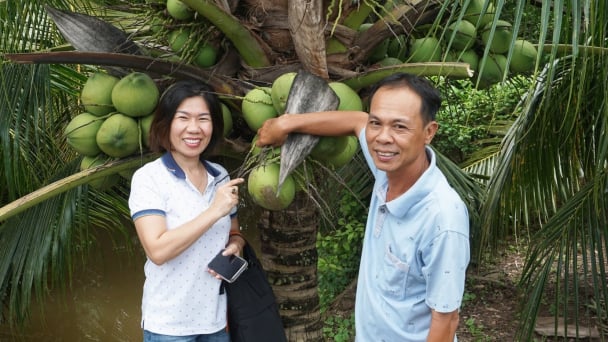
(VAN) The digital map of raw material zones is expected to resolve overlapping investments, ensure production transparency, and accelerate deep processing in the coconut industry.
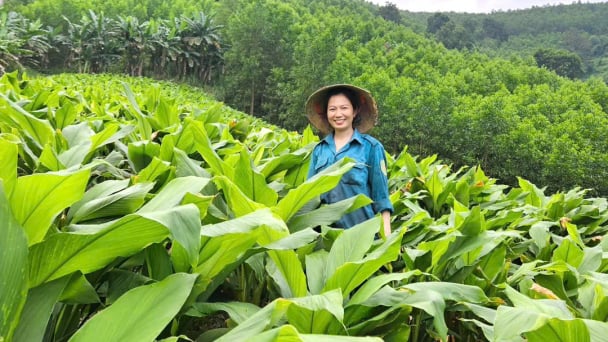
(VAN) Transforming barren hills once dedicated only to acacia and cassava, the Anh Mai Medicinal Plant Cooperative has found a new direction with red turmeric, opening up sustainable livelihoods for local residents.
