July 21, 2026 | 16:24 GMT +7
Hotline: 0913.378.918

July 21, 2026 | 16:24 GMT +7
Hotline: 0913.378.918
Land subsidence resulting from groundwater extraction for aquaculture, the severe decline in sediment flow from the upper Mekong River, and climate change are all having an increasingly detrimental effect on the Mekong Delta, particularly in coastal regions. The Southern Institute of Water Resources Planning (SIWRP) conducted this evaluation in response to the region's increasing environmental and resource challenges.
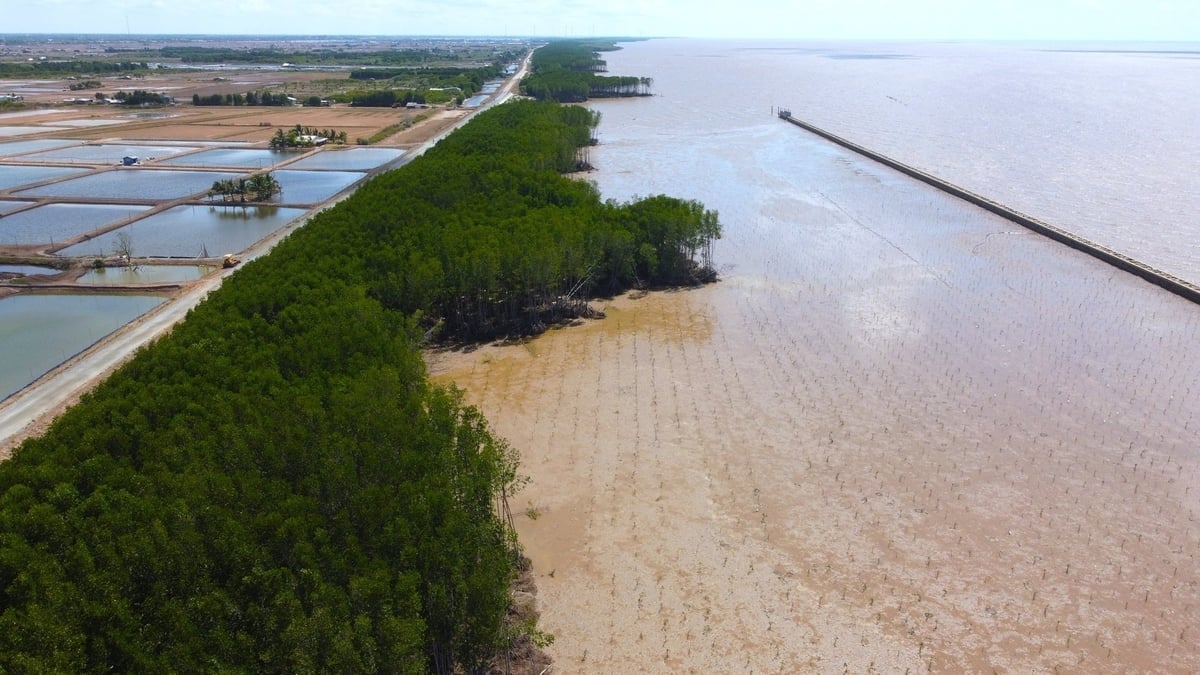
Coastal erosion and mangrove degradation are increasingly serious in the coastal areas of the Mekong Delta. Photo: Kim Anh.
Furthermore, coastal ecosystems are experiencing significant stress due to environmental pollution and degradation, which are consequences of unsustainable aquaculture practices, particularly intensive farming models that fail to manage effluent adequately.
Consequently, the loss of mangrove forests and coastal erosion have become more severe, resulting in the loss of hundreds of hectares of land and forest annually.
The SIWRP, in partnership with the International Union for Conservation of Nature (IUCN) Vietnam, conducted field surveys and consultations in five coastal provinces from April 7 to 11: Tien Giang, Ben Tre, Tra Vinh, Soc Trang, and Bac Lieu.
The survey results showed that the Mekong Delta is facing a range of pressing issues. Despite the expansion of numerous sea dike systems, numerous segments remain incomplete. The efficacy of coastal protection structures is inconsistent, despite their varied forms.
The severe degradation of coastal protection forests is particularly alarming. Efforts to restore these forests continue to encounter significant difficulties, and in numerous regions, the mangrove belts are too narrow to effectively shield the sea embankment.
Additionally, the ecological environment and extant disaster prevention systems are further burdened by the absence of widespread sustainable aquaculture models in the region.
These ongoing issues underscore the urgent need for integrated, comprehensive solutions that incorporate both technical engineering approaches and nature-based solutions at both the central and local levels.
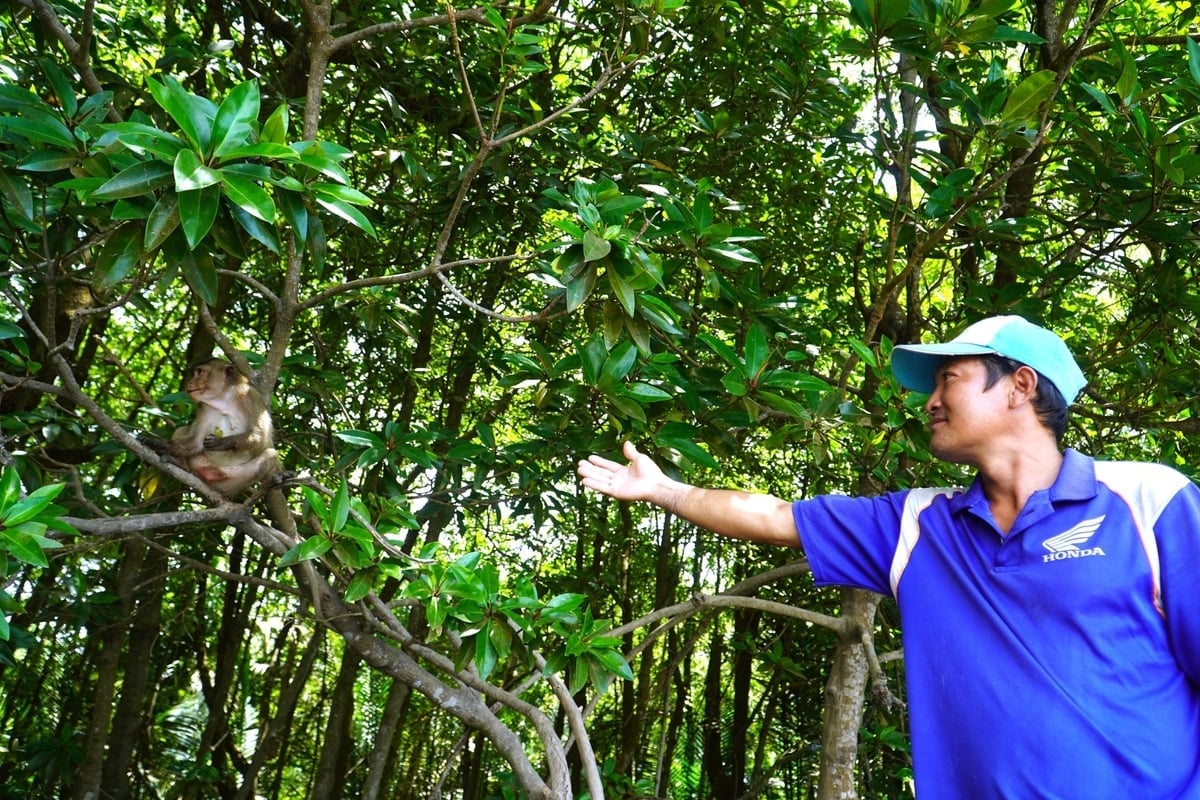
There is a need to focus on assessing the potential of Hybrid Nature-Based Solutions (Hybrid NbS) to open up opportunities for engagement with climate-resilient livelihood models. Photo: Kim Anh.
Mr. Do Duc Dung, Director of the Southern Institute of Water Resources Planning, has stated that the institute will focus on identifying strategic directions and proposing research to enhance management mechanisms and policies. Assisting in the sustainable development of the Mekong Delta, the objective is to identify gaps and requirements that necessitate resolution.
Mr. Dung also emphasized the importance of future solutions that encompass the evaluation and assessment of the current state of sea dike systems and protective infrastructure, as well as the identification of necessary strategies and requirements for developing mangrove belts outside the dikes to enhance their resilience to extreme weather events.
He emphasized the significance of assessing the potential of hybrid nature-based solutions (Hybrid NbS) for coastal protection. These methods not only enhance the efficacy of coastal defense but also present opportunities to integrate with adaptive livelihood models, capitalize on the economic potential of coastal ecosystems, and access emerging markets, such as carbon credits.
Translated by Linh Linh

(VAN) Viet Nam is actively preparing to participate in GREEN EXPO 2027 to promote its image as a green, sustainable, and innovative nation on the global stage.

(VAN) Lai Chau is passing by in a hurried rhythm at this time. Everyone is working tirelessly against the clock, devoting all efforts to overcoming the aftermath of the disaster.

(VAN) Some countries consider agriculture a public service, so the state must invest in it, according to Ass. Prof Dr. Dao The Anh, former Deputy Director of the Viet Nam Academy of Agricultural Sciences.

(VAN) The Minister of Agriculture and Environment of the Lao PDR recognizes the VRG's significant contributions over two decades of investment and operations in Laos.

(VAN) The VNMHA held a conference to review its work over the first six months of the year and set out priority directions and tasks for the second half of 2026.

(VAN) Khanh Hoa Sea Festival 2026, themed ‘Colors of the Ocean - Reaching International Scale,’ conveys a message of green marine economic development, integration, and Khanh Hoa's rising position.

(VAN) Viet Nam and the Food and Agriculture Organization of the United Nations (FAO) have launched a project to strengthen water resources management, reduce pollution and restore water quality in the Gulf of Tonkin.
