Made-in-Viet Nam banana varieties combat Panama wilt threat
(VAN) As Panama wilt disease threatens banana-producing regions globally, Viet Nam-developed resistant banana varieties are moving closer to widespread distribution, strengthening the competitiveness of the banana industry and advancing the industry's $1 billion export ambition.
Panama Wilt – the disease destroying the banana industry
INTRO
The global banana industry is a giant consumer market, valued at over USD 15.3 billion in 2024, and expected to reach USD 21.7 billion by 2030.In Viet Nam, banana cultivation now covers more than 160,000 hectares. Thanks to this, Viet Nam became the world’s 9th-largest banana exporter in 2024, with nearly USD 380 million in export value.However, like the global industry, many key banana-growing areas in Viet Nam have faced Panama wilt – a disease considered extremely dangerous, pushing many banana-producing regions to the brink of being “wiped out.” Tên phim: PANAMA WILT – THE DISEASE DESTROYING THE BANANA INDUSTRY
Just over a month remains before the Lunar New Year, but never has the specialized banan area along the Red River – Ban Nguyen commune, Phu Tho province – been as desolate as now.
After 10 months of planting, with hopes for the Tet banana season when each beautiful bunch could sell for up to a million dong, Ms. Hoan is now devastated as nearly 500 banana trees of her family have been completely lost.
Mrs HAN THI HOAN
Ban Nguyen commune, Phu Tho province
“When the bananas were growing, they looked very good. Two months later, the leaves turned yellow and the plants wilted. I sprayed many kinds of pesticides but nothing worked. This Tet, I have no bananas to sell.”
Not only Mrs. Hoan’s family, but hundreds of other households in this banana-growing area face the same situation.
Further south, Dong Bac Company – a long-standing banana- exporting enterprises with hundreds of hectares of plantations in Dong Nai – is also in the same plight. The company tried many varieties supplied by several nurseries and advertised as disease-resistant, but before harvest, the farms were infected again, causing severe double losses for the company.
Mr. NGUYEN VAN NGHIA
Technical staff, Dong Bac Co., Ltd., Dong Nai province “Panama can appear at any stage of the banana plant without warning. When it appears in the 4th or 5th month, we’ve already invested a lot in care. Once the disease shows up, we lose everything.”
Dr. Tran Ngoc Hung from the Fruit and Vegetable Research Institute says these bananas are typical cases of wilt disease – caused by the Fusarium fungus, also known as Panama disease. The most visible signs are yellowing leaves, drying leaves, darkened leaf sheaths, and when cutting the stem, the disease marks are very clear.
Dr. TRAN NGOC HUNG - Fruit and Vegetable Research Institute, MAE
“When the disease reaches this point, the fungus has already entered the plant. It depends on when the plant was infected. The more severe the infection, the more the vascular bundles turn brown, and the plant dies.”
Panama disease was first detected in Viet Nam in 2014. The areas were banana-growing provinces along the Red River, originating from Yunnan (China). These were: Lao Cai, Ha Noi, and Hung Yen. Until now, almost all banana-growing provinces and cities in Viet Nam have reported the presence of this dangerous, destructive disease.Studies show that the Fusarium fungus enters the soil through many pathways, including infected seedlings; contaminated soil moved from one area to another; spread during cultivation (irrigation water, fungal spores carried by wind, and pathogens transmitted through unsterilized banana-farming tools).
Dr. TRAN NGOC HUNG - Fruit and Vegetable Research Institute, MAE
“After entering the root system, it spreads through the vascular bundles into the corm and then the stem, causing the vascular system to rot. This blocks water and nutrient transport, so the leaves turn yellow, and the plant collapses and dies.”
In Viet Nam, bananas have the second-largest cultivation area among fruit crops, with more than 160,000 hectares, producing about 2.6 to 2.7 million tons, and export value keeps rising. It’s expected that by 2025, exports may reach USD 400 million. Therefore, the need for Fusarium-resistant banana varieties “made in Viet Nam” is urgent.
Mr. Dung is one of the farmers trialing Fusarium-resistant banana varieties supplied by the Vegetable and Fruit Research Institute in recent years. Nearly 200 banana plants in his family’s field sit among surrounding farms infected with Panama, but they still have a bumper Tet harvest. He says each Tet banana bunch for worship costs 800,000 to 1 million dong, and traders have already placed deposits.
Mr. HAN HUNG DUNG - Ban Nguyen commune, Phu Tho province“Farmers here accept this variety. It’s big, strong, and very resistant to Panama disease, giving a harvest rate of over 90%.”
In the southern region, U&I Agriculture Joint Stock Company (Unifarm) has also invested in its own research and succeeded in developing and producing Fusarium-resistant banana varieties, with a resistance rate of 95%–98% even on land with a history of infection. The fruit has good quality and appearance, favored by international markets. Since then, thousands of hectares of disease-resistant bananas have been deployed in the company’s production areas and partner farms for export.
MSc.TO THI NHA TRAM
Research Team Leader, U&I Agriculture JSC
“Inducing mutations on somatic cells is an advanced technology with breakthrough potential. Its disease resistance can be equal to or even better than varieties developed in other countries. However, the commercial bananas do not get wing burn or rust spots. This is the most distinctive and outstanding trait of UNI 126—no other variety in the world has it.”
Although demand for disease-resistant varieties from enterprises and farmers is real and urgent—totaling more than 26 million seedlings each year—banana varieties with strong resistance and wide ecological adaptability from the Vegetable and Fruit Research Institute, as well as the UNI 126 variety from Unifarm, are still not widely circulated.
The reason is that under Circular 17 of 2019, bananas are classified as a major crop, so all procedures related to trials, registration, and variety protection are very strict.
Mr. PHAM QUOC LIEM
Chairman & CEO, U&I Agriculture JSC
“We have been developing this variety since 2018, and we submitted the registration and protection documents two years ago. I truly hope authorities will find solutions so that leading research units like UNI-FARM can be granted the right to register or receive special approval to protect this banana variety.”
Mr. NGUYEN QUOC MANH
Deputy Director, Plant Production and Protection Department, MAE
“The Department has proposed to the Ministry to consider removing some crops from the list of major crops, so we can promote production and bring new varieties into use in the coming time.”
Returning to major export banana areas in the South, some enterprises and farmers have been fortunate to partner with Unifarm in production and sales, allowing them to cultivate the UNI-126 disease-resistant variety under the company’s linked farm system.
But for hundreds, even thousands of banana-growing enterprises and farmers across the country, the hope of accessing Panama-resistant varieties cannot be fulfilled overnight.
Early approval of disease-resistant varieties developed by Vietnamese scientists – so farmers can start using them in the 2026 production season – will not only help Viet Nam’s banana industry overcome this global crisis and reach the USD 1 billion export goal, but also affirm the nation’s breakthroughs in agricultural science and technology, in line with the spirit of Resolution 57.
Authors: Hai Dang - Quang Dung - An Khang - Le Binh - Tran Phi
The ASEAN Eco-School Viet Nam Award is a shared commitment to action across the region, contributing to the creation of sustainable and happy learning environment.
(VAN) In recent years, Vietnam’s exported rice has been recognized not only for its volume but also for its quality, with numerous varieties such as DT8 and ST25 favored by consumers in many countries.
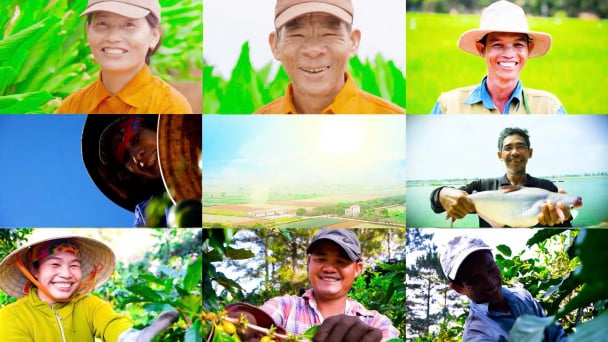
(VAN) The documentary is a story honoring ordinary yet extraordinary people; bold policy innovations; solid achievements; and profound lessons on the path of development.
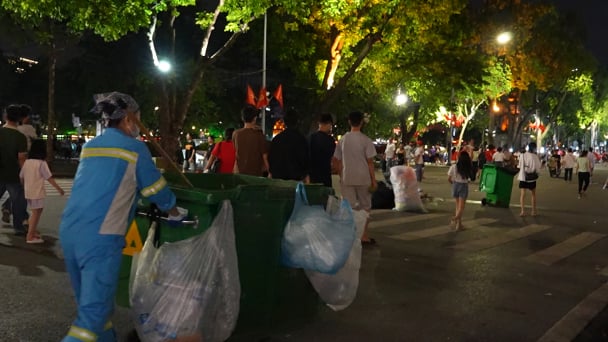
(VAN) Right after the parade rehearsal concluded, many streets in central Hanoi were littered with waste, and sanitation workers immediately began their task.
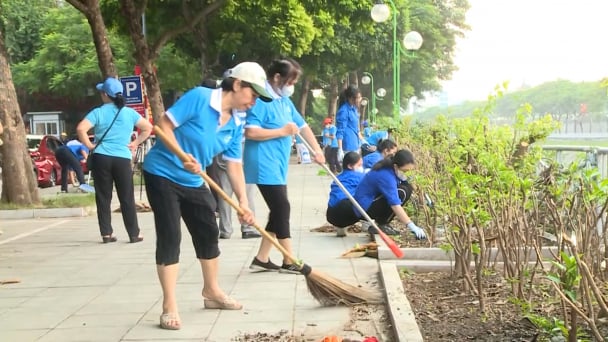
(VAN) Nghia Do Ward mobilized over 100 youth union members, women’s union members, and local residents to clean up several areas and main streets in the ward.