August 25, 2025 | 14:00 GMT +7
Hotline: 0913.378.918

August 25, 2025 | 14:00 GMT +7
Hotline: 0913.378.918
The Can Tho City Department of Agriculture and Rural Development hosted a meeting on the morning of August 24 with a delegation from the Gyeonggi Environmental Energy Development Institute (GEEI) of South Korea. The discussions centered on the city's urgent water resource and energy concerns and the organizations' future collaboration.
Mr. Ngo Thai Chan, Director of the Can Tho City Department of Agriculture and Rural Development, identified eight critical areas for collaboration. The delegation and South Korean investors were most interested in the waste-to-energy plant proposal, which is located on a 5.5-hectare site in the former Soc Trang province.
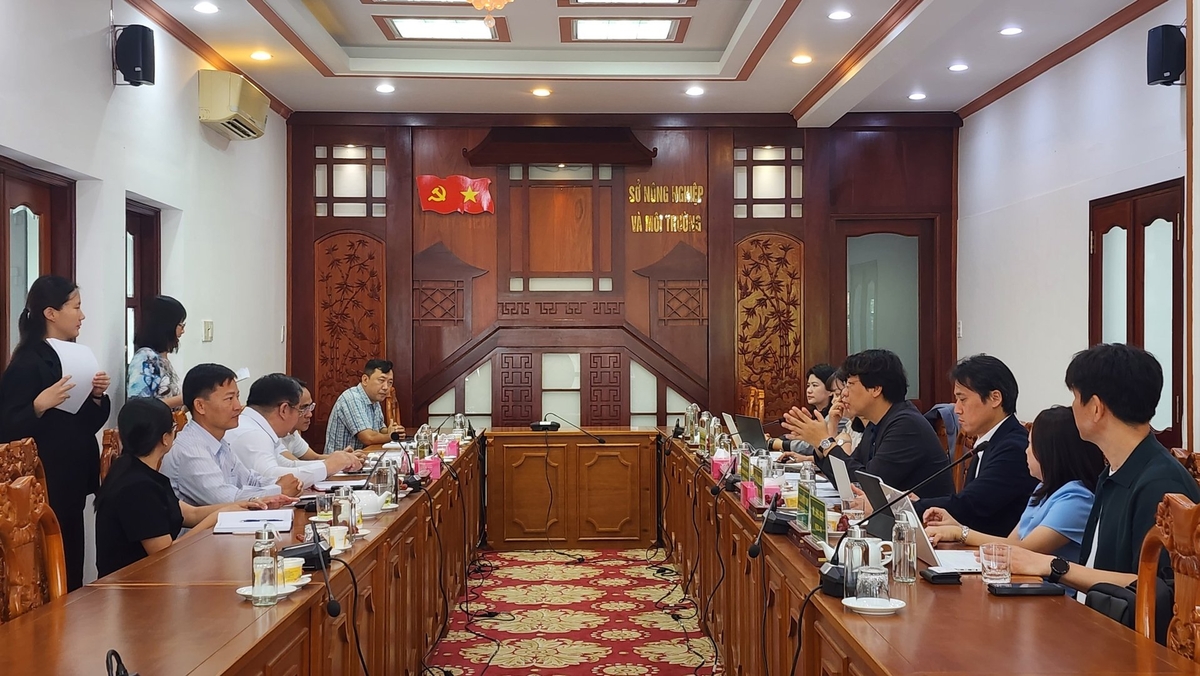
The Can Tho City Department of Agriculture and Rural Development met with a delegation from the Gyeonggi Environmental Energy Development Institute (South Korea). Photo: Kim Anh.
Can Tho City intends to construct three waste-to-energy facilities, as per Mr. Chan. Investors have already been attracted to two projects, which are situated in the former Can Tho City and Hau Giang province. The city is currently in the process of securing investment for a third facility in the former Soc Trang province, which will have a maximum capacity of 25 MW.
Currently, the former province of Soc Trang generates an average of 870 tons of household refuse per day. Nevertheless, waste treatment methods have been primarily restricted to the use of outdated technology, such as sorting, landfilling, and composting. Prior to its merger, the former Soc Trang province had already formulated a proposal to attract investment for a waste-to-energy plant. The 5.5-hectare site is located in the vicinity of the former Soc Trang City Solid Waste Treatment Plant.
A representative of the South Korean investors expressed a keen interest in the project, pointing out that comparable waste-to-energy projects in their country receive government policy support, which enables businesses to sell electricity, generate profit, and reinvest. The Korean delegation is optimistic that Vietnam will adopt comparable policies to entice investors to conduct surveys and acquire information regarding the project.
The Director of the Can Tho City Department of Agriculture and Rural Development responded by confirming that the Vietnamese government already provides preferential mechanisms for waste-to-energy initiatives. In particular, enterprises that invest will be provided with assistance in connecting to the national infrastructure and will be guaranteed profits from electricity sales.
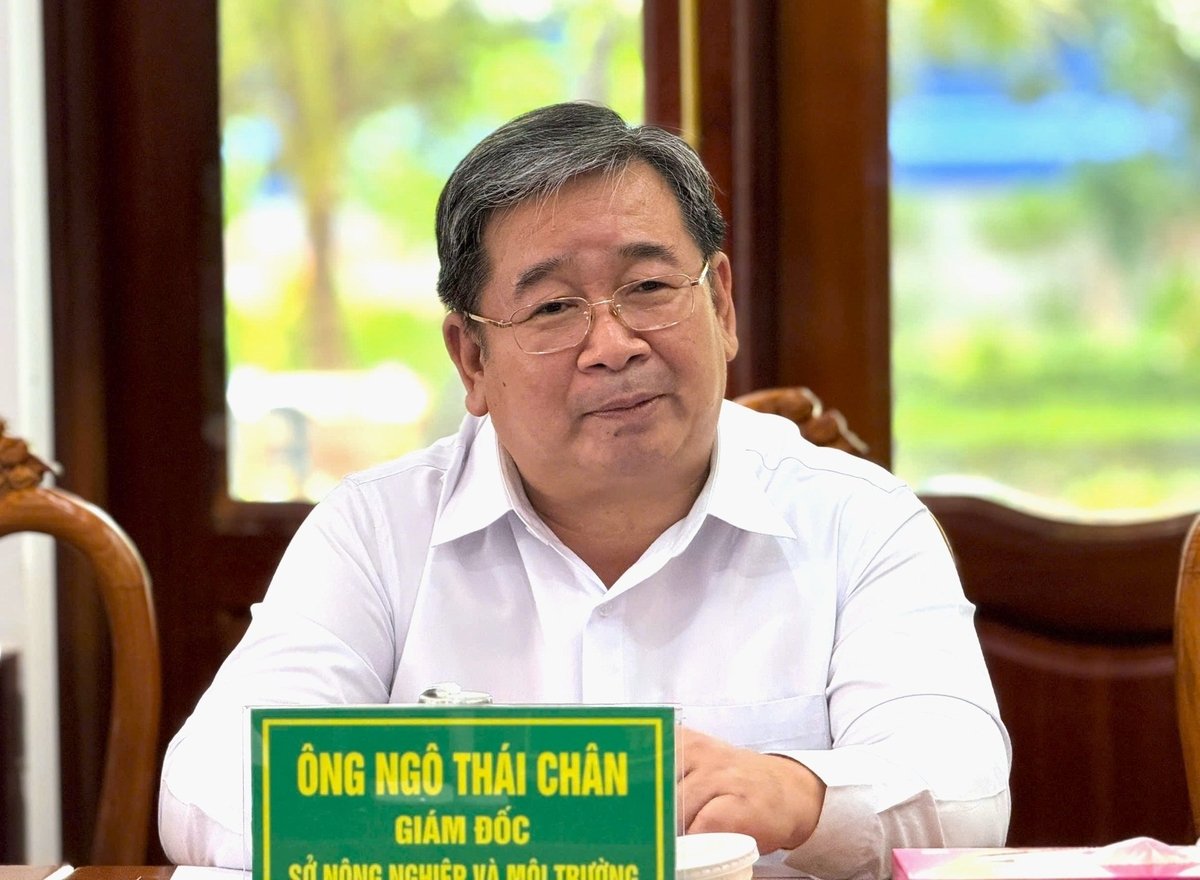
Mr. Ngo Thai Chan, Director of the Can Tho City Department of Agriculture and Rural Development, outlined eight areas for cooperation, including a call for South Korea to consider and invest in the Waste-to-Energy Plant Project. Photo: Kim Anh.
Furthermore, Can Tho City invited GEEI to conduct a survey and invest in a solar power project at the Freshwater Lake in the former Hau Giang province. The initiative would encompass an area of approximately 50 hectares and would employ either onshore or floating solar panels.
Can Tho also extended an invitation for collaboration in other fields, such as the repair of damaged environmental monitoring stations, the construction of small-scale wastewater treatment plants for concentrated residential areas (serving 5,000-10,000 residents per area), the automation of sewer systems, the investment in dikes, embankments, and sluice gates to prevent erosion and saltwater intrusion, and the collaboration on research for compact water purification solutions for households and communities.
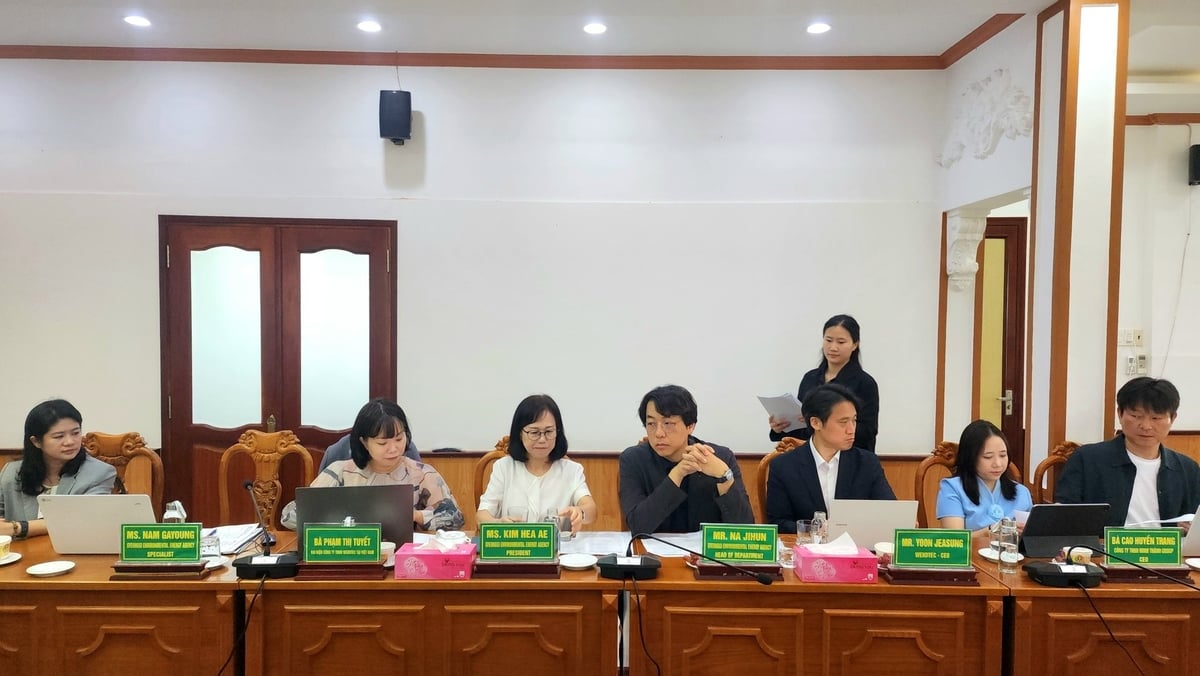
The delegation from the Gyeonggi Environmental Energy Development Institute (South Korea) expressed special interest in Can Tho’s waste-to-energy plant project. Photo: Kim Anh.
Ms. Kim Hea Ae, President of GEEI, stated that the challenges facing Can Tho City are similar to those her home province of Gyeonggi is also working to solve. She recommended that both parties pursue funding from ODA initiatives and programs administered by government agencies in their respective countries to improve collaboration. She further stated that the two parties must meet soon to engage in a more in-depth conversation regarding the areas of cooperation. Additionally, she observed that GEEI is prepared to provide Can Tho City with small-scale science and technology investments.
Translated by Linh Linh
/2025/08/22/5016-5-233850_817.jpg)
(VAN) The merger of Hai Phong and Hai Duong has opened a new chapter, where the advantages of production and logistics converge to create a base for Vietnamese agricultural products to reach the global market.
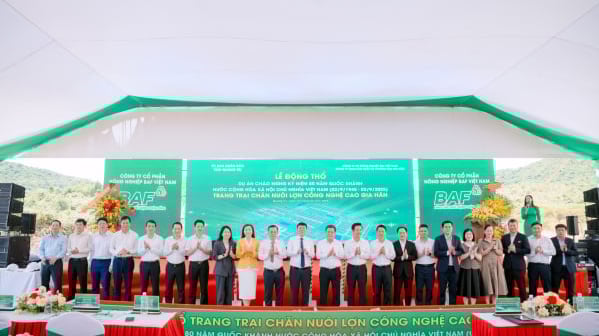
(VAN) On August 19, 2025, BAF Vietnam Agricultural Joint Stock Company (HOSE: BAF) successfully held the groundbreaking ceremony for the Gia Han high-tech pig farming farm.
/2025/08/19/3939-5-183454_678.jpg)
(VAN) Surpassing many international 'big guys,' Vinamilk has been honored by Brand Finance as the world's most promising dairy brand. What has helped this brand create the miracle?
/2025/08/18/5525-3-194703_724.jpg)
(VAN) The RAS-IMTA recirculating shrimp farming model helps Ca Mau improve productivity, reduce emissions, protect the environment, meet export standards, and move toward a sustainable green fisheries industry.
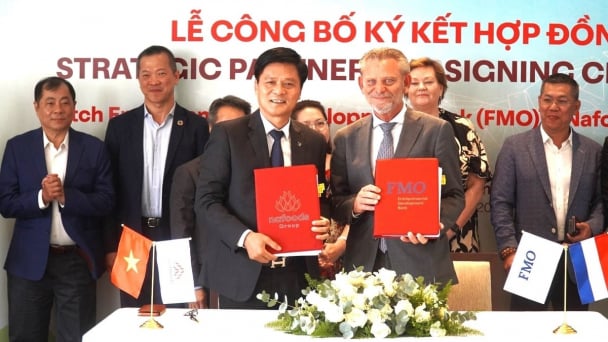
(VAN) Nafoods Group has joined forces with the Dutch Entrepreneurial Development Bank to boost production, embrace new technologies, and advance sustainable farming.
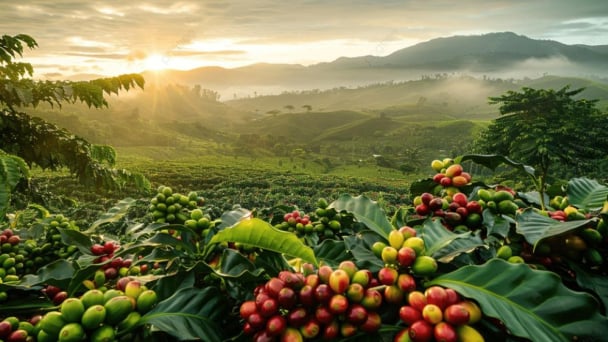
(VAN) Vinacafe is accelerating the adoption of science, technology, and digital transformation to drive a green transition, enhance quality, and meet the demands of the new era.
