June 4, 2026 | 16:20 GMT +7
Hotline: 0913.378.918

June 4, 2026 | 16:20 GMT +7
Hotline: 0913.378.918
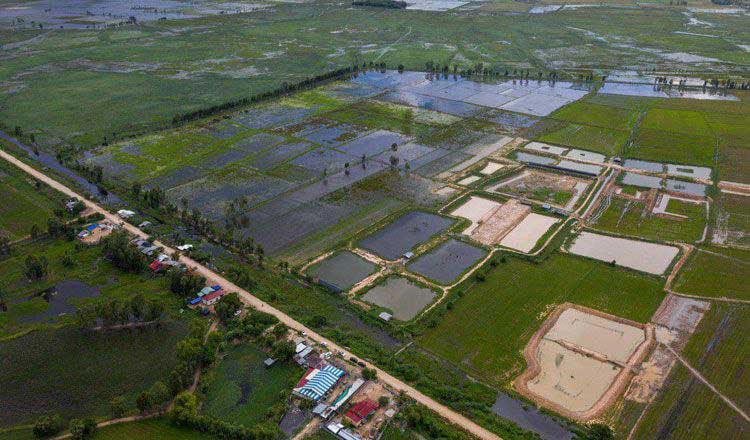
Relevant cooperation between Jiangsu and Cambodia began in May last year.
The goal is to boost agricultural economic and trade cooperation and technology exchanges between the two regions.
The collaborative establishment of the Fish and Rice Corridor between China and Cambodia stands as a pivotal aspect of agricultural cooperation that will accelerate Cambodia’s agricultural modernisation and bolster farmers’ incomes.
In 2024, the Ministry of Agriculture and Rural Affairs spearheaded the drafting of a cooperation plan and key project list between China and the Royal Government of Cambodia to advance the construction of the new corridor jointly.
To further propel the joint efforts in building the Fish and Rice Corridor, the ministry and Cambodia’s Ministry of Agriculture, Forestry and Fisheries convened the inaugural meeting on the collaborative establishment of the corridor in Beijing this March.
Relevant cooperation between Jiangsu and Cambodia began in May last year. Twelve student representatives from various Cambodian agricultural sectors participated in a 13-day study exchange program in four cities in Jiangsu province: Nanjing, Yangzhou, Zhenjiang, and Taizhou.
The program focused on rice cultivation, aquaculture, digital agriculture, traditional cultural preservation and sustainable agricultural development.
Li Chunyang, a researcher and chief expert at the Jiangsu Academy of Agricultural Sciences, said that the establishment of the Fish and Rice Corridor focuses on the development of rural areas and agricultural communities in Cambodia, aiming to increase the productivity and sustainability of the Cambodian agricultural sector, especially in rice cultivation and fish farming.
“This not only helps ensure Cambodia’s food self-sufficiency, but also significantly increases farmers’ incomes and improves their livelihoods. The entire training process involves theoretical learning, and more importantly, allows Cambodian students to go out into the fields and factories of the enterprises for hands-on observation and experience.”
He added that during the process, the students better appreciated the significant help that technological improvements bring to agricultural production, and it also further sparked their interest in the sector.
“Many students have already expressed their intentions to bring the technologies back to Cambodia and actively engage in actions to help implement them,” said Li.
In January, the Asian Vision Institute, based in Phnom Penh, led local companies to visit Suqian North Jiangsu Grain and Oil Company in the province to explore potential cooperation in agricultural automation processing, with plans for further research in Cambodia following negotiations.
Zhang Jiahong, a researcher at the Lixiahe Agricultural Science Institute in Jiangsu, said: “Fishery aquaculture and rice cultivation are key sectors in Cambodia’s agricultural development. Jiangsu has a good agricultural industry structure and a high level of development. Therefore, it can offer broad prospects and potential for future cooperation between the two sides.”
Li said that at Cambodia’s request, Jiangsu will arrange for Chinese experts to conduct two agricultural technology lectures and exchanges in Cambodia this year. The focus will be on reducing losses, increasing production, improving quality, and adding value to agricultural products to improve production efficiency and economic benefits for Cambodian farmers and cooperatives.
He said Cambodia will also organize key agricultural technical personnel to visit relevant research units or enterprises in Jiangsu for targeted learning, exchanges, and training to enhance their technical capabilities and business acumen.
Li added that efforts will be made to strengthen exchanges and cooperation between Chinese and Cambodian agricultural processing enterprises to promote mutual understanding and collaboration through product promotion, exhibitions and other means to advance the development and market expansion of Cambodia’s local agricultural products.
“The academy has also collaborated with Cambodia’s Ministry of Agriculture, Forestry, and Fisheries to establish a joint laboratory focusing on the functional evaluation and product development of agricultural products. These cooperative projects will help enhance the added value of Cambodian agricultural products and drive economic cooperation between the two countries,” Li said.
Khmertimes

(VAN) As a pioneering enterprise in developing large-scale production zones, strengthening farmer partnerships, standardizing production practices, and enhancing traceability, PAN Group is elevating the value and global competitiveness of Vietnamese rice.
/2026/06/03/2038-2-111633_44.jpg)
(VAN) Disease outbreaks, competitive pressures, and market requirements force banana exporters to change production methods, invest in technology, and improve the quality of growing areas to sustain export momentum.

(VAN) Agricultural and aquatic products of Can Tho City will increase in value and gain wider access to the South Korean market.
![Transforming through Resolution 57: [2] Businesses lead the way](https://t.ex-cdn.com/nongnghiepmoitruong.vn/608w/files/chinq/2026/06/03/1033-chuyen-minh-tu-nghi-quyet-57-bai-2-doanh-nghiep-dan-loi-152034_231.jpg)
(VAN) Businesses are bringing technology to the fields of Ho Chi Minh City to achieve a modern, green, and sustainable agricultural model.
![Transforming through Resolution 57: [1] ‘Digital farms’ in the heart of a megacity](https://t.ex-cdn.com/nongnghiepmoitruong.vn/608w/files/chinq/2026/06/02/4327-113a0791-210633_906-210635-183212.jpg)
(VAN) From hydroponic vegetables grown in membrane houses to tissue-cultured orchids, Ho Chi Minh City is reshaping agriculture through digital technologies.

(VAN) At Vietnam Dairy 2026, Nestle Viet Nam shared its digital transformation experience, contributing to food safety enhancement, and value chain transparency across the dairy industry.

(VAN) Dong Nai is accelerating the development of high-tech agriculture by attracting business investment and scaling up green, smart, and sustainable farming models.
