December 5, 2025 | 11:44 GMT +7
Hotline: 0913.378.918

December 5, 2025 | 11:44 GMT +7
Hotline: 0913.378.918
These days, Phu Yen province is implementing the first phase of vaccination against livestock diseases in 2025. As a cattle farmer with more than 20 years of experience, Nguyen Van Tuan in Vinh Ba village (Hoa Dong commune, Tay Hoa) fully understands that vaccinating the cattle will help them develop immunity, proactively preventing potential epidemic outbreaks and spread of diseases.
Recently, when the veterinary staff deployed forces to localities, Tuan vaccinated his 12 cows against diseases such as pasteurellosis and foot-and-mouth disease. Tuan said, “Although cows have higher resistance than other livestock when exposed to erratic weather, the herd is easily susceptible to disease.”
Aiming for an effective cattle raising environment, in addition to feeding the cows with enough roughage such as grass, straw, and supplementing with concentrated feed (bran, vitamins, and minerals), Tuan focuses on vaccinating the herd fully and periodically. As a result, his herd of cows always grows and develops well with no signs of a dangerous epidemic occurring.

Localities are proactively vaccinating livestock against disease during the period of erratic weather. Photo: KS.
In a similar case, Nguyen Van Phuc in An Chan commune (Tuy An) has raised broiler chickens on a scale of 2,000 chickens per batch in recent years and has not experienced any dangerous disease outbreaks, thanks to his dedication to fully vaccinating his flock.
He buys chickens from reputable companies so they are injected with the necessary vaccines right from the initial stage. During the raising process, he also proactively buys vaccines to vaccinate his flock, particularly against avian influenza fully. In particular, during the changing season period, his family strengthens vaccination because this is when diseases are likely to break out.
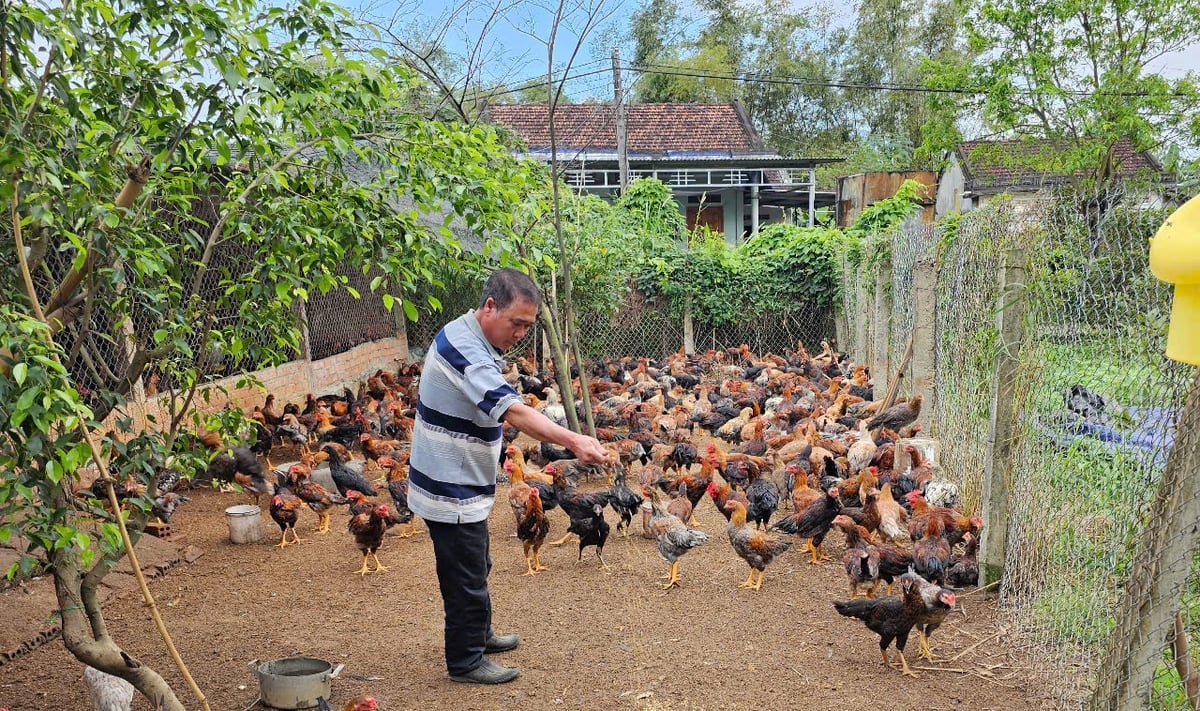
Farmers today are also more aware of vaccinating their livestock. Photo: KS.
According to Truong Van Binh, Deputy Head of the Phu Yen Sub-Department of Crop Production and Livestock Production, vaccination plays an important role in protecting livestock health and bringing sustainable economic benefits to farmers.
Vaccines can prevent dangerous infectious diseases such as swine fever, avian influenza, foot-and-mouth disease, and pasteurellosis which can cause serious damage to farms by reducing the number of livestock, thereby greatly affecting the economy of livestock farmers. In recent years, Phu Yen Sub-Department of Crop Production and Livestock Production has always promoted and recommended that people fully vaccinate their livestock.
“When livestock are fully vaccinated, they are less likely to get sick and maintain good health and stable growth. Farmers can thus improve livestock production efficiency, and reduce loss and treatment costs. In addition, healthy livestock provide high-quality products such as meat, milk, and eggs, ensuring safety for consumers. Furthermore, vaccinating livestock also helps prevent diseases transmitted from animals to humans, contributing to protecting public health,” said Deputy Head Truong Van Binh.
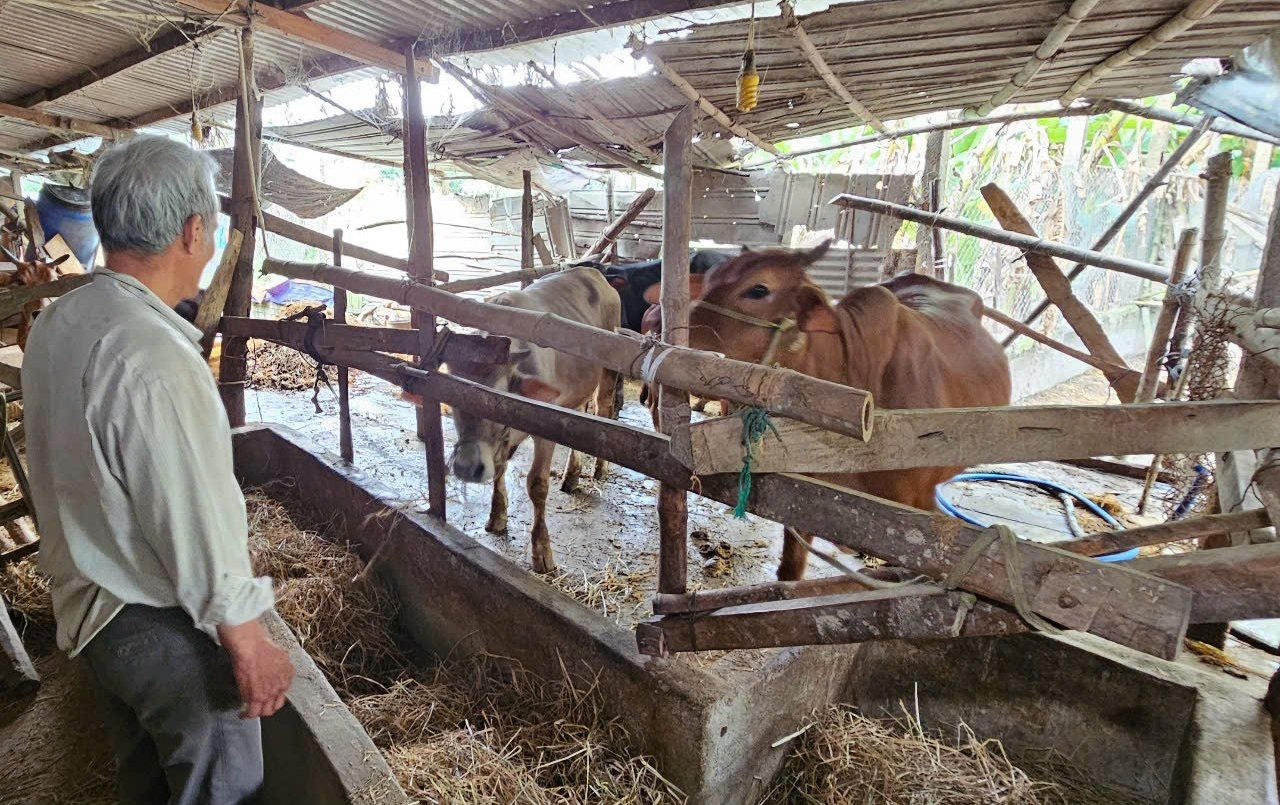
Livestock farming in Phu Yen has been stable in recent years thanks to the localities’ high focus on vaccination. Photo: KS.
Information from Phu Yen Sub-Department of Crop Production and Livestock Production shows that the whole province has 97,350 buffaloes and cows to be vaccinated in this period. Up to now, the whole province has vaccinated 47,591 doses of foot-and-mouth disease vaccine for buffaloes and cows, reaching a rate of 49%; more than 8,950 doses of pasteurellosis vaccine and 49,491 doses of lumpy skin disease vaccine. As for avian influenza, 133,300 chickens have been vaccinated. The province has also vaccinated 5,288 dogs and cats against rabies.
From Deputy Head Binh’s perspective, a successful vaccination process means a minimum rate of 80% of livestock being fully vaccinated with the correct vaccine in phase I/2025. The Sub-Department recommends that localities prioritize mobilizing human and material resources to ensure the vaccination process yields high results, thereby providing effective support for livestock disease prevention and control activities. At the same time, local authorities must regularly inform livestock farmers to raise awareness and ensure compliance with vaccination regulations.
In addition to accelerating vaccination, localities must enhance disease surveillance in livestock and poultry, particularly in areas that have experienced disease outbreaks or are at a high risk of occurrence. The goal is to promptly detect, warn farmers, and manage outbreaks as soon as signs of an epidemic are detected.
According to Phu Yen Sub-Department of Crop Production and Livestock Production, since the beginning of the year, livestock production has been stable, with no dangerous epidemics occurring. However, farmers should not be complacent as many dangerous epidemics are still occurring in livestock in many provinces and cities across the country.
Translated by Samuel Pham

(VAN) As of 2025, the ASEAN region has a total of 69 ASEAN Heritage Parks recognized across its 10 member states. Among them, Viet Nam contributes 15 ASEAN Heritage Parks.

(VAN) Yok Don National Park has high biodiversity with numerous endemic plant and animal species, and it is also the only dipterocarp forest ecosystem conservation area in Viet Nam.

(VAN) Viet Nam and Brunei signed two important MOUs on fisheries and IUU, expanding cooperation in agriculture, the environment, and Halal exports, aiming to substantively implement joint projects.

(VAN) The Viet Nam Coconut Association worked with the International Finance Corporation (IFC) and businesses to promote the supply chain, enhance competitiveness, and develop the coconut industry sustainably.
![Hue aims for Net Zero: [2] Pioneering low-emission tourism](https://t.ex-cdn.com/nongnghiepmoitruong.vn/608w/files/huytd/2025/12/04/0633-dulichzero-4-095634_236-161125.jpg)
(VAN) The ancient capital of Hue has developed Net Zero tourism products and models, aiming to reduce carbon emissions and pioneer the establishment of Viet Nam's green tourism destination.

(VAN) C.P. Viet Nam has announced the successful completion of its goal to plant 1.5 million trees during the 2021-2025 period, a key milestone within company's long-term ESG strategy and its roadmap for emission reduction.

(VAN) This is an initiative of MAE aimed at creating a unified coordination mechanism to implement agricultural cooperation programs with developing countries.
