July 21, 2026 | 16:02 GMT +7
Hotline: 0913.378.918

July 21, 2026 | 16:02 GMT +7
Hotline: 0913.378.918
The ongoing transformation of global supply chains is reshaping the competitive landscape for the seaport industry. Whereas port performance was once measured primarily by infrastructure capacity and cargo throughput, competitive advantage is now increasingly determined by digital transformation, green development, and the ability to operate intelligently and efficiently.
Amid continued uncertainty in international trade, shipping lines and logistics providers are increasingly favoring ports that offer more than high cargo-handling capacity. They are seeking facilities with advanced management systems, fully digitalized operations, and seamless connectivity with other modes of transportation. This shift is creating strong momentum for modernization across ports throughout the region, including those in Vietnam.
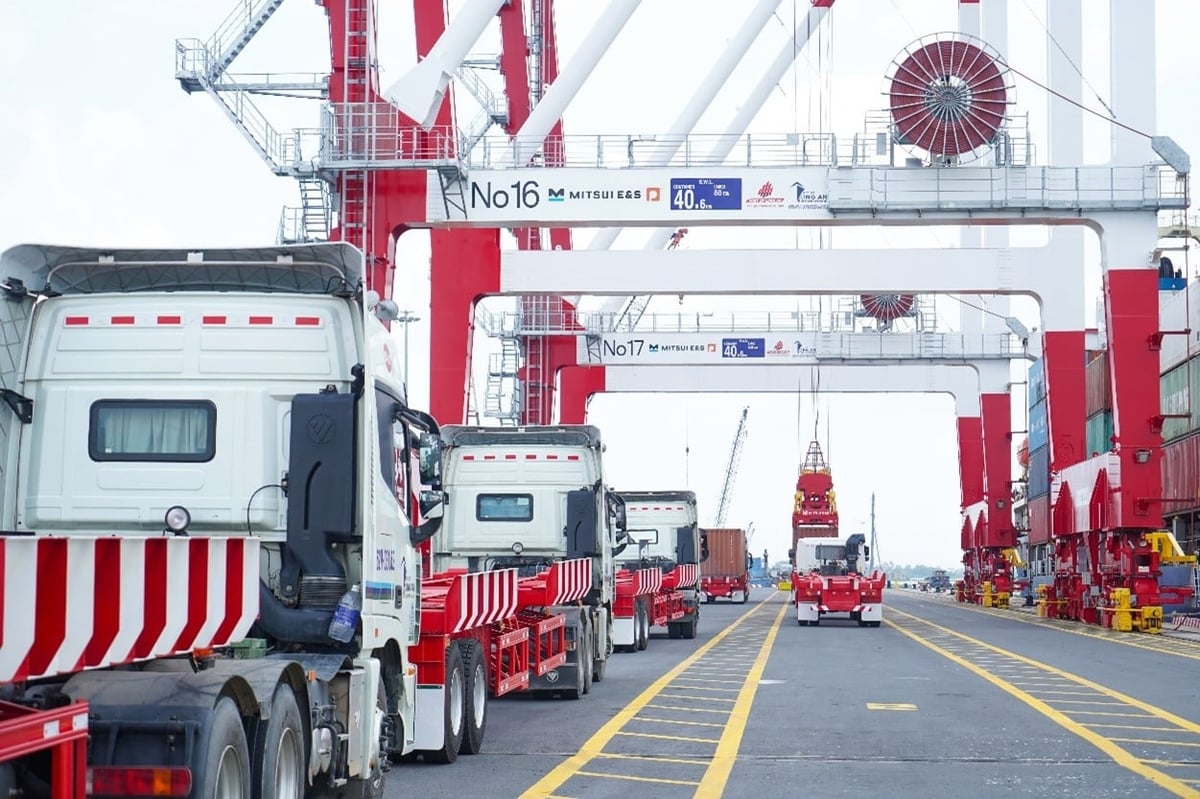
Green port and smart port initiatives are being implemented in an integrated manner at Long An International Port. Photo: Bich Lien.
This trend was clearly reflected at the ASEAN Ports & Logistics 2026 Conference and Exhibition, held in Kuala Lumpur, Malaysia, from July 7 to 9. The event brought together more than 300 policymakers, industry leaders, port operators, shipping lines, logistics companies, and technology providers from across the region. Discussions focused on digital transformation, artificial intelligence (AI), green ports, the energy transition, and strengthening supply chain resilience.
The conference underscored a fundamental shift in port competition. Expanding berth capacity and increasing cargo throughput are no longer enough. Today's competitive edge increasingly depends on technological innovation, operational efficiency, and long-term sustainability.
Many experts at the event highlighted that AI, big data, the Internet of Things (IoT), and automation will play an increasingly critical role in port management. Real-time data analytics enables ports to optimize vessel scheduling, coordinate equipment and cargo movements, reduce container dwell times, and improve risk forecasting and response throughout the logistics chain. These capabilities form the foundation of smart ports that can meet the evolving demands of global trade.
In response to these trends, many Vietnamese port operators are gradually investing in green and smart port development. At ASEAN Ports & Logistics 2026, Long An International Port showcased its smart green port model, featuring an integrated digital ecosystem that connects port operations, warehouses, transportation services, and customers through advanced management platforms, including SAP S/4HANA, Terminal Operating System (TOS), E-Port, and Warehouse Management System (WMS).
According to the company, these digital platforms enable seamless integration across port operations, improve operational efficiency, enhance transparency, and strengthen coordination throughout the logistics supply chain.
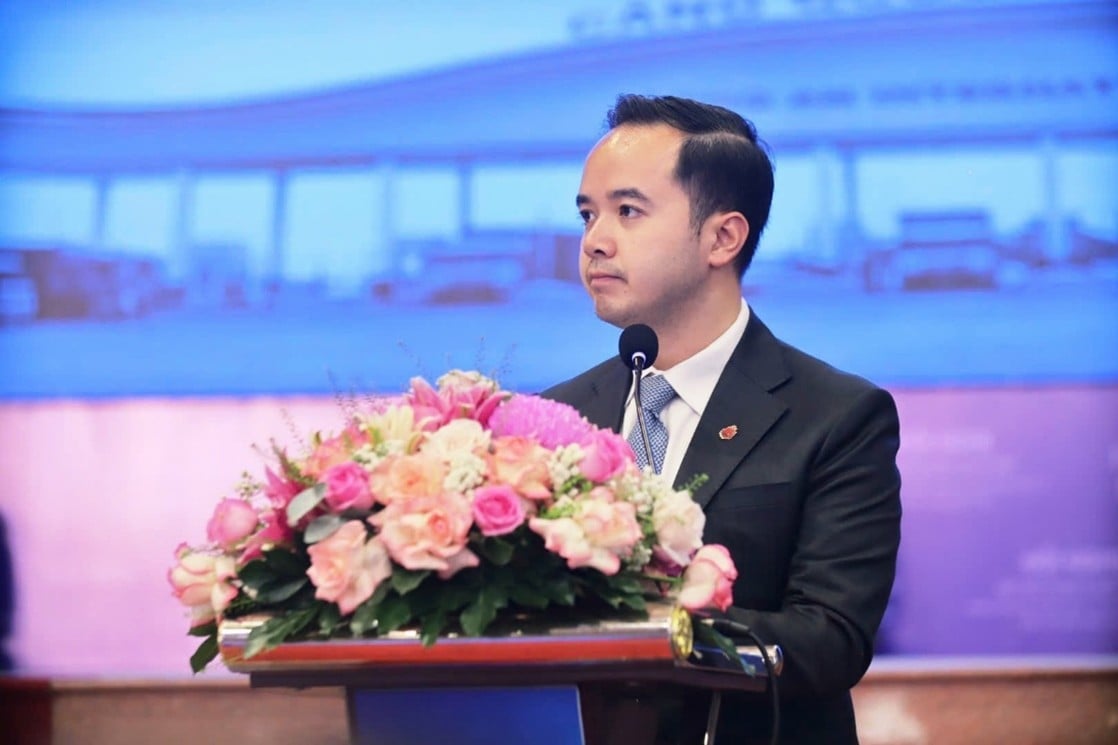
Vo Quoc Huy, Chairman and Chief Executive Officer of Long An International Port, speaks after the port received the prestigious award. Photo: Bich Lien.
Alongside its digital transformation efforts, the port has introduced a range of green initiatives, including rooftop solar power systems, the electrification of cargo-handling equipment, the deployment of electric cranes, and energy-efficient technologies. These measures support environmental, social, and governance (ESG) objectives as well as Vietnam's commitment to achieving net-zero emissions.
Beyond investing in modern equipment, many ports are also optimizing operational processes to reduce fuel consumption, increase the use of renewable energy, and gradually replace fossil fuel-powered machinery with electric alternatives. This approach has become a global best practice, helping ports lower greenhouse gas emissions while improving long-term operational efficiency.
These efforts have received international recognition. Long An International Port became the first Vietnamese port to receive the "Smart Green Port Company of the Year 2026" award from Frost & Sullivan as part of its Asia-Pacific Best Practices Awards 2026. According to Vo Quoc Huy, Chairman and Chief Executive Officer of Long An International Port, the company remains committed to a long-term strategy centered on technology, green transformation, and operational excellence as the foundation for enhancing competitiveness and creating sustainable value for customers and the broader supply chain.
At the conference, Long An International Port also presented its integrated port-industrial-urban-services-logistics ecosystem, spanning 1,935 hectares. The development links seaport infrastructure, industrial parks, manufacturing facilities, and logistics services within a unified value chain. This integrated model helps optimize cargo flows, improve supply chain efficiency, and strengthen connectivity between Ho Chi Minh City, the Mekong Delta, and international shipping routes.
Building on the success of ASEAN Ports & Logistics 2026, Long An International Port has also been selected to host the ASEAN Ports & Logistics 2027 conference, scheduled for March 2027 in Ho Chi Minh City. The event is expected to serve as a regional platform for policymakers, industry leaders, and logistics experts while showcasing Vietnam's growing capabilities in the seaport sector and its commitment to building more resilient and sustainable supply chains.
Translated by Huong Giang
/2026/07/20/1547-1-180442_204.jpg)
(VAN) A farmer in Can Tho has found the secret to raising giant water bugs that produce intensely aromatic essence, earning annual profits of hundreds of millions of dong.

(VAN) From crop conversion to deep processing, Ba Che Commune in Quang Ninh Province is building a comprehensive cinnamon value chain that creates sustainable livelihoods while strengthening the local forestry economy.

(VAN) The ACIAR-SunRice public-private partnership, rooted in science and sustainable development, is expected to support rice farmers in the Mekong Delta.

(VAN) Linking the shrimp, rice, and coffee sectors through a circular economy model is opening up a new pathway for Viet Nam's agriculture.

(VAN) HCMC is accelerating the transition to circular industry by transforming industrial parks into eco-industrial zones, fostering industrial symbiosis, and expanding international partnerships for green manufacturing.
(VAN) The digital map of raw material zones is expected to resolve overlapping investments, ensure production transparency, and accelerate deep processing in the coconut industry.
(VAN) Transforming barren hills once dedicated only to acacia and cassava, the Anh Mai Medicinal Plant Cooperative has found a new direction with red turmeric, opening up sustainable livelihoods for local residents.
