July 21, 2026 | 12:25 GMT +7
Hotline: 0913.378.918

July 21, 2026 | 12:25 GMT +7
Hotline: 0913.378.918
Viet Nam's coconut industry is shifting its focus from expanding cultivation areas to data-driven management of raw material zones. The transition is seen as a strategic move to enhance production transparency, improve traceability, attract investment in deep processing, and strengthen the sector's competitiveness in international markets.
According to the Viet Nam Coconut Association, the Mekong Delta is the country's primary coconut-growing region, supplying raw materials to hundreds of processing enterprises serving both domestic and export markets. Beyond traditional products such as coconut meat, coconut oil, and coconut water, the industry has expanded into higher value-added segments, including food, cosmetics, pharmaceuticals, and green materials. Coconut product exports are projected to exceed USD 1.1 billion in 2026.
However, sustaining this growth momentum and meeting increasingly stringent import requirements will require the development of concentrated raw material zones that comply with international organic standards and are supported by digital management systems. These have become essential prerequisites for the industry's long-term development.

An organic-oriented coconut plantation for fresh coconut production in Tam Hiep Islet, Phu Thuan Commune, Vinh Long Province. Photo: Minh Dam.
The Viet Nam Coconut Association is implementing a plan to develop a nationwide digital map of controlled organic coconut-growing areas, with an initial focus on the Mekong Delta. The system will compile data on coconut cultivation areas, including fresh coconut plantations, and regularly update enterprise investment activities by locality.
According to Cao Ba Dang Khoa, Vice Chairman of the Viet Nam Coconut Association, the coconut industry is entering a new stage of development, with deep processing and production transparency serving as its key pillars. Viet Nam currently has about 55,000 hectares of certified organic coconut plantations, while nearly 10,000 hectares are undergoing certification. In Vinh Long Province alone, more than half of the coconut-growing area has already obtained organic certification.
Khoa said the digital map will establish a unified database for local authorities, businesses, and cooperatives to manage raw material zones more effectively, helping prevent overlapping investments and strengthen value chain linkages. Farmers participating in certified organic production areas will also have greater opportunities to sell their coconuts at prices above the market average.
The Viet Nam Coconut Association noted that the development of coconut raw material areas has faced several constraints in recent years. Without a unified data management system, businesses have had to identify suitable production areas and negotiate directly with individual farmers, resulting in overlapping investments in the same locations and weakening supply chain connectivity.

Vinh Long supplies coconuts to hundreds of processing and export enterprises. Photo: Minh Dam.
In addition, many farmers have yet to participate in organic production from the outset due to limited awareness of its long-term benefits. At the same time, foreign investors have faced difficulties accessing reliable information on raw material areas when planning deep-processing projects.
The digital map of coconut-growing areas is therefore expected to serve as a strategic tool for production planning, investment promotion, and the modernization of Viet Nam's coconut industry.
Under the plan, the 2026-2028 phase will focus on completing the database for Vinh Long, Dong Thap, Can Tho, Ca Mau, and An Giang, covering approximately 160,000 hectares. The system will then be expanded to the Southeast region before being integrated into a nationwide platform.
Given the fragmented nature of coconut cultivation in Viet Nam, digitizing the entire production area from the outset is considered impractical. Instead, the association will prioritize collecting data from certified organic raw material zones already linked with enterprises, before gradually expanding the system to other growing areas.

Coconut product exports are projected to exceed USD 1.1 billion in 2026. Photo: Minh Dam.
In terms of technology, the system will do more than define the boundaries of cultivation areas. It will also provide updated information on investing enterprises, certification standards, certificate validity, and production status. Satellite imagery and unmanned aerial vehicles (UAVs) will be used to update data in real time, while cooperative-based value chain models will be developed to serve as focal points for raw material supply.
Representatives of the Viet Nam Coconut Association said that, rather than pursuing an overly ambitious goal of creating a comprehensive nationwide coconut map from the outset, the initial phase should focus on establishing controlled raw material zones. The database will be developed step by step, prioritizing essential information such as investment areas, organic certification, partner enterprises, production status, and traceability, before being expanded to meet broader management needs.
The initiative marks a major shift in the management of Viet Nam's coconut industry, moving from administration based on cultivation area to data-driven governance of actual production. In the long term, the digital system will go beyond mapping plantation areas to assigning a unique identity to each coconut tree, enabling accurate records of varieties, tree age, and projected yields.

Viet Nam's coconut industry is shifting from expanding cultivation areas to data-driven management of raw material zones to enhance production transparency, improve traceability, and strengthen global competitiveness. Photo: Minh Dam.
The digital map is expected to become an effective macro-level investment coordination tool for government agencies. Whenever an enterprise registers a new raw material zone, information on its location, planned scale, and participating farming households will be uploaded to the system. Automated alerts will be generated if overlapping investments are detected, enabling local authorities to monitor developments and coordinate investments more efficiently.
According to Lam Van Tan, Director of the Vinh Long Department of Agriculture and Environment, the province aims to generate USD 1 billion in coconut export revenue by 2030. However, given the industry's current growth rate and readiness for digital transformation, the target could be achieved earlier, potentially between 2027 and 2028.
Vinh Long currently has around 120,000 hectares of coconut plantations, of which approximately 30,000 hectares are certified organic. By 2026, the province aims to expand its organic coconut area to 43,000 hectares, accounting for 36% of the total cultivation area. To support exports, Vinh Long has also obtained 222 growing area codes for fresh coconuts and secured export registration codes for 29 packing facilities serving the Chinese market.
Tran Van Ut Tam, Deputy Director of the Vinh Long Department of Science and Technology, said the province has developed a shared digital mapping platform and launched several agricultural data digitization programs. More than VND 20 billion has been allocated this year alone to digital transformation projects supporting the agricultural sector.
The controlled organic coconut-growing area mapping project is more than a technical initiative. It is becoming an integrated information platform connecting the four key stakeholders in the value chain: government authorities, businesses, cooperatives, and farmers.
By assigning a digital identity to each production area and enabling continuous monitoring, the system is expected to provide practical solutions for traceability, production planning based on market demand, and attracting foreign direct investment (FDI) in deep-processing industries.
With its existing advantages, Vinh Long is expected to successfully serve as the pilot province before the model is expanded nationwide, contributing to the long-term competitiveness of Viet Nam's coconut industry in international markets.
"Developing a digital map of controlled organic coconut-growing areas is essential. In the future, digitization will go beyond mapping cultivation areas to managing individual coconut trees, enabling more accurate monitoring of varieties, tree age, and productivity," said Tran Van Ut Tam.
Translated by Phuong Linh
/2026/07/20/1547-1-180442_204.jpg)
(VAN) A farmer in Can Tho has found the secret to raising giant water bugs that produce intensely aromatic essence, earning annual profits of hundreds of millions of dong.

(VAN) From crop conversion to deep processing, Ba Che Commune in Quang Ninh Province is building a comprehensive cinnamon value chain that creates sustainable livelihoods while strengthening the local forestry economy.

(VAN) The ACIAR-SunRice public-private partnership, rooted in science and sustainable development, is expected to support rice farmers in the Mekong Delta.

(VAN) Linking the shrimp, rice, and coffee sectors through a circular economy model is opening up a new pathway for Viet Nam's agriculture.

(VAN) HCMC is accelerating the transition to circular industry by transforming industrial parks into eco-industrial zones, fostering industrial symbiosis, and expanding international partnerships for green manufacturing.
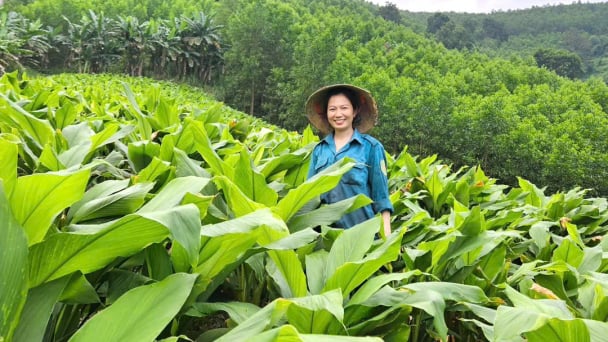
(VAN) Transforming barren hills once dedicated only to acacia and cassava, the Anh Mai Medicinal Plant Cooperative has found a new direction with red turmeric, opening up sustainable livelihoods for local residents.
