June 5, 2026 | 07:41 GMT +7
Hotline: 0913.378.918

June 5, 2026 | 07:41 GMT +7
Hotline: 0913.378.918
According to the Binh Dinh Fisheries Sub-Department, the province has almost 2,000 hectares of water surface available for shrimp farming in 2021, including approximately 628 ha for intensive and semi-intensive farming techniques and nearly 1,371 ha for advanced extensive farming methods.
The crop was impacted by extended hot weather throughout the stocking and harvesting stages, impairing the growth and development of farmed shrimp. However, only 0.61ha of shrimp farming area was affected by environmental and white spot illnesses during the previous farming season, and there was no area affected by hepatopancreas disease. The condition stood in stark contrast to the previous year, when almost 37.5 hectares of agricultural land was afflicted with illnesses. As a consequence, shrimp farmers in Binh Dinh enjoyed a bumper harvest this year.

In the early 2021 farming crop, most farmers in Binh Dinh can garner profits thanks to less disease in shrimp. Photo: Vu Dinh Thung.
According to Nguyen Van Hung, the local authority of Phuoc Thanh, the last shrimp harvest saw the development of infectious illnesses, despite the fact that farmers began stocking for just one month. Almost all shrimp farmers failed. However, shrimp farming households have strictly followed the authorities' and local authorities' recommendations this year, ensuring that the environment surrounding the water source for farming is protected, shrimp diseases are controlled, and damage is kept to a minimum. As a result, the majority of local shrimp farmers have a successful farming crop.
The aforementioned accomplishment is the result of many contributions from competent authorities. According to the Binh Dinh Fisheries Sub-Department, prior to the start of the farming season, this unit conducted numerous rounds of environmental monitoring in aquaculture areas throughout the province to warn, recommend, and guide farmers on how to properly care for, manage, and protect water sources.
Apart from that, the Binh Dinh Sub-Department of Animal Health collaborated with communities to supplement disinfectants, tighten quarantine of shrimp breeds to guarantee the quality of input, and offer extra advice on pond development methods. and take care of sick shrimp.
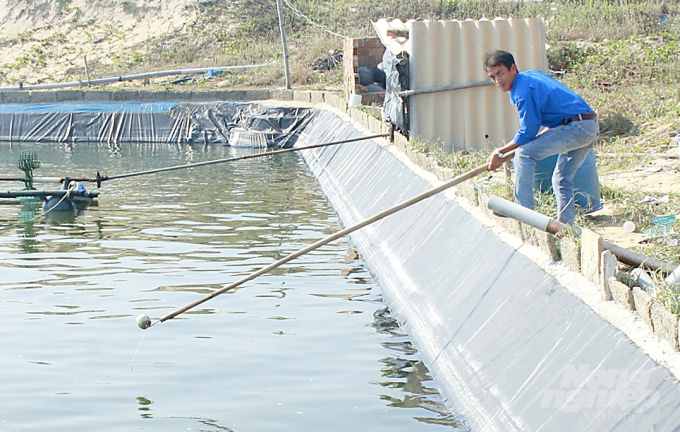
Shrimp farmers in Binh Dinh are currently limiting black tiger shrimp farming and switching to white leg shrimp. Photo: Vu Dinh Thung.
Additionally, Binh Dinh shrimp farmers are increasingly using microbial finished products to enhance the water source's ecology and implement environmental management methods to avoid shrimp illnesses during extended periods of hot weather.”
In mid-July, at the Binh Dinh Department of Agriculture and Rural Development's preliminary conference for the first six months of the year, Tran Van Phuc, director of the sector in Binh Dinh, stated: "In recent years, under the guidance of the functional sector, shrimp farmers in Binh Dinh have increased high-quality shrimp farming and shifted farming methods from extensive to intensive and semi-intensive." As a consequence, overall farmed shrimp output exceeded 3,500 tons in the first six months of 2021, with white leg shrimp production reaching almost 3,313 tons, an increase of 4.2 percent over the same time last year.
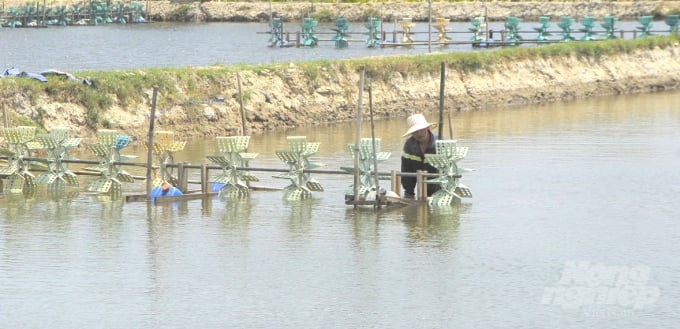
Shrimp farmers in Binh Dinh are looking forward to investing in the infrastructure of farming areas so that the environment for farming water is guaranteed. Photo: Vu Dinh Thung.
He also stated that in the coming years, Binh Dinh will prioritize promoting infrastructure investment in concentrated farming areas; developing intensive farming of white-leg shrimp through the use of advanced technology, organizing shrimp farming cooperatives, and developing a value chain for the white-leg shrimp industry.
“In order to develop shrimp farming in a sustainable and effective manner, we hope that the government will pay attention to and support investment in farming infrastructure, ensuring the environmental sustainability of the water source for farming; receive additional technical guidance from the functional sector; and introduce new technology that shrimp farmers can access and apply if it is suitable for shrimp farming.
/2026/06/04/5514-0-124633_818.jpg)
(VAN) With the largest rubber area nationwide, VRG is stepping up efforts to create green value from rubber forests, playing a vital role in sustainable development.

(VAN) As a pioneering enterprise in developing large-scale production zones, strengthening farmer partnerships, standardizing production practices, and enhancing traceability, PAN Group is elevating the value and global competitiveness of Vietnamese rice.
/2026/06/03/2038-2-111633_44.jpg)
(VAN) Disease outbreaks, competitive pressures, and market requirements force banana exporters to change production methods, invest in technology, and improve the quality of growing areas to sustain export momentum.

(VAN) Agricultural and aquatic products of Can Tho City will increase in value and gain wider access to the South Korean market.
![Transforming through Resolution 57: [2] Businesses lead the way](https://t.ex-cdn.com/nongnghiepmoitruong.vn/608w/files/chinq/2026/06/03/1033-chuyen-minh-tu-nghi-quyet-57-bai-2-doanh-nghiep-dan-loi-152034_231.jpg)
(VAN) Businesses are bringing technology to the fields of Ho Chi Minh City to achieve a modern, green, and sustainable agricultural model.
![Transforming through Resolution 57: [1] ‘Digital farms’ in the heart of a megacity](https://t.ex-cdn.com/nongnghiepmoitruong.vn/608w/files/chinq/2026/06/02/4327-113a0791-210633_906-210635-183212.jpg)
(VAN) From hydroponic vegetables grown in membrane houses to tissue-cultured orchids, Ho Chi Minh City is reshaping agriculture through digital technologies.

(VAN) At Vietnam Dairy 2026, Nestle Viet Nam shared its digital transformation experience, contributing to food safety enhancement, and value chain transparency across the dairy industry.
