July 21, 2026 | 10:12 GMT +7
Hotline: 0913.378.918

July 21, 2026 | 10:12 GMT +7
Hotline: 0913.378.918
As market requirements become increasingly stringent, businesses are no longer focused on securing enough supply to meet delivery schedules. Instead, they are seeking raw materials that consistently meet standards for quality, food safety, and traceability.

Durians are sorted at the packing facility before export. Quality control from the very beginning of the supply chain has become an essential requirement for maintaining market access. Photo: Viet Huong.
This shift is becoming increasingly evident among Vietnam's durian exporters. According to Mr. Phan Nhat Tam, Director of Khoi Phong Farm Co., Ltd. (Dong Nai Province), the biggest change today is not the volume of fruit being purchased but the criteria used to select raw materials. Under unfavorable weather conditions, particularly prolonged rainfall, noticeable differences in durian quality have emerged among growing areas, requiring companies to intensify inspections and conduct sample testing before making purchasing decisions. Tightening quality control is not only necessary to meet the requirements of individual export markets but also essential for maintaining credibility with trading partners as import regulations become increasingly stringent.
"Instead of prioritizing volume as we did in the past, we now place greater emphasis on quality. Only consignments that meet the required standards are selected for packing and export," Mr. Tam said.
Dr. Le Phong Hai, Director of the Biotech Solution Technology Transfer Center and Vice Chairman of the Vietnam Agribusiness Club, said this is an inevitable trend as the durian industry enters a stage where competitiveness is determined by quality. Whereas companies previously focused on inspecting products at the final stage, quality control must now begin at the production area.
According to Dr. Hai, businesses need to have a thorough understanding of where their raw materials are produced, how they are cultivated, and which factors may affect quality. Only by monitoring the entire production process can companies proactively meet the requirements of importing markets.
"The most important thing is to control quality right from the growing area. When businesses know exactly where their raw materials come from and how they are produced, they are in a much stronger position to meet market requirements," Dr. Hai said.
In reality, today's market no longer accepts the mindset that "if you have products, they will sell." Every shipment must simultaneously satisfy multiple requirements relating to quality, food safety, and traceability. As a result, businesses are being compelled to change their procurement strategies, shifting from prioritizing purchase volumes to prioritizing quality from the very beginning of the supply chain.

Many exporters have shifted from prioritizing purchase volumes to carefully selecting raw materials in order to improve export quality. Photo: Tran Hung.
Whereas businesses previously became involved only when the harvest season began, many companies now choose to work alongside growers from the very beginning of the production cycle. Instead of waiting until procurement to assess quality, exporters are becoming more deeply engaged in production to ensure that raw materials meet the specific requirements of each target market.
According to Ms. Ngo Tuong Vy, General Director of Chanh Thu Fruit Import-Export Co., Ltd., the biggest change for businesses today is proactively working with customers first to understand the requirements of each market before developing production plans together with cooperatives and farmers. Sustainable linkages can only be established when stable market outlets are secured.
She said the company accompanies farmers from the start of each crop, providing guidance on cultivation practices, harvest timing, and the technical standards that must be met. Once production protocols are agreed upon, the company develops appropriate partnership mechanisms to ensure stable market access for growers while securing a reliable supply of export-quality raw materials.
In addition to purchasing fruit at prevailing market prices, the company also provides financial incentives to cooperatives and growers that strictly follow the agreed production protocols, encouraging the development of standardized production areas.
Ms. Vy noted that perceptions of export markets have also changed considerably. While China was once regarded as a relatively less demanding market, its requirements for quality, traceability, and food safety are now increasingly comparable to those of other high-standard markets.
"Meeting standards is no longer a competitive advantage, it has become a prerequisite for maintaining exports. Therefore, businesses and farmers must change together and comply with a common production process from the very beginning of the season," Ms. Vy emphasized.
From the perspective of production organization, Ms. Dang Thi Thuy Nga, Director of Xuan Dinh Agricultural Trade and Services Cooperative, said cooperatives today no longer simply purchase produce but also serve as a vital bridge between businesses and growers. Whenever export markets or companies introduce new requirements, the cooperative promptly communicates them to its members so production practices can be adjusted accordingly.
"Whenever new regulations are issued or businesses provide feedback on product quality, we immediately inform all members. Training is conducted regularly so that farmers can make timely adjustments instead of waiting until harvest to address problems," Ms. Nga said.
According to Ms. Nga, quality is not created during the final sorting stage but throughout the entire cultivation process. Therefore, complying with production protocols, maintaining field diaries, and using agricultural inputs in accordance with technical guidelines have become mandatory requirements for cooperative members.
The efforts of individual businesses are helping improve the quality of raw materials. However, achieving lasting transformation across the durian industry will require more professionally organized production zones and stronger value-chain linkages among businesses, cooperatives, and growers. These foundations will be essential for enhancing the competitiveness of Vietnam's durian industry in its next stage of development.
Translated by Kieu Chi
![Gia Lai agricultural extension milestones: [1] Bringing red tilapia to Japan](https://t.ex-cdn.com/nongnghiepmoitruong.vn/608w/files/content/2026/07/20/1-094213_494-122051.jpg)
(VAN) In recent years, Gia Lai's agricultural extension service has been connecting businesses with red tilapia farmers to bring this product to Japan.

(VAN) Facing strict environmental demands, China - Viet Nam supply chains must replace fragmented logistics with modern 'green road corridors'.

(VAN) Viet Nam's pepper sector is adopting regenerative agriculture models to reduce greenhouse gas emissions and enhance sustainability.
![Five markets, one strategy: [4] A new game in the US market](https://t.ex-cdn.com/nongnghiepmoitruong.vn/608w/files/chidhctv/2026/07/17/2354-5-thi-truong-1-chien-luoc-bai-4-thong-diep-tu-thi-truong-hoa-ky-180013_702-191039-0916281.jpg)
(VAN) According to Mr.Huy, Agricultural Counselor to the US, opportunities to access this market are reserved for suppliers with the capacity to fully comply.
![Five markets, one strategy: [3] Preparing early for export](https://t.ex-cdn.com/nongnghiepmoitruong.vn/608w/files/chidhctv/2026/07/16/2032-aeon2-15234345-130423_61-141655-0915081.jpg)
(VAN) According to Counselor Vu Cuong, if Vietnamese enterprises actively prepare, they are fully capable of meeting the requirements of the Japanese market.
/2026/07/16/4921-3-114416_964.jpg)
(VAN) Despite its vast fruit-growing areas and export growth, Dong Thap's fruit industry still faces bottlenecks in logistics, value chain linkages, and deep-processing capacity, limiting its ability to expand into international markets.
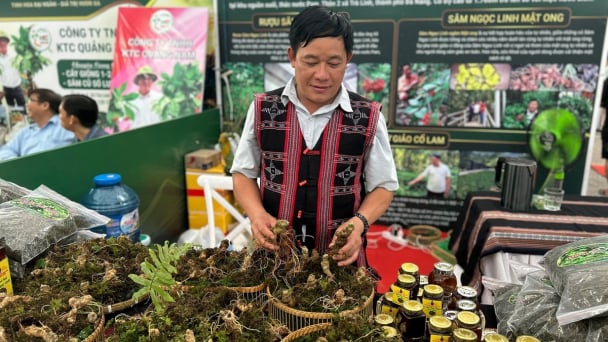
(VAN) Viet Nam's 'national treasure' carries with it the story of its native land while also opening opportunities for Ngoc Linh ginseng to reach a much broader market.

![Durian market at new crossroads: [1] Falling prices prompt caution](https://t.ex-cdn.com/nongnghiepmoitruong.vn/resize/174x104/files/huytd/2026/07/11/0928-duong-dai-cho-sau-rieng-viet-bai-1-gia-giam-doanh-nghiep-than-trong-163428_487-085818.jpg)