July 21, 2026 | 09:41 GMT +7
Hotline: 0913.378.918

July 21, 2026 | 09:41 GMT +7
Hotline: 0913.378.918
Dong Thap province currently has more than 135,000 ha of fruit trees, including more than 39,000 ha of durian, around 26,260 ha of jackfruit, 24,900 ha of coconut, over 16,800 ha of mango, nearly 15,000 ha of pineapple, and approximately 14,100 ha of citrus. As of June this year, the province's total fruit output had reached approximately 1.3 million tons. Durian remained the standout commodity, with production during the first six months of the year estimated at more than 268,000 tons.
Large-scale concentrated fruit production zones have been established across Dong Thap, creating favorable conditions for the synchronized implementation of planting area codes, quality standards, and logistics solutions. To date, the province has been granted 3,496 planting area codes covering 101,182 ha of fruit orchards for export purposes. Of these, 3,452 codes have already been approved by importing countries, while the remainder are awaiting approval. The province has also been assigned 565 packing facility codes, of which 496 have been approved.

Dong Thap is the Mekong Delta's largest fruit-producing province, with a wide range of high-value export commodities. Photo: Minh Dam.
Dong Thap has more than 2,400 ha of fruit trees certified under VietGAP or GlobalGAP or compliant with food safety standards, while organic production areas reached approximately 847 ha. Around 133 cooperatives engaged in fruit production and consumption have established linkages with businesses both within and outside the province.
In the first six months of 2026, the province's fruit and vegetable export turnover was estimated at USD 77.53 million, up 1.76% compared to the same period. Durian remained the key product, accounting for 30.56% of total export turnover, followed by dried fruit products (10.25%), frozen mango (7.60%), and dragon fruit (5.26%). This export structure reflects a positive shift toward high-value processed and frozen fruit products.
Despite its enormous potential and bright spots, Dong Thap's fruit industry still faces numerous constraints and major bottlenecks, particularly in the export sector. Price volatility remains a persistent challenge, with bumper harvests often followed by sharp price declines. Durian prices have fluctuated dramatically, climbing above VND 100,000/kg at times before plunging to only a few tens of thousands of dong. More recently, the price of pineapple in Dong Thap dropped from a stable VND 8,000–11,000/kg to around VND 6,000/kg, leaving growers merely breaking even due to oversupply and heavy reliance on the domestic fresh fruit market.
According to Mr. Vo Tan Loi, Chairman of the Dong Thap Durian Association, the most pressing challenge for the fruit industry in general and durian in particular is the lack of standardized production areas. Fraud involving planting area codes and packing facility codes continues to occur. In particular, the province lacks a laboratory capable of testing cadmium residues in durian exports to China. As a result, exporters must rely on laboratories in Ho Chi Minh City and Can Tho, which is both time-consuming and prone to causing shipment delays.
Another systemic challenge is farmers’ fragmented, small-scale production and spontaneous cultivation expansion, resulting in inconsistent product quality. Weak linkages between farmers and businesses have also led to contract breaches. Farmers bear considerable production risks but receive incommensurate benefits. When material costs rise or market prices increase, they are still paid according to contract prices. However, when market prices decline, businesses often lower their procurement prices accordingly.
In addition, the province’s cooperatives remain limited in capacity, small in scale, and slow to innovate. Dong Thap currently has 214 cooperatives and cooperative groups with more than 34,150 members. However, their production area accounts for only 12.7% of the province’s total cultivated area, while output through contractual linkages represents just 30% of the cooperatives’ total output.
Cold-chain logistics infrastructure, storage facilities, and deep-processing capacity also remain underdeveloped. In the Dong Thap Muoi region, there is not yet a large-scale processing plant dedicated to converting pineapples into export products. Meanwhile, importing markets such as China, the U.S., Japan, and the EU continue to tighten requirements on food safety, plant quarantine, traceability, and green development.
The current situation underscores the urgent need for Dong Thap to shift from an agricultural production mindset to an agricultural economics approach; from fragmented production to value chain linkages; from producing what is readily available to producing what the market demands; and from manual farming to the application of science, technology, and digital transformation. Farmers should no longer be viewed solely as producers but as professional stakeholders capable of working collaboratively and managing production data.
According to Mr. Nguyen Dinh Tung, Vice Chairman of the Viet Nam Fruit and Vegetable Association, amid the global supply surplus, producers should prioritize improving quality rather than pursuing output. They should also diversify their product portfolio and strengthen cadmium residue control to overcome technical barriers imposed by importing countries.
Sharing the same view, Mr. Bui Ke Binh, a pineapple grower in Tan Phuoc 1 Commune, said local farmers have already mastered cultivation techniques but urgently need businesses to invest in deep processing facilities to ensure sustainable output for their products.

Mr. Ngo Chi Cuong, Secretary of the Dong Thap Provincial Party Committee (center), visits a specialized durian farming model in the province. Photo: Minh Dam.
Speaking at a recent conference on developing value chains for Dong Thap’s key fruit industries, organized by the provincial People’s Committee, Mr. Dang Van Tuan, Deputy Director of the Dong Thap Department of Industry and Trade, acknowledged that the province’s fruit export performance has yet to match its full potential. Drawing on practical experience, delegates agreed that building agricultural brands must begin at the source. The province should strengthen value chain linkages, with processing and distribution enterprises serving as the core, while expanding official exports, investing in cold-chain logistics infrastructure, and accelerating digital transformation and traceability.
Under its development strategy, Dong Thap will shift from providing fragmented support to investing across entire value chains, from creating product labels to building strong brands, and from simply registering intellectual property rights to managing and commercializing intellectual assets. The province is also building additional industrial parks and industrial clusters, with priority given to attracting investment in deep processing of fruit and seafood to address output problems for farmers.
In a dialogue with businesses held during the conference, Mr. Nguyen Thanh Dieu, Vice Chairman of the Dong Thap Provincial People’s Committee, affirmed that the provincial leadership always creates the most favorable conditions for enterprises. He said relevant departments and agencies would be instructed to promptly address businesses’ recommendations and remove bottlenecks, enabling companies to confidently expand their operations while working together to elevate Dong Thap’s fruit industry to the international stage.
$1 = VND 26,450 - Source: Vietcombank.
Translated by Thu Huyen
![Gia Lai agricultural extension milestones: [1] Bringing red tilapia to Japan](https://t.ex-cdn.com/nongnghiepmoitruong.vn/608w/files/content/2026/07/20/1-094213_494-122051.jpg)
(VAN) In recent years, Gia Lai's agricultural extension service has been connecting businesses with red tilapia farmers to bring this product to Japan.

(VAN) Facing strict environmental demands, China - Viet Nam supply chains must replace fragmented logistics with modern 'green road corridors'.

(VAN) Viet Nam's pepper sector is adopting regenerative agriculture models to reduce greenhouse gas emissions and enhance sustainability.
![Five markets, one strategy: [4] A new game in the US market](https://t.ex-cdn.com/nongnghiepmoitruong.vn/608w/files/chidhctv/2026/07/17/2354-5-thi-truong-1-chien-luoc-bai-4-thong-diep-tu-thi-truong-hoa-ky-180013_702-191039-0916281.jpg)
(VAN) According to Mr.Huy, Agricultural Counselor to the US, opportunities to access this market are reserved for suppliers with the capacity to fully comply.
![Five markets, one strategy: [3] Preparing early for export](https://t.ex-cdn.com/nongnghiepmoitruong.vn/608w/files/chidhctv/2026/07/16/2032-aeon2-15234345-130423_61-141655-0915081.jpg)
(VAN) According to Counselor Vu Cuong, if Vietnamese enterprises actively prepare, they are fully capable of meeting the requirements of the Japanese market.
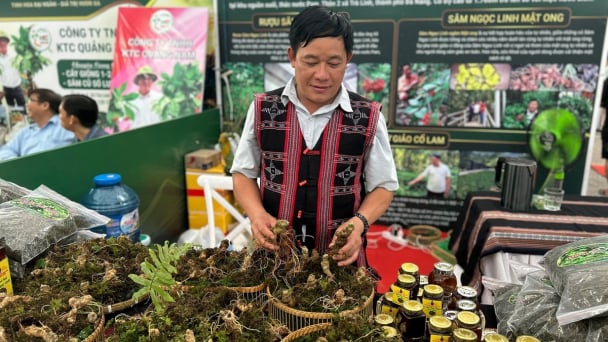
(VAN) Viet Nam's 'national treasure' carries with it the story of its native land while also opening opportunities for Ngoc Linh ginseng to reach a much broader market.
