July 21, 2026 | 17:06 GMT +7
Hotline: 0913.378.918

July 21, 2026 | 17:06 GMT +7
Hotline: 0913.378.918
Having identified the risks and pinpointed the farming practices that need adjustment, the remaining question for the durian industry is how to turn technical recommendations into real change on the ground. Many experts say this will determine the industry's competitiveness in the coming period.

For many years, specialized durian-growing areas relied heavily on each household's own production experience. Photo: Minh Dam.
For many years, specialized durian-growing areas developed largely on the basis of each household's own production experience. If the previous goal was mainly to expand acreage, increase output and open new markets, the focus is now shifting toward maintaining consistent quality, controlling risk and building trust with import markets. With cadmium, the challenge is even clearer, because it cannot be resolved with a single input, cannot be fixed in one round of soil remediation, and cannot be placed entirely on the shoulders of individual farming households.
For many years, specialized durian-growing areas relied heavily on each household's own production experience. Care regimens, fertilizer schedules, input volumes and flower-induction methods were typically adjusted to the conditions of each individual orchard. This model once helped durian trees adapt quickly to real production conditions. But as markets shift toward risk control, the differences between households have become a challenge instead.
According to Tran Thanh Tam, director of the Dong Thap Sub-Department of Plant Production and Protection, one of the biggest risks today is that households within the same production unit code still follow inconsistent care procedures.

Companies can inspect only a portion of raw material before packing, so if a shipment is found to exceed residue thresholds, the risk can affect both the growing area and the purchasing company. Photo: Minh Dam.
Meanwhile, purchasing companies can typically inspect only a portion of raw material before packing. If an import market conducts a probability-based inspection and finds a shipment that exceeds chemical residue thresholds, the impact does not stop at a single producing household. The risk can spread across the entire growing area and affect the purchasing company as well.
According to Tam, this is why the agriculture sector is gradually shifting from inspecting individual shipments to managing risk starting at the growing area itself. Rather than waiting for the product to be created and then testing it, governance needs to begin with the soil, input materials and cultivation practices.
One issue drawing significant attention from experts and regulators is the development of a data system to provide early warning of cadmium residue risk. According to specialized agencies, sampling is no longer aimed solely at assessing current conditions; it is now geared toward building a database to support governance of growing areas.
In Dong Thap's key durian-producing region alone, about 1,620 samples have been collected for analysis and to build an initial database. The information gathered includes growing-area coordinates, soil characteristics, pH levels, input materials and analysis results.
According to experts, the goal of this system is not to "label areas as having cadmium." The aim is to create an early-warning tool. Once authorities know which areas pose higher risk, specialized agencies and farmers will be able to adjust cultivation practices before risks appear in the product.

Frozen durian processed for export. Photo: Minh Dam.
That is also the distinction between incident management and risk governance. Whereas care decisions in the past were based mainly on experience, in the future data will increasingly function as a kind of "production input."
Shifting market demands are also drawing companies deeper into growing areas. According to Vo Tan Loi, chairman of the Dong Thap Durian Association, many companies have already begun screening for chemical residues and heavy metals before harvest as a condition of purchase.
Some companies are also stepping up monitoring of growing areas, setting input criteria and coordinating technical guidance. Although this raises short-term costs, it is considered a necessary step to reduce risk across the entire chain.
Even so, companies cannot replace the role of regulatory agencies or scientists. Controlling cadmium is not the task of any single link in the chain. It is a continuous process of coordination between production, testing and the market.
Out of this, a linkage model is gradually taking shape. In it, the state is responsible for building the database, monitoring growing areas and controlling inputs. Scientists continue to research absorption mechanisms, refine soil remediation processes, and propose solutions suited to different growing conditions. Companies and cooperatives organize production linkages, screen product quality and support standards implementation. Farmers shift from a mindset of tending trees to one of managing soil and long-term production governance.
According to Nguyen Thi Hong Thuy, vice chairwoman of the People's Committee of Ngu Hiep commune (Dong Thap), the ultimate goal is not just to sustain exports but to protect the reputation of a durian-growing region built up over many years. That is also something growers are beginning to recognize. A shipment that exceeds residue thresholds can be sent back. But losing the market's trust can take years to rebuild.

Building a "green zone" for durian in the Mekong Delta starts with soil management, input materials and growing-area data, rather than relying solely on inspection at the final stage. Photo: Minh Dam.
Cadmium may be the first test. But it is unlikely to be the last. As markets place growing emphasis on traceability, food safety and sustainable development, the durian industry's competitive advantage will no longer be measured by acreage or output. Competitiveness will instead depend on the ability to maintain growing areas that are transparent, consistent and capable of controlling their own risks.
For the durian-growing region of the Mekong Delta, the journey to build a "green zone" therefore does not begin in the testing lab. It begins with the soil, with how growers choose their inputs, with growing-area data, and with a decision to change the entire production chain together.
With more than 134,000 hectares of fruit trees and annual output exceeding 2.5 million tons, accounting for nearly 35 percent of the Mekong Delta's fruit-growing area, Dong Thap is accelerating the issuance of growing-area codes, developing chain linkages and pursuing production under international standards to raise product value, expand export markets and build a sustainable fruit industry.
For durian specifically, Dong Thap now has more than 32,000 hectares, concentrated in the province's flood-controlled western communes, planted with high-quality varieties favored by the market such as Ri6 and Monthong, with output exceeding 511,000 tons. The province has been granted 355 durian growing-area codes, covering more than 13,900 hectares.
Translated by Linh Linh
![Gia Lai agricultural extension milestones: [1] Bringing red tilapia to Japan](https://t.ex-cdn.com/nongnghiepmoitruong.vn/608w/files/content/2026/07/20/1-094213_494-122051.jpg)
(VAN) In recent years, Gia Lai's agricultural extension service has been connecting businesses with red tilapia farmers to bring this product to Japan.

(VAN) Facing strict environmental demands, China - Viet Nam supply chains must replace fragmented logistics with modern 'green road corridors'.

(VAN) Viet Nam's pepper sector is adopting regenerative agriculture models to reduce greenhouse gas emissions and enhance sustainability.
![Five markets, one strategy: [4] A new game in the US market](https://t.ex-cdn.com/nongnghiepmoitruong.vn/608w/files/chidhctv/2026/07/17/2354-5-thi-truong-1-chien-luoc-bai-4-thong-diep-tu-thi-truong-hoa-ky-180013_702-191039-0916281.jpg)
(VAN) According to Mr.Huy, Agricultural Counselor to the US, opportunities to access this market are reserved for suppliers with the capacity to fully comply.
![Five markets, one strategy: [3] Preparing early for export](https://t.ex-cdn.com/nongnghiepmoitruong.vn/608w/files/chidhctv/2026/07/16/2032-aeon2-15234345-130423_61-141655-0915081.jpg)
(VAN) According to Counselor Vu Cuong, if Vietnamese enterprises actively prepare, they are fully capable of meeting the requirements of the Japanese market.
/2026/07/16/4921-3-114416_964.jpg)
(VAN) Despite its vast fruit-growing areas and export growth, Dong Thap's fruit industry still faces bottlenecks in logistics, value chain linkages, and deep-processing capacity, limiting its ability to expand into international markets.
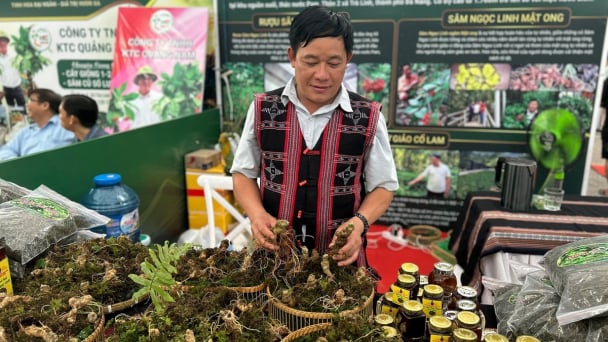
(VAN) Viet Nam's 'national treasure' carries with it the story of its native land while also opening opportunities for Ngoc Linh ginseng to reach a much broader market.
