July 21, 2026 | 09:41 GMT +7
Hotline: 0913.378.918

July 21, 2026 | 09:41 GMT +7
Hotline: 0913.378.918
From the perspective of the US market, the economic potential of Vietnamese agricultural products in global trade remains immense, but the approach to capturing these opportunities must be fundamentally changed. The United States is currently the world's largest economy with a GDP of approximately 27 trillion USD. Total annual food expenditure hovers around 2,5 to 2,6 trillion USD, with nearly 60% dedicated to food services.
Retail e-commerce has surpassed the 1.200 billion USD threshold, accounting for over 16% of total retail sales. This demonstrates that this is not only a massive consumer market, but also a deeply stratified, multi-channel consumer ecosystem with high standards and global influence. Consequently, opportunities for Vietnamese agricultural products remain wide open, but it is no longer a matter of simply having goods to sell; rather, it demands simultaneous fulfillment of quality, compliance, and the capacity to integrate into the distribution system.

Mr. Pham Quang Huy is the Agricultural Counselor to the United States. Photo: VAN.
To contribute to the target of reaching 100 billion USD in agriculture, forestry, and fishery exports, the focus remains on the product groups where Vietnam holds a competitive advantage, such as seafood, wood, coffee, cashew nuts, pepper, and a portion of fruits and vegetables. These are product groups in which we possess both production capacity and the ability to enhance added value through processing and compliance with market regulations.
However, the room for growth no longer lies in increasing raw export volumes but in the ability to enhance value and integrate more deeply into the supply chain. For example, regarding seafood, as import goods account for about 80% of consumption in the US, the opportunity is immense; yet, if we stop at semi-processed products, it is very difficult to raise their value.
The market is shifting strongly toward convenient, processed products suitable for retail systems and food services. Similarly, with coffee or cashews, Vietnam's supply advantage is very clear, but without engaging in roasting, packaging, or brand building, the added value will remain limited.
In the US market, many positive signals indicate that the growth potential for Vietnamese agricultural products remains substantial. Imports are accounting for an increasingly large share of US food consumption, particularly for high-value products. For fruits and vegetables, imports make up about 59% of the fresh fruit supply and 35% of the fresh vegetable supply.
At the same time, US consumers are increasingly interested in international cuisine, healthy products, and goods with clear, sustainable origins. The robust growth of e-commerce also creates opportunities for businesses to reach consumers directly.
However, the key is that these positive signals do not automatically translate into purchase orders for Vietnam. The US market does not lack supply, so opportunities are available only to suppliers with the capacity to fully comply.

Imports account for 80% of seafood consumption in the US, showing massive room for Vietnam to engage deeper in the supply chain. Photo: VASEP.
The biggest bottlenecks at present do not lie in the products, but in the system. First is the export mindset, where many businesses still view successfully shipping a cargo as a success, whereas in the US market, the real value lies in whether the goods can be sustained within the distribution system.
Second is the issue of compliance. This is a highly compliant market with strict requirements regarding food safety, traceability, and supply chain integrity. In fisheries, regulations such as the Marine Mammal Protection Act (MMPA) have set requirements on harvesting management equivalence, resulting in some of Vietnam's fishing sectors being restricted from market access. This shows that the issue is no longer a simple trade but an upgrade of the entire value chain.
Third is the limitation in logistics and market presence, as Vietnamese enterprises still rely heavily on intermediaries and have not directly participated in distribution channels.
Another very crucial point regarding the US market is that trade promotion must go beyond merely bringing samples for introduction or promoting product images. The market does not need a good product in the short term, but a supply system that can operate stably in the long run. This becomes even clearer when working with major distribution channels.
With Amazon, products can access the market quickly, but if inventory levels, delivery speeds, or customer feedback are not maintained, the system will automatically reduce visibility. With Costco or Walmart, the standards are even higher, as suppliers must prove their capacity to supply stably on a large scale, with near-zero deviations. A buyer once shared that they do not look for the best product, but for the most reliable supplier.
In this context, the role of industry associations needs to be recognized more clearly and leveraged more vigorously. In markets like the US, where standards are high and information is fragmented, it is very difficult for individual businesses to meet all requirements on their own. Associations can play a coordinating role by standardizing market information, establishing common standards, and supporting businesses with traceability, certifications, and compliance documentation.
At the same time, associations serve as vital hubs for connecting with distribution systems, importers, and organizations in the US, helping to reduce market access costs for businesses, especially small and medium-sized enterprises. Associations also play a role in shaping the overall industry image, rather than allowing individual businesses to develop in a fragmented, spontaneous manner.
In parallel, the role of agricultural counselors abroad is becoming increasingly important, acting as a coordinating bridge with authorities to handle trade barriers and help domestic enterprises correctly understand the requirements and operations of the host market. Accessing the US market also needs to shift toward a more specific approach; it cannot be treated as a single, homogeneous market. Each state, such as California, Texas, or New York, has its own unique consumption and distribution characteristics, demanding different approaches.
In the coming time, it is crucial that coordination among domestic agencies, industry associations, and the counselor system shifts from case-by-case support to supply chain support. Domestically, the focus must be on standardizing raw material zones, upgrading processing, and building traceability systems. Associations will handle coordination and standardization. Abroad, counselors will focus on market connectivity, policy warnings, and supporting businesses to directly access buyers.
In a market where trust and stability are prioritized above all else, like the US, having a well-organized industry ecosystem will create a much more distinct competitive advantage than competing individually.
Translated by Ha Chi
![Gia Lai agricultural extension milestones: [1] Bringing red tilapia to Japan](https://t.ex-cdn.com/nongnghiepmoitruong.vn/608w/files/content/2026/07/20/1-094213_494-122051.jpg)
(VAN) In recent years, Gia Lai's agricultural extension service has been connecting businesses with red tilapia farmers to bring this product to Japan.

(VAN) Facing strict environmental demands, China - Viet Nam supply chains must replace fragmented logistics with modern 'green road corridors'.

(VAN) Viet Nam's pepper sector is adopting regenerative agriculture models to reduce greenhouse gas emissions and enhance sustainability.
![Five markets, one strategy: [3] Preparing early for export](https://t.ex-cdn.com/nongnghiepmoitruong.vn/608w/files/chidhctv/2026/07/16/2032-aeon2-15234345-130423_61-141655-0915081.jpg)
(VAN) According to Counselor Vu Cuong, if Vietnamese enterprises actively prepare, they are fully capable of meeting the requirements of the Japanese market.
/2026/07/16/4921-3-114416_964.jpg)
(VAN) Despite its vast fruit-growing areas and export growth, Dong Thap's fruit industry still faces bottlenecks in logistics, value chain linkages, and deep-processing capacity, limiting its ability to expand into international markets.
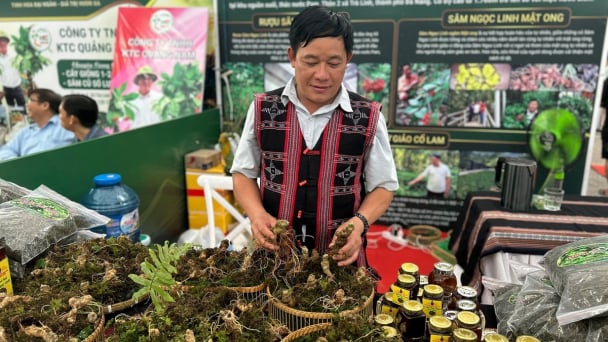
(VAN) Viet Nam's 'national treasure' carries with it the story of its native land while also opening opportunities for Ngoc Linh ginseng to reach a much broader market.

![Five markets, one strategy: [1] Mindset of agricultural counselor in the new era](https://t.ex-cdn.com/nongnghiepmoitruong.vn/resize/174x104/files/huytd/2026/07/13/2741-local1781773800420yk0tspo2tx-105752_768-111609-1144332.jpg)
![Five markets, one strategy: [2] New impetus of Viet Nam-RoK trade](https://t.ex-cdn.com/nongnghiepmoitruong.vn/resize/174x104/files/chidhctv/2026/07/14/1516-5-thi-truong-1-chien-luoc-bai-2-tu-thu-nghiem-den-thuong-mai-hoa-231531_437-120859-1807452.jpg)
![Five markets, one strategy: [3] Preparing early for export](https://t.ex-cdn.com/nongnghiepmoitruong.vn/resize/174x104/files/chidhctv/2026/07/16/2032-aeon2-15234345-130423_61-141655-0915081.jpg)