July 21, 2026 | 16:27 GMT +7
Hotline: 0913.378.918

July 21, 2026 | 16:27 GMT +7
Hotline: 0913.378.918
Competitiveness is increasingly being reassessed based on the ability to meet requirements on emission reduction, traceability, and environmental responsibility. These have become essential conditions for survival within global supply chains. Enterprises that fail to adapt will gradually lose their "ticket" to participate in international markets.
In this context, Betrimex has chosen to reorganize the coconut value chain, from raw material areas and farmers to processing systems and markets, moving toward transparency, control, and alignment with green standards. Approaching the milestone of 50 years of establishment and development, Betrimex remains committed to a long-term growth strategy, regarding coconuts as a component of the sustainable economic ecosystem.

Coconut raw material areas provide the foundation for Betrimex to build a transparent and sustainable supply chain capable of meeting increasingly strict standards of international markets. Photo: Thanh Moc.
As export markets change, product value is increasingly determined by how supply chains are organized and operated. Standards such as ESG, Net Zero, the circular economy, and carbon credits have become part of rules of global trade. Requirements on emission reduction, data transparency, and traceability are reshaping the agricultural sector, driving the transition from fragmented production to verifiable value chains.
According to Mr. Truong Tri Cuong, Director of Agricultural Services at Betrimex, emission reduction capacity, traceability, and data governance will become important components of the agricultural sector's competitiveness in the future. At Betrimex, raw material areas are identified as the core foundation. The company has developed more than 30,000 hectares of coconut raw material areas, including over 16,000 hectares certified organic, with the participation of more than 20,000 farmer households.
This scale enables Betrimex to establish a transparent supply chain with data management capability that meets international standards, which has become a "passport" for Vietnamese agricultural products to penetrate deeper into global markets.
If environmental issues in agriculture were once primarily associated with reducing impacts, farming ecosystems are now increasingly recognized as part of the climate solution.
Coconut is a perennial crop with stable biomass, capable of storing carbon in its trunk, root system, and soil organic matter. When properly managed, coconut plantations can become an important component of carbon-sequestering ecosystems in the Mekong Delta. As the region faces increasingly severe impacts from climate change, saltwater intrusion, and extreme weather events, sustainable farming models have become key factors to maintain raw material areas.
Based on this approach, Betrimex has accelerated organic and regenerative agriculture models while maximizing the value of agricultural by-products. Coconut shells, husks, and coir are utilized to produce biomass, organic fertilizers, activated carbon, and biochar, helping extend the value lifecycle of the coconut tree while reducing resource waste.
At the same time, Betrimex conducts annual greenhouse gas emission inventories, monitors emissions by product unit, optimizes energy consumption, and increases the share of renewable energy sources, including biomass and solar power, within its production system.

Betrimex accompanies farmers in standardizing plantation data, providing technical training, and sharing the benefits of sustainable development. Photo: Thanh Moc.
The green transition in agriculture is closely linked to farmers' role. As production methods change, the position of farmers within the value chain is also being reshaped. In the green value chain, farmers are not merely suppliers of raw materials; they become contributors to environmental value. Soil quality, farming methods, traceability, and emission levels all become components of product value.
The Director of Agricultural Services at Betrimex emphasized, "What matters is helping farmers recognize the tangible benefits of the green transition: healthier soils, optimized input costs, and more stable output."
Through its linkage programs, Betrimex accompanies farmers in providing technical training, supporting the transition to organic farming, maintaining production records, and standardizing plantation data. These efforts contribute to strengthening production capacity and meeting increasingly strict market requirements.
In addition, the implementation of the Fairtrade program has helped increase resources for farmers, from technical training to infrastructure improvements. This approach contributes to a more sustainable distribution of value throughout the supply chain.

The modern plant system operated under lean management principles and integrated ESG standards helps optimize energy use and reduce emission intensity per unit of product. Photo: Thanh Moc.
Under its sustainable development roadmap, Betrimex aims to achieve carbon neutrality by 2035 and attain Zero Waste Level 2 by 2040. This roadmap requires long-term investment in technology, renewable energy, environmentally friendly materials, and data governance systems.
From coconut plantations across the Mekong Delta, a new production mindset is gradually taking shape, which is closely linked to environmental responsibility, livelihoods, and resilience to climate change. Green standards are becoming the common language of global trade, and the ability to organize and operate value chains sustainably will determine the position of Vietnamese agricultural products in international markets.
Betrimex’s transformation journey stands as clear evidence of the Vietnamese coconut industry's potential to reach new heights. Beyond adapting to global integration, Vietnamese coconuts are fully capable of establishing a presence in international markets as pioneers in creating sustainable green values.
Translated by Thu Huyen
/2026/07/20/1547-1-180442_204.jpg)
(VAN) A farmer in Can Tho has found the secret to raising giant water bugs that produce intensely aromatic essence, earning annual profits of hundreds of millions of dong.

(VAN) From crop conversion to deep processing, Ba Che Commune in Quang Ninh Province is building a comprehensive cinnamon value chain that creates sustainable livelihoods while strengthening the local forestry economy.

(VAN) The ACIAR-SunRice public-private partnership, rooted in science and sustainable development, is expected to support rice farmers in the Mekong Delta.

(VAN) Linking the shrimp, rice, and coffee sectors through a circular economy model is opening up a new pathway for Viet Nam's agriculture.

(VAN) HCMC is accelerating the transition to circular industry by transforming industrial parks into eco-industrial zones, fostering industrial symbiosis, and expanding international partnerships for green manufacturing.
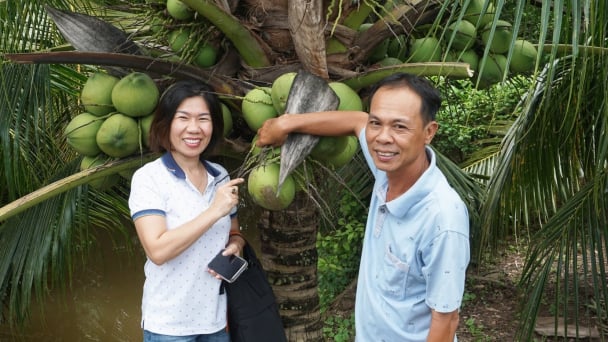
(VAN) The digital map of raw material zones is expected to resolve overlapping investments, ensure production transparency, and accelerate deep processing in the coconut industry.
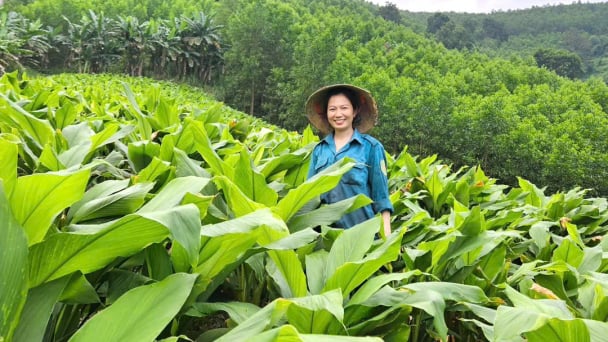
(VAN) Transforming barren hills once dedicated only to acacia and cassava, the Anh Mai Medicinal Plant Cooperative has found a new direction with red turmeric, opening up sustainable livelihoods for local residents.
