July 21, 2026 | 10:12 GMT +7
Hotline: 0913.378.918

July 21, 2026 | 10:12 GMT +7
Hotline: 0913.378.918
Apart from shrimp and pangasius, tilapia is increasingly viewed as a promising export species for markets such as the United States, Brazil, and Japan. The Mekong Delta, in particular, has a competitive edge, as tilapia raised in brackish water tends to gain better-tasting flesh than those farmed in other regions.
Can Tho City is among the localities with significant room for expansion. According to the Can Tho Department of Agriculture and Environment, by the end of 2025, tilapia had been stocked on 604 hectares, while the city's potential farming area is estimated at up to 96,500 hectares. Under intensive farming systems, average yields reach 35 tons per hectare, while cage culture produces 7-8 tons per cage.
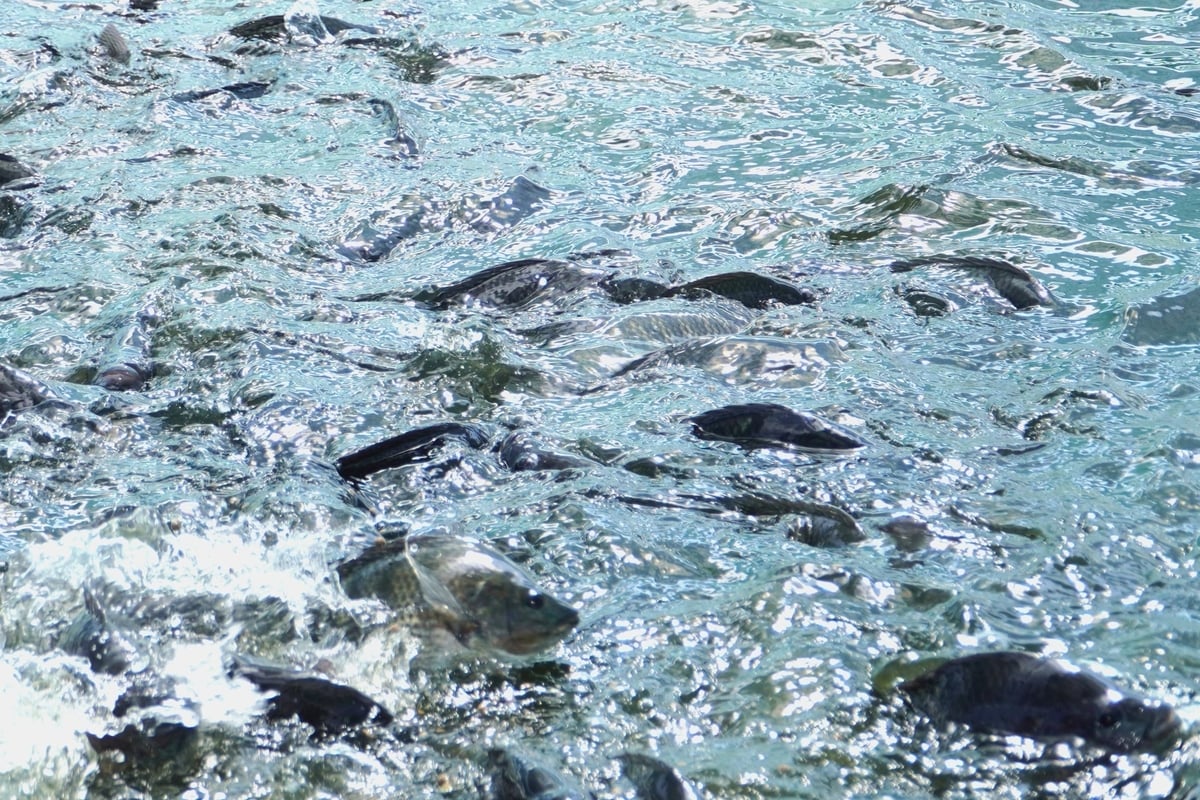
Since 2021, Can Tho has successfully developed a safe food supply chain for tilapia. Photo: Kim Anh.
A key strength of the city lies in its processing capacity. Can Tho is home to two large-scale tilapia processing plants. Tai Kim Anh Co., Ltd. operates a facility with a processing capacity of 200 tons per day, producing both tilapia fillets and whole fish. Another plant belongs to Vietnam Clean Seafood Corporation, the first enterprise in Vietnam to successfully develop tilapia fillet products for export to Japan, serving the sashimi and sushi markets.
Building on these strengths, the Can Tho People's Committee has registered with the Ministry of Agriculture and Environment to participate in a project to improve Vietnam’s tilapia value chain and to enhance trade in high-quality soybeans for aquaculture. This is a five-year initiative funded by the United States.
During a meeting with the International Collaborating Centre for Aquaculture and Fisheries Sustainability (ICAFIS) on July 13, Quach Thi Thanh Binh, Deputy Director of the Can Tho Department of Agriculture and Environment, described the project as a major milestone for tilapia development in both the Mekong Delta and Can Tho. The project offers not only an opportunity to expand farming areas but also momentum to establish a sustainable value chain covering broodstock production, commercial farming, processing, and exports.
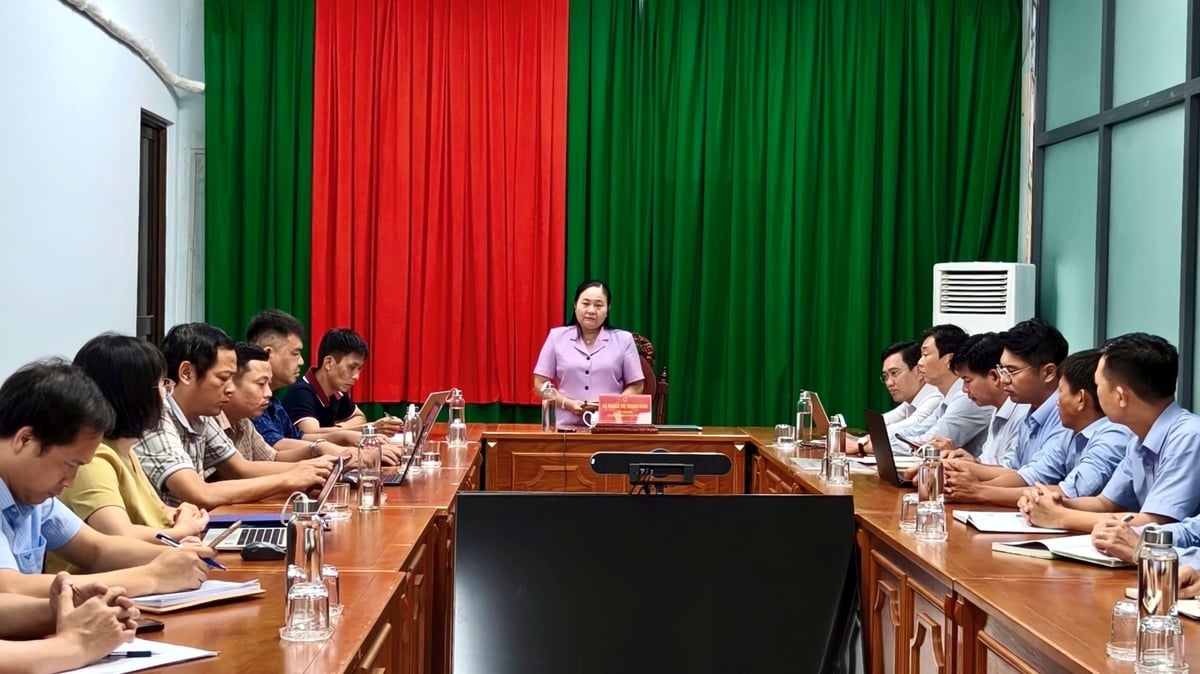
Quach Thi Thanh Binh, Deputy Director of the Can Tho Department of Agriculture and Environment, chairs a meeting with ICAFIS, seed and input suppliers, and cooperatives involved in the tilapia value chain. Photo: Kim Anh.
"Although tilapia was once considered only a standalone farming species, its long-term development in the region has made it an important component of biodiversity in brackish-water shrimp farming. Can Tho therefore has extensive experience with this species and is fully prepared to participate in an export-oriented tilapia supply chain targeting the U.S. market," said Deputy Director Binh.
Following consultations with farmers and cooperatives in Can Tho, ICAFIS representatives concluded that the biggest challenge facing tilapia development is securing stable market outlets through processing and exports.
Current production costs are around VND 26,000 per kilogram. Without processing and exporting enterprises, farmers are highly vulnerable to falling market prices, which may result in losses and disrupt the entire value chain.
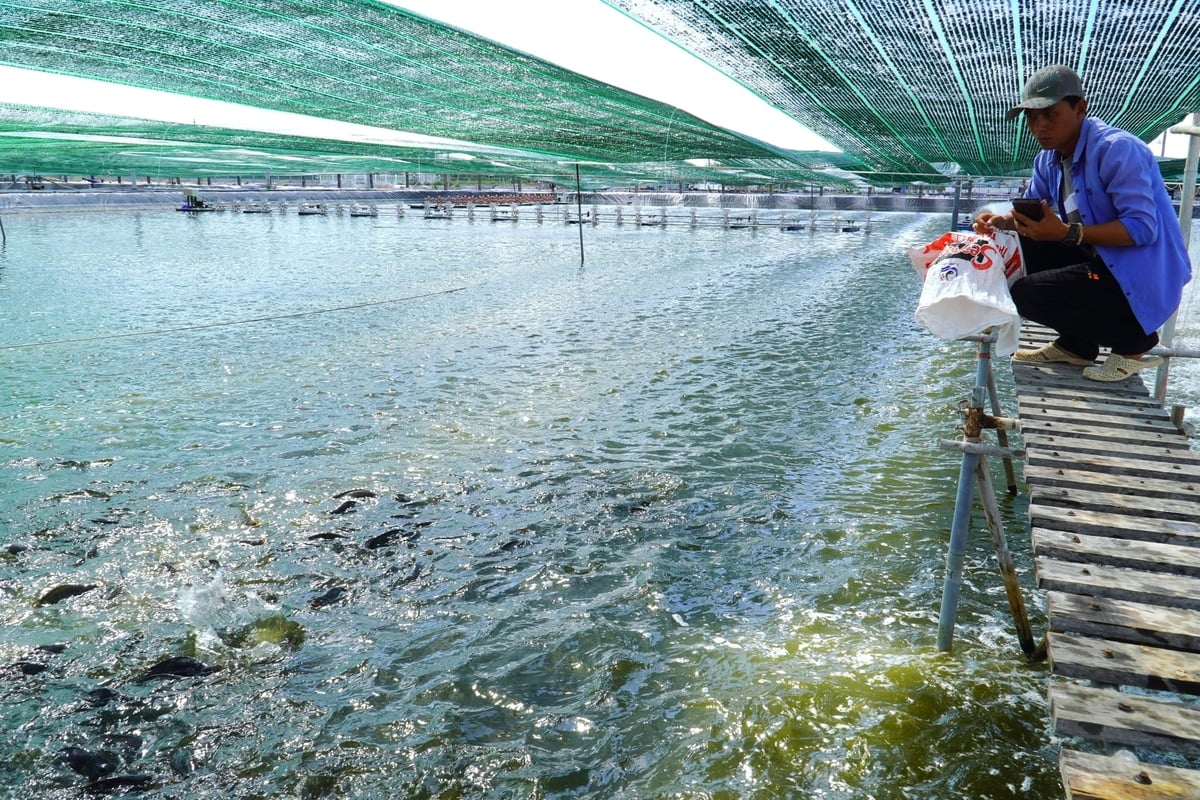
Inside the tilapia farming operation of Viet Nam Clean Seafood Corporation. Photo: Kim Anh.
According to Ngo Cong Luan, Director of the 14/10 Agriculture and Fisheries Cooperative (Hoa Tu commune, Can Tho), the cooperative has raised tilapia for many years, mainly to improve water quality in shrimp ponds. While local conditions are suitable for developing tilapia into an export commodity, farmers remain most concerned about market access.
At times, farm-gate prices have dropped to roughly VND 22,000 per kilogram, leaving farmers with little or no profit and discouraging them from expanding production as planned. Farmers would be willing to scale up production only if an integrated value chain could be established, linking seed supply, feed, commercial farming, processing, and exports.
Another important lesson comes from cooperatives developing processed tilapia products, with Nhat Tam Production and Trading Cooperative being a prime example. From its experience, growth promoters or reproductive stimulants may leave residues during the seed production stage rather than during grow-out. This issue is especially critical because the United States strictly monitors prohibited residues in imported seafood products.

Can Tho currently supplies more than 30 million tilapia fingerlings annually, meeting only 60% of local demand.
One thing to note is that different tilapia strains have varying fillet yields, which concerns the ratio between whole-fish weight and finished fillet weight after removing the head, viscera, bones, and skin. Some strains achieve a fillet conversion ratio of 2.8-2.9, while others remain at 3.2-3.3.
Although these differences are not reflected in seed prices, they have a significant impact on processing efficiency. For this reason, research, selection, and promotion of high-yield tilapia strains should be treated as a priority when building the tilapia value chain.
Can Tho currently supplies more than 30 million tilapia fingerlings annually, meeting only 60% of local demand. The remainder is sourced mainly from Dong Thap and An Giang provinces. To improve tilapia quality and achieve greater self-sufficiency, the Can Tho Department of Agriculture and Environment is cooperating with Tiran Group of Israel to develop several monosex tilapia strains, including white tilapia, salt-tolerant black tilapia, and red tilapia.
*USD 1 = VND 26,450. Source: Vietcombank.
Translated by Samuel Pham
![Gia Lai agricultural extension milestones: [1] Bringing red tilapia to Japan](https://t.ex-cdn.com/nongnghiepmoitruong.vn/608w/files/content/2026/07/20/1-094213_494-122051.jpg)
(VAN) In recent years, Gia Lai's agricultural extension service has been connecting businesses with red tilapia farmers to bring this product to Japan.

(VAN) Facing strict environmental demands, China - Viet Nam supply chains must replace fragmented logistics with modern 'green road corridors'.

(VAN) Viet Nam's pepper sector is adopting regenerative agriculture models to reduce greenhouse gas emissions and enhance sustainability.
![Five markets, one strategy: [4] A new game in the US market](https://t.ex-cdn.com/nongnghiepmoitruong.vn/608w/files/chidhctv/2026/07/17/2354-5-thi-truong-1-chien-luoc-bai-4-thong-diep-tu-thi-truong-hoa-ky-180013_702-191039-0916281.jpg)
(VAN) According to Mr.Huy, Agricultural Counselor to the US, opportunities to access this market are reserved for suppliers with the capacity to fully comply.
![Five markets, one strategy: [3] Preparing early for export](https://t.ex-cdn.com/nongnghiepmoitruong.vn/608w/files/chidhctv/2026/07/16/2032-aeon2-15234345-130423_61-141655-0915081.jpg)
(VAN) According to Counselor Vu Cuong, if Vietnamese enterprises actively prepare, they are fully capable of meeting the requirements of the Japanese market.
/2026/07/16/4921-3-114416_964.jpg)
(VAN) Despite its vast fruit-growing areas and export growth, Dong Thap's fruit industry still faces bottlenecks in logistics, value chain linkages, and deep-processing capacity, limiting its ability to expand into international markets.
(VAN) Viet Nam's 'national treasure' carries with it the story of its native land while also opening opportunities for Ngoc Linh ginseng to reach a much broader market.
