June 4, 2026 | 09:04 GMT +7
Hotline: 0913.378.918

June 4, 2026 | 09:04 GMT +7
Hotline: 0913.378.918
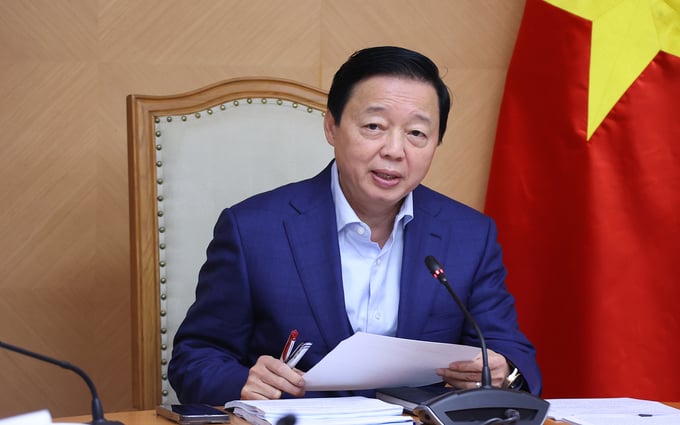
Deputy Prime Minister Tran Hong Ha chairs the working session. Photo: VGP.
On February 18, Deputy Minister Tran Thanh Nam and units of the Ministry of Agriculture and Rural Development presented a report to Deputy Prime Minister Tran Hong Ha regarding the agricultural extension development strategy until 2030, dv2050.
The strategy is designed to significantly reform the organization and activities of agricultural extension, enhance decentralization, and ensure a streamlined, efficient, and effective system that is customized to the unique production models and local conditions. It concentrates on the enhancement of coordination among state-run agricultural extension services, enterprise-led extension programs, and community-based agricultural extension initiatives along value chains. Furthermore, the strategy encourages the integration of digital transformation and information technology in agricultural extension. The objective is to establish a professional and innovative extension system that is capable of accommodating the needs of agricultural, rural, and agrarian development.
The strategy also establishes particular objectives, such as guaranteeing that 90% of communes nationwide have community agricultural extension groups by 2030. The national agricultural extension database will digitize, visualize, and update over 50% of the technical materials used in agricultural extension. Additionally, it intends to offer training, technology transfer, and capacity-building programs to approximately 100,000 farmers. Additionally, the development of 70% of agricultural extension models and initiatives within sustainable production and consumption linkages will guarantee economic benefits for both participants and the broader community.
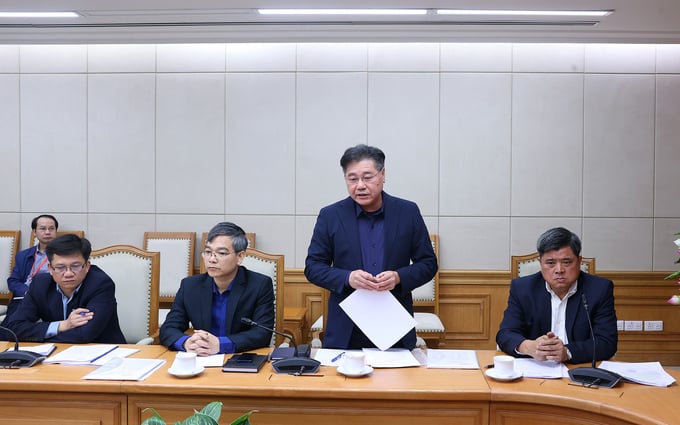
Director of the National Agricultural Extension Center Le Quoc Thanh speaking at the meeting. Photo: VGP.
According to Deputy Minister Tran Thanh Nam, agricultural extension services will be developed in the future with a multi-value integration approach that is in accordance with market demands. This approach will enable small-scale farmers to achieve large-scale commercial production. Rather than merely offering technical advice, extension officers will also assist farmers in the organization of production, the integration of raw material supply chains, the access of market information, and the application of digital transformation solutions that are based on market-specific data and analytics.
The focus of future agricultural extension initiatives will be on the transmission of technology, the restructuring of production in accordance with cooperative development, and the support of the establishment of linked agricultural production zones with businesses. Furthermore, digital agricultural extension services will be enhanced. Associations and enterprises will further develop agricultural extension networks in advantageous regions, while state-led extension services will prioritize the assistance of underprivileged regions.
The Project on Enhancing the Effectiveness of Community Agricultural Extension has been implemented by the nationwide agricultural extension system since 2022, incorporating a number of new initiatives. 58 provinces and cities have established over 5,000 community agricultural extension organizations, with nearly 48,000 members, as of the end of 2024, according to the National Agricultural Extension Center. These initiatives have actively and effectively assisted farmers in accessing and deploying new technical and technological advancements by employing innovative operational approaches.
Agricultural extension services are in high demand in Vietnam, a predominantly agricultural nation, particularly in light of the increasingly stringent quality standards that domestic and international markets are enforcing. Presently, agricultural extension initiatives involve numerous stakeholders, including cooperatives, associations, enterprises, and international organizations. This emphasizes the pressing necessity of a comprehensive agricultural extension development strategy, particularly in the coordination of state-run and private agricultural extension services.
Beyond addressing issues of stagnation and slow adaptation to modern agricultural practices, the strategy serves as a guiding framework for extension organizations. It also serves as a foundation for the development of policies that motivate organizations and individuals to engage in agricultural extension initiatives.
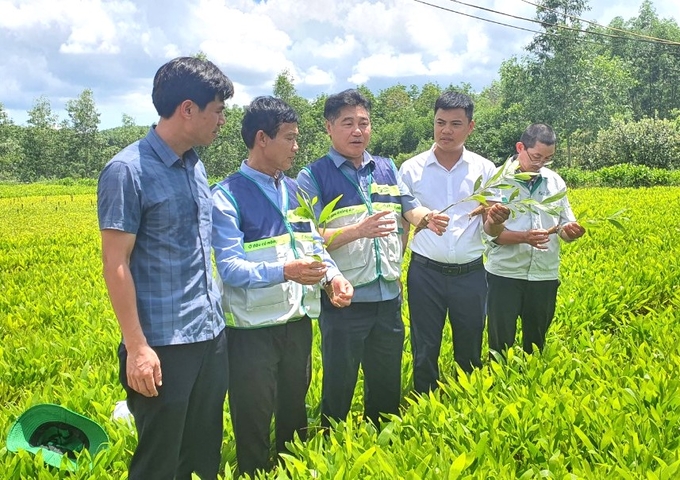
Director Le Quoc Thanh visits the raw material production area. Photo: AT.
Deputy Prime Minister Tran Hong Ha expressed his profound appreciation for the Agricultural Extension Development Strategy that the Ministry of Agriculture and Rural Development (MARD) had formulated. He underscored the importance of the strategy's development in the context of the agricultural economy's evolving challenges and new tasks.
Consequently, the strategy must explicitly delineate the current function and position of agricultural extension, as well as the tasks that require innovation and inheritance, as well as the scope of its implementation. Furthermore, it is imperative that it establishes objectives that are comprehensive, inclusive, and effective in order to benefit agriculture, farmers, and rural development.
Upon the request of the government leader, the strategy was to propose core and breakthrough solutions for agricultural extension, ensuring that they are in alignment with specific projects and duties. It is also necessary to modernize the models and operational mechanisms of the agricultural extension system in order to improve its efficiency and effectiveness.
"The Deputy Prime Minister emphasized that agricultural extension must assist farmers in achieving stable incomes, enhancing their livelihoods, and maintaining resilience to risks." He also directed that the extension system should assist farmers in the transition from traditional farming to organic, modern, and smart agriculture.
Further, agricultural extension initiatives should prioritize the integration of production and trade chains, the enhancement of quality and productivity, the guarantee of food safety, and the establishment of agricultural production zones and brands that meet the highest standards in both domestic and international markets.
The development of agricultural extension models must be associated with the regional development strategy, nationally advantageous agricultural products, or agricultural and rural tourism..
The Deputy Prime Minister also directed MARD to establish policies and mechanisms to facilitate the mobilization of research institutes and universities in the areas of technology transfer and human resource training for agricultural extension groups, farmers, and extension officers, with a particular emphasis on the grassroots level.
Translated by Linh Linh

(VAN) Hue City launched the VIE/301 Project "Climate Adaptation and Resilience Finance," funded by the Green Climate Fund (GCF) and the Luxembourg Government.

(VAN) The Viet Nam Association of National Parks and Nature Reserves (VNPPA) has warned of the risk of ecological fragmentation if management is divided along administrative boundaries.

(VAN) The IUU inter-agency working group met to agree on regulations, build transparent coordination and boost database digitization.
/2026/06/02/2436-2-211902_630.jpg)
(VAN) The rural tourism development plan for the 2026–2030 period aims to create sustainable livelihoods, increase incomes, and promote the value of indigenous culture and resources.

(VAN) The delegation from MAE exchanged experiences on Extended Producer Responsibility (EPR), Deposit Return Systems (DRS), and the circular economy during a working visit to Germany and Norway.
/2026/05/30/1359-3-130327_621.jpg)
(VAN) Green transition requires a '4-party' linkage ecosystem to reduce capital pressure on enterprises, maximize social resources, and form a green value chain network.

(VAN) The Ministry of Agriculture and Environment is developing an implementation plan for three strategic technology task groups covering the 2026 - 2030 period, in accordance with Prime Ministerial Decision 808/QD-TTg.
