December 26, 2025 | 15:46 GMT +7
Hotline: 0913.378.918

December 26, 2025 | 15:46 GMT +7
Hotline: 0913.378.918
On December 24, Deputy Prime Minister Tran Hong Ha chaired a meeting to listen to reports and provide feedback on a draft decree detailing several provisions of the Law on Environmental Protection related to responsibilities of producers and importers for recycling products and packaging as well as their responsibilities for waste treatment (EPR).

Deputy Prime Minister Tran Hong Ha chaired the meeting. Photo: VGP/Minh Khoi.
At the meeting, the Deputy Prime Minister stressed that the core focus of the EPR policy is the circular economy, with recycling as a means to turn waste into resources.
According to the Deputy Prime Minister, the issuance of new policies must ensure legal compliance while thoroughly assessing practical impacts, adopting an appropriate roadmap, and strictly avoiding policy "shocks" that could disrupt production chains or create compliance difficulties for businesses.
According to the Ministry of Agriculture and Environment, the draft decree has been developed on the principle of not altering existing policies while supplementing financial support mechanisms funded by contributions from producers and importers for waste recycling and treatment activities.

Deputy Minister of Agriculture and Environment Le Cong Thanh delivered a report. Photo: VGP/Minh Khoi.
Deputy Minister Le Cong Thanh said that the draft clearly specifies objects, forms of support, principles for management, allocation, and disbursement of funds, and implementation procedures for support mechanisms.
Recycling support packages are defined by product and packaging categories, based on the actual capacity of recycling facilities, to maximize the participation of small and medium-sized enterprises and capable private enterprises. Thereby establishing a diverse, competitive, and transparent domestic recycling network.
Funding for waste treatment support is allocated to localities according to quantitative criteria such as population size and the area of disadvantaged regions. Provincial People's Committees are authorized to decide on the use of these funds and take full responsibility in accordance with legal regulations.
At the meeting, representatives of associations such as VAMA, PRO Vietnam, and VBA proposed to clarify concepts related to collection and the recognition of recycled products, create transparency in the management and use of the EPR fund, and clearly stipulate the principles for calculating the FS fee.

A representative of the Vietnam Automobile Manufacturers' Association (VAMA) delivers remarks at the meeting. Photo: VGP/Minh Khoi.
From practice, many localities have also expressed concerns about a misalignment between legal requirements and actual recycling capacity, particularly for batteries, electronic devices, and means of transport.
Concluding the meeting, Deputy Prime Minister Tran Hong Ha stressed that the overarching principle is that the policy must be immediately implementable, operate substantively, and not be approached through an administrative mindset.
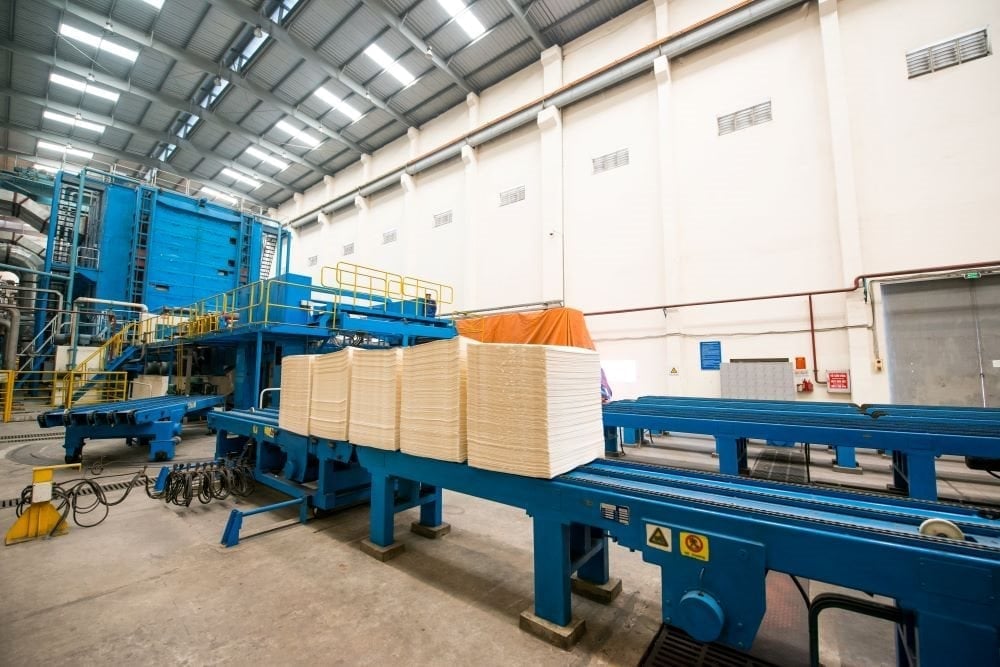
Viet Nam aims to design EPR mechanism toward a circular economy, avoiding administrative mindset.
The Deputy Prime Minister noted that the list of entities subject to EPR should focus on waste types that are difficult to collect and treat and pose a high risk of environmental impact, which should be expanded under a roadmap.
Deputy Prime Minister Tran Hong Ha emphasized that EPR funds must be managed in line with the principles of voluntariness, publicity, and transparency and must not be administrative like state budget funds. The State should neither impose rigid spending norms nor establish new apparatuses but instead ensure that contributors are entitled to participate in decision-making and monitoring of fund utilization through a council involving businesses and relevant stakeholders.
Translated by Thu Huyen

(VAN) On December 24, Deputy Prime Minister Tran Hong Ha chaired a meeting about approving greenhouse gas emission quotas for 2025 - 2026 period.

(VAN) As Viet Nam enters a new era, the national agricultural sector must proactively adapt to global trends to transform current challenges into strategic development opportunities.
/2025/12/18/5046-3-154320_307.jpg)
(VAN) Granting planting area codes is a solution that helps Lao Cai manage forests effectively while also laying a data foundation to support the development of the carbon credit market in the future.
/2025/12/16/3554-1-192458_116.jpg)
(VAN) Minister Tran Duc Thang held a working session with the Viet Nam Seaculture Association to discuss solutions for developing marine farming in a methodical, industrial, sustainable, and well-organized manner.

(VAN) Trading forest carbon credits is to reduce greenhouse gas emissions while creating sustainable livelihoods for local communities.

(VAN) Expanding the area of forests with FSC certification creates a foundation for elevating the economic value of forests, promoting sustainable management, and offering opportunities to participate in the carbon credit market.
