July 21, 2026 | 11:05 GMT +7
Hotline: 0913.378.918

July 21, 2026 | 11:05 GMT +7
Hotline: 0913.378.918
Speaking at the National Conference on Livestock and Veterinary Science and Technology on March 28, Doan Quoc Khanh, Executive Director of Raw Material Development at Vinamilk, said science and technology are becoming central to Viet Nam’s transition toward green agriculture.

According to Khanh, Vinamilk’s development model is built on three pillars: green farms, green production, and green energy. Photo: Tung Dinh.
Within the broader green growth strategy, agriculture plays a central role, with a target to cut at least 121.9 million tons of CO₂ equivalent by 2030. Methane emissions alone are to be capped at no more than 45.9 million tons of CO₂ equivalent, representing a 30% reduction compared to 2020 levels.
To achieve these goals, coordinated solutions are being implemented across the entire production chain, from cultivation and livestock farming to forestry and land use. Notably, Decree 08/2022/ND-CP has created a key legal framework encouraging businesses to invest in circular, low-emission production models.
Against this backdrop, Vinamilk is developing an integrated ecosystem based on green farms, green production, and green energy, forming a sustainable value chain from inputs to outputs. The company currently partners with between 40,000 and 90,000 farmers, creating a large and stable raw material base while strengthening links between business and community in sustainable livestock development.

Many farms are being developed under the Vinamilk Green Farm model. Photo courtesy of Vinamilk. Photo: Vinamilk.
In operations, Vinamilk adopts a value-chain approach, exercising comprehensive control over land and water resources, waste treatment, animal welfare, labor conditions, and economic efficiency. This model helps balance production growth with environmental protection.
The company operates 15 farms nationwide, several of which follow the Vinamilk Green Farm model. These facilities apply Industry 4.0 technologies in herd management, combined with organic farming practices and ecological design to optimize microclimates, improve productivity, and reduce environmental impact.
A notable highlight is the effective implementation of circular economy practices. Solid waste, after treatment, is reused to improve soil, create biological bedding, and support farmers, reducing dependence on external inputs. Liquid waste is treated to standards and reused for irrigation and biogas production, which is then used for grass drying, heating, and barn sanitation, significantly cutting fossil fuel use.
At the same time, all farms have adopted solar power systems. Vinamilk aims to fully utilize all generated biogas in the 2027–2030 period, eliminating flaring and moving toward a closed-loop circular model while optimizing renewable energy use.
In manufacturing, the company is implementing its “Pathway to Dairy Net Zero 2050,” with clearly defined emission reduction milestones. Several facilities have already achieved carbon neutrality under international standards, demonstrating the feasibility of its decarbonization strategy.
Vinamilk is also accelerating digital transformation in governance. All farms have completed greenhouse gas inventories, with data centrally managed to ensure transparency and support long-term planning. Thanks to technological applications, dairy cow productivity has reached 30–35 liters per cow per day, approaching global averages.
Khanh said advancing green agriculture requires focusing on four key solution groups: precision livestock farming based on digital platforms; improvements in breeding and animal nutrition; expansion of renewable energy linked to circular economy models; and enhanced emissions measurement and transparency tied to carbon credit markets.
As green and digital economies become global trends, science and technology are playing a central role in reshaping growth models. With an increasingly complete policy framework and proactive business participation, Vietnam’s agricultural sector is steadily moving toward its net-zero target by 2050.

In the coming period, Vinamilk will continue expanding its network of farms and factories in line with net-zero standards. Photo: Tung Dinh.
In the coming period, Vinamilk plans to expand its network of farms and factories in line with net-zero standards, while piloting science-based methane reduction solutions and strengthening collaboration with technology partners.
The company also aims to complete a closed-loop circular economy model in which all livestock waste is separated and efficiently reused, with solid waste used for soil improvement and liquid waste converted into biogas and reused in production. Solar power systems will continue to be expanded to increase the share of clean energy.
On the technology front, Vinamilk is finalizing an integrated herd management system that consolidates data on animal health, nutrition, and treatment on a unified digital platform. By 2027, the entire system is expected to be centrally connected from headquarters to domestic and overseas farms.
Digitalization, the company says, not only improves operational efficiency but also ensures data transparency, strengthens herd quality control, and optimizes productivity, contributing significantly to sustainable green agricultural development.
Reaffirming its long-term commitment, Khanh said Vinamilk will continue to work closely with the Ministry of Agriculture and Environment, alongside businesses and communities, to achieve net-zero goals and support the sustainable development of Vietnam’s agricultural sector.
Translated by Linh Linh
/2026/07/20/1547-1-180442_204.jpg)
(VAN) A farmer in Can Tho has found the secret to raising giant water bugs that produce intensely aromatic essence, earning annual profits of hundreds of millions of dong.

(VAN) From crop conversion to deep processing, Ba Che Commune in Quang Ninh Province is building a comprehensive cinnamon value chain that creates sustainable livelihoods while strengthening the local forestry economy.

(VAN) The ACIAR-SunRice public-private partnership, rooted in science and sustainable development, is expected to support rice farmers in the Mekong Delta.

(VAN) Linking the shrimp, rice, and coffee sectors through a circular economy model is opening up a new pathway for Viet Nam's agriculture.

(VAN) HCMC is accelerating the transition to circular industry by transforming industrial parks into eco-industrial zones, fostering industrial symbiosis, and expanding international partnerships for green manufacturing.
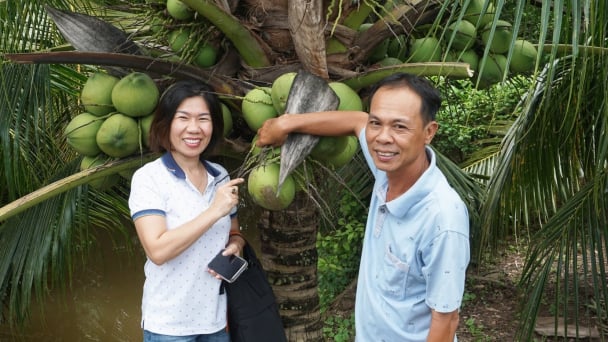
(VAN) The digital map of raw material zones is expected to resolve overlapping investments, ensure production transparency, and accelerate deep processing in the coconut industry.
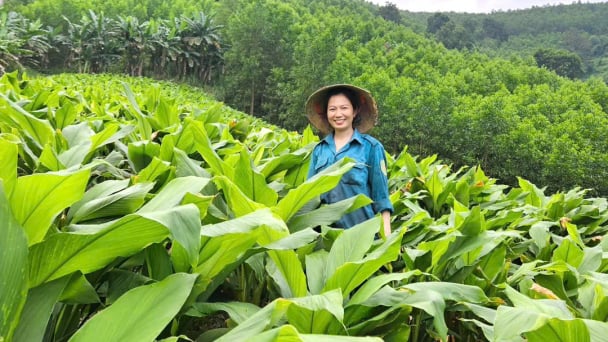
(VAN) Transforming barren hills once dedicated only to acacia and cassava, the Anh Mai Medicinal Plant Cooperative has found a new direction with red turmeric, opening up sustainable livelihoods for local residents.
