January 1, 2026 | 19:20 GMT +7
Hotline: 0913.378.918

January 1, 2026 | 19:20 GMT +7
Hotline: 0913.378.918
Most of the rare animal species released back into the Central Highlands forests have adapted well, showing flexibility and quickly mastering the skills needed to find food in the wild.
On July 2, a representative from the Wildlife Rescue Department (under the Center for Elephant Conservation, Wildlife Rescue, and Forest Management of Dak Lak, located in Buon Don commune, Dak Lak province) reported that since mid-June, the Center has collaborated with relevant agencies such as forest rangers and the police to release 12 individuals of rare and endangered wildlife back into the forests of Chu Yang Sin National Park.
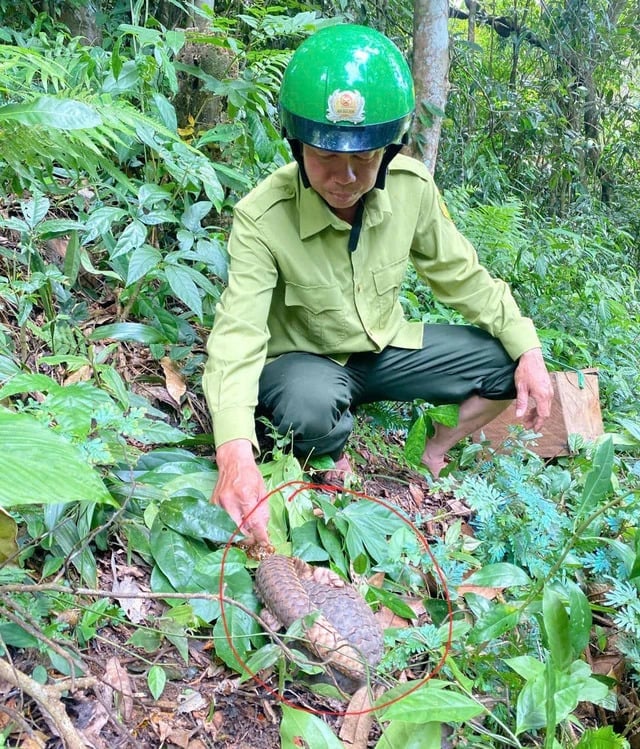
Before being released into the forests of Chu Yang Sin National Park, the Javan pangolin was received, cared for, and thoroughly examined by the Center. Photo: Tuan Phuc.
Several species are listed under strict protection regulations, including the Javan pangolin, pig-tailed macaque, long-tailed macaque, giant Asian pond turtle, impressed tortoise, clouded monitor lizard, and common palm civet.
The Javan pangolin is a critically endangered and highly protected species, listed in the global Red List. It is prioritized for conservation and is strictly prohibited from being exploited, used, or traded in any form under the law.
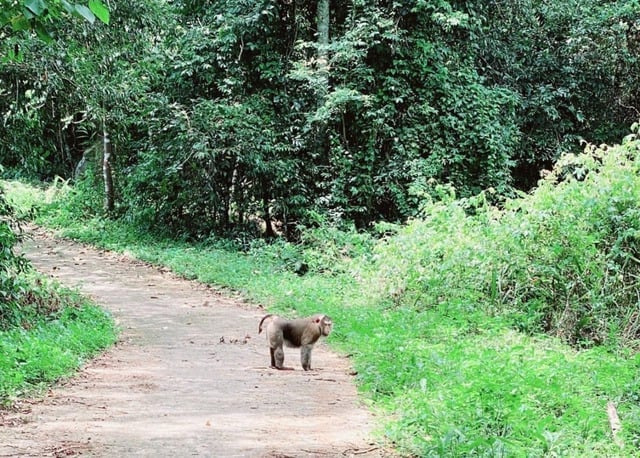
The pig-tailed macaque was released back into the forest by the Dak Lak Center for Elephant Conservation, Wildlife Rescue, and Forest Management during a mid-June operation. Photo: Tuan Phuc.
According to Vietnamese law, the pig-tailed macaque is a rare and threatened wildlife species classified under Group IIB. Hunting, transporting, and trading this species are considered illegal. Currently, pig-tailed macaques are primarily found in natural forests in the Central, Central Highlands, and Northwestern regions of Vietnam.
The giant Asian pond turtle is now a species with a very limited population due to frequent hunting. This rare and endangered species inhabits natural environments in several provinces across Vietnam, including Dak Lak, Gia Lai, and Dong Nai.
The impressed tortoise is a rare and endangered wildlife species, also classified under Group IIB, with the scientific name Cuora mouhotii. It is mainly distributed in provinces such as Lao Cai, Thanh Hoa, Nghe An, and Dak Lak.
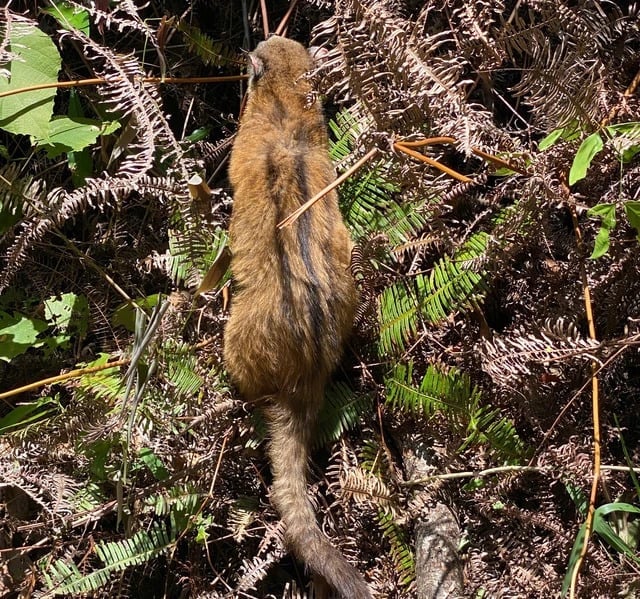
The common palm civet was released back into the forest by the Dak Lak Center for Elephant Conservation, Wildlife Rescue, and Forest Management in mid-June. Photo: Tuan Phuc.
The common palm civet is a threatened and rare wildlife species whose wild population is declining sharply. It faces a high risk of extinction and urgently needs conservation and population recovery efforts.
According to Mr. Le Van Hong, Head of the Wildlife Rescue Department (under the Center for Elephant Conservation, Wildlife Rescue, and Forest Management of Dak Lak), before being released back into the wild, all of these rare individuals had been received, cared for, and thoroughly examined for health by the Center. As a result, once returned to their natural forest habitat, they were able to adapt and survive effectively quickly.
Translated by Kieu Chi

(VAN) Located in three former provinces, Nam Dinh, Thai Binh, and Ninh Binh, and now in two provinces, Ninh Binh and Hung Yen, "Red River Delta" is the name of Vietnam's first interprovincial coastal wetland World Biosphere Reserve.
/2025/12/29/1046-1-210728_624.jpg)
(VAN) In 2025, Viet Nam recorded severe and extreme disasters, breaking multiple historical records and causing heavy losses in lives, property, and infrastructure nationwide.

(VAN) Applied technologies, water-saving irrigation is a strategic solution to promote climate-resilient agriculture and strengthen water security in the uplands.
/2025/12/29/3936-3-163422_251.jpg)
(VAN) Can Gio mangrove forest in particular and the entire Can Gio Mangrove Biosphere Reserve in general hold great potential for carbon credits.

(VAN) Chu Pah Rubber has announced its products that comply with the EU Deforestation Regulation (EUDR), affirming its commitment to sustainable production and product origin transparency.

(VAN) Deputy Director Nguyen Hoai Nam stated that a digital data platform will be developed with agricultural sector databases, utilizing AI to help farmers make informed decisions on 'watering correctly, sufficiently, and efficiently.’
/2025/12/29/4841-2-134224_777.jpg)
(VAN) From only about 10 individuals in 2009, the wild elephant population in Dong Nai has recovered to nearly 30 animals after more than 10 years.
