June 3, 2026 | 16:56 GMT +7
Hotline: 0913.378.918

June 3, 2026 | 16:56 GMT +7
Hotline: 0913.378.918
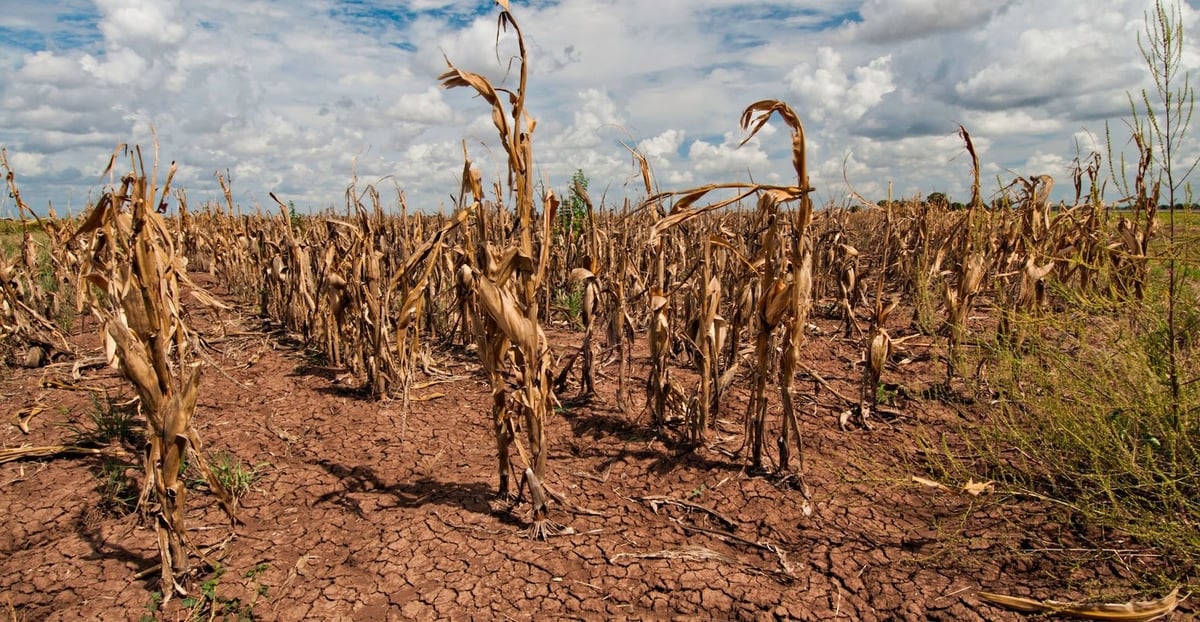
U.S. climate extremes slash crop yields threaten local agriculture.
After decades of steady growth, U.S. harvests are starting to slip under the pressure of climate extremes, raising urgent questions about how farmers will feed a growing population.
In North Carolina, last year’s brutal swings from drought to flood drovecorn yields down 41% and wiped out hundreds of millions of dollars in farm income.
“There is no such thing as normal,” said John Gottula, a principal advisor for AI and biostatistics at SAS. “Driving to the beach last year from Wake County, you might have seen withered corn because we didn't get any rain in June. And, coupled with the dump of rain from Hurricane Helene, we got extremely low corn yields last year.”
North Carolina’s average corn yield plunged from 147 bushels per acre in 2023 to just 87 bushels in 2024, cutting the crop’s value from $750 million to $250 million, the steepest one-year drop on record in the state.
Nationwide, the U.S. Drought Monitor still shows roughly 40% of the country as abnormally dry, while the Southwest suffers its worst multiyear “megadrought” in more than 1,200 years. Farmers across the country are grappling with flash floods, record heat and sudden freezes that can erase months of hard work in a matter of days.
“Climate change has impacted the way droughts behave, because of the higher average temperatures,” said David DuBois, New Mexico’s state climatologist. “Even if you get one inch of rain, that rain is not going to stick around as long as it would have if it were a little bit cooler.”
Hotter droughts pull moisture from soil faster, slicing yields and squeezing farm budgets. Some experts warn that without targeted relief, many family farms simply won’t survive.
“To be really, really efficient, we need to hear from producers and involve them in the decision-making process,” said Sawssan Boufous, an agricultural economist at New Mexico State University who studies sustainability and farm profitability.
High-tech yield monitors and artificial intelligence tools have helped push U.S. corn production to record highs over the past four decades. By mapping every acre in real time, farmers can adjust fertilizer, irrigation and pesticide applications with unprecedented precision.
But adoption remains low among the nation’s nearly 2 million farms, 70% of which are small operations with limited access to capital and technical support. For many, buying and maintaining advanced sensors and cloud-based analytics is still out of reach.
As the calendar flips toward 2025 plantings, growers and policymakers alike are racing the seasons. In Raleigh, the Corn Farmers Recovery Act is moving through the House, seeking $90 million from the state’s disaster relief fund. In Washington, what Republicans call the “One, Big, Beautiful Bill” earmarks $60 billion over the next decade for federal farm programs.
The coming years will test whether that aid, and the high-tech tools at farmers’ disposal, can outrun a warming world.
According to Gottula, growers get an average of 40 chances in a lifetime to make a good crop. Each one lost to extreme weather chips away at America’s food security.
wral

(VAN) Viet Nam presents advantages for developing agricultural tourism including low costs, diverse climate conditions, landscapes, and a tropical agricultural system.

(VAN) Permanent Deputy Prime Minister Pham Gia Tuc, Chairman of the National Committee for APEC 2027, chaired the third meeting of the Committee.

(VAN) To celebrate World Environment Day, Lao Cai residents are exchanging plastic waste and used books for green plants through a community recycling campaign.

(VAN) Local authorities across Hai Phong are rolling out a series of activities to mark World Environment Day 2026 and the Month of Action for the Environment.

(VAN) In the fight against antibiotic resistance, urgent cross-sectoral coordination among health, agriculture and environment is key to protecting communities.

(VAN) Muong Nhe Nature Reserve focuses on conserving biodiversity and developing native plants, while surveying eco-tourism potential to achieve sustainable development linked with forest protection.

(VAN) The 'Resilience First Programme', funded by the Government of Ireland, is helping vulnerable communities in Quang Tri Province strengthen their livelihoods and enhance resilience to climate-related risks.
