January 1, 2026 | 01:08 GMT +7
Hotline: 0913.378.918

January 1, 2026 | 01:08 GMT +7
Hotline: 0913.378.918
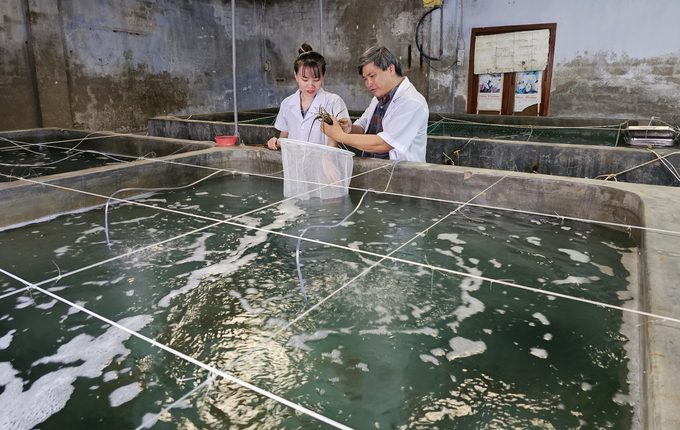
Scientists from Institute III set up a lobster farming experiment to determine the amount of waste. Photo: KS.
Scientists from the Research Institute for Aquaculture III (RIA III) conducted experiments on lobster tank farming in 2024 to determine the waste load associated with aquaculture activities.
The scientific mission assigned by the Ministry was conducted by Master Vo Thi Ngoc Tram, Deputy Director of the Center for Environment and Disease Monitoring in Aquaculture (CEDMA) under RIA III. He stated that lobster is the primary farming object in the Southern Central region, in addition to Asian sea bass and oysters. RIA III has conducted experiments to determine the waste load in cage farming.
To determine the total waste output from lobster aquaculture activities, the research team implemented three experimental procedures, each of which was repeated three times, as per MSc Tram.
On a daily basis, the research team monitored critical water environment parameters, including temperature, pH, dissolved oxygen (DO), and salinity. In addition, they gathered waste, including defecation and residual feed, to determine the waste output during specific time periods.
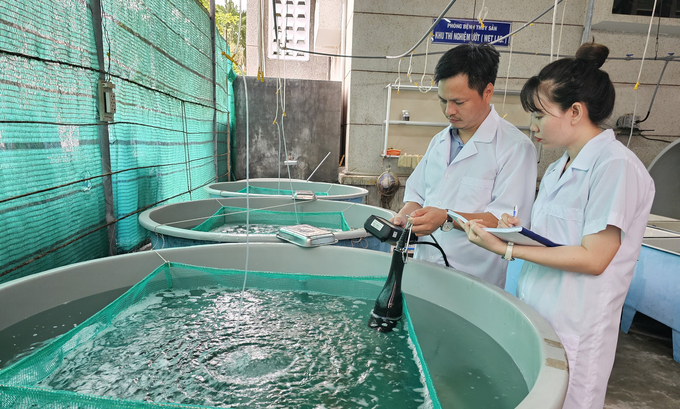
Every day, scientists monitor water environmental factors and collect the amount of excrement discharged. Photo: KS.
"We calculated waste output from lobster farming from two main sources: (1) Dissolved waste, determined through key parameters such as total nitrogen and total phosphorus from the farmed animals and the feed used; and (2) Organic solid waste, calculated from leftover feed, feces from farmed lobsters, feed conversion ratios, growth rates, and the harvest yield of the lobsters," MSc Vo Thi Ngoc Tram explained in detail.
MSc Tram noted that the lobsters grew and developed well after three months of experimental farming and two months of monitoring juvenile lobster development during her instruction of the experimental model. In the agricultural regimens, the survival rates exceeded 80%. Initially, the research team has acquired baseline data to estimate the waste load associated with lobster aquaculture.
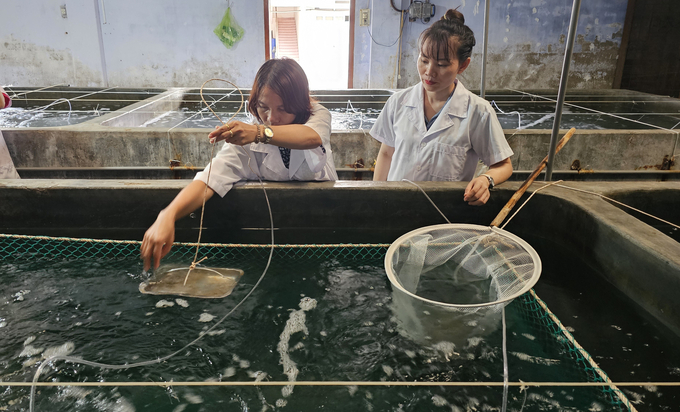
Feed shrimp with industrial food and trash fish to compare and determine the amount of waste. Photo: KS.
The South-Central provinces of Vietnam possess tremendous potential for aquaculture development due to their abundance of tidal plains, harbors, and lagoons. In the past three decades, the marine aquaculture sector has experienced substantial growth by capitalizing on these natural advantages, with a particular emphasis on primary species like oysters, marine fish, and lobsters. In addition to benefiting the economy, this sector has also guaranteed consistent employment opportunities for local communities.
Nevertheless, cage farming operations at sea have produced substantial quantities of waste, which has caused environmental degradation in farming regions, particularly in sheltered harbors. This is in addition to their other accomplishments. Still, quantified data are scarce regarding this matter.
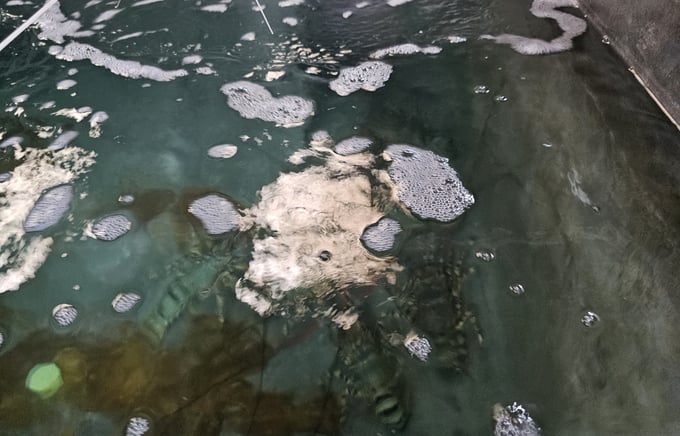
Lobsters raised in experimental tanks grow and develop well. Photo: KS.
Assoc Prof Dr Vo Van Nha, Director of Institute III, responded that the Ministry of Agriculture and Rural Development (MARD) had selected Institute III to implement the project "Assessment of Pollution Sources and Waste Outputs from Marine Aquaculture Activities in the South-Central Region and Proposed Management Solutions." The institute assigned seasoned researchers to concentrate on critical species, including barramundi, oysters, and lobsters, which are frequently cultivated in the area.
The research entailed the cultivation of these species in experimental containers to assess the environmental impact of feeding with industrial and fresh feed. This data revealed the waste generated by lobster aquaculture and other species in the South-Central provinces.
"It is difficult to evaluate the influence of current marine aquaculture activities on the environment due to the complexity of measuring the total waste output in open marine systems." Assoc Prof Dr Vo Van Nha elaborated, "We simulated the farming system in tanks, providing similar feeding and care methods as in the sea to control and evaluate the waste. While there may be discrepancies, such as water flow and exchange, in actual sea farming, this approach helps solve the basic question of determining waste output per unit area or weight of farmed species."
In addition, Dr. Nha underscored the importance of assessing waste sources and outputs in marine aquaculture to ascertain the appropriate stocking densities and prevent the environmental carrying capacity of agricultural areas from being exceeded. Part of an undertaking entrusted to MARD from 2023 to 2025, this research is being conducted.
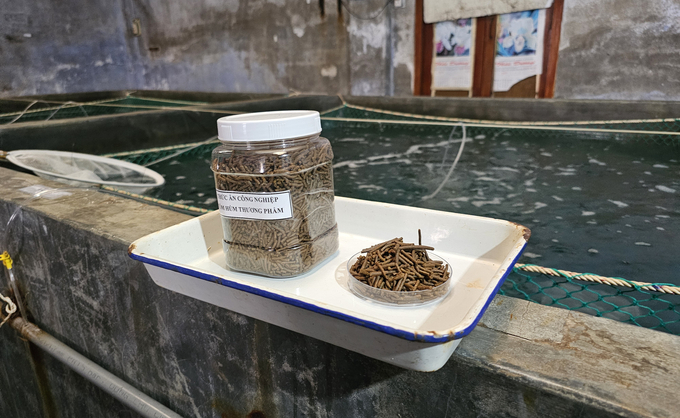
Industrial feed for lobsters produced by Institute III. Photo: KS.
In collaboration with the Department of Natural Resources and Environment and the Department of Agriculture and Rural Development (DARD) in Phu Yen, Institute III conducts annual environmental monitoring and disease surveillance in concentrated aquaculture areas, as per Nguyen Trong Tung, Director of the Department of Agriculture and Rural Development (DARD). In order to assess and evaluate the environmental carrying capacity of agricultural zones, these findings establish an adequate scientific foundation.
Additionally, the province's comprehensive development plan for the aquaculture sector (2021-2025, with a vision to 2030) incorporates a variety of cultivation methods that are based on environmental carrying capacity assessments.
Translated by Linh Linh
/2025/12/29/0829-2-000508_274.jpg)
(VAN) Hai Phong is tightening management, with 100% of fishing vessels licensed and equipped with vessel monitoring systems, joining the national effort to lift the EC's 'yellow card.'
/2025/12/27/2744-1-121716_241.jpg)
(VAN) The Viet Nam Environment Protection Fund is the national environment protection fund and a state financial institution under the Ministry of Agriculture and Environment.
/2025/12/27/2015-2-111213_813.jpg)
(VAN) In efforts to realize the goal of Net Zero emissions, reducing urban emissions is regarded as a key solution.

(VAN) Deputy Prime Minister Tran Hong Ha requested to design the EPR mechanism toward a circular economy that is transparent, feasible, and non-administrative and aligned with actual recycling capacity.

(VAN) On December 24, Deputy Prime Minister Tran Hong Ha chaired a meeting about approving greenhouse gas emission quotas for 2025 - 2026 period.

(VAN) As Viet Nam enters a new era, the national agricultural sector must proactively adapt to global trends to transform current challenges into strategic development opportunities.
/2025/12/18/5046-3-154320_307.jpg)
(VAN) Granting planting area codes is a solution that helps Lao Cai manage forests effectively while also laying a data foundation to support the development of the carbon credit market in the future.
