December 1, 2025 | 12:40 GMT +7
Hotline: 0913.378.918

December 1, 2025 | 12:40 GMT +7
Hotline: 0913.378.918
Every year, hundreds of thousands of tons of plastic waste from land flow into the sea, infiltrating coral reefs, sticking to fishing nets, or getting trapped in the stomachs of marine creatures. Numerous scientific studies have shown that microplastics have appeared in the digestive systems of most fish and mollusk species sampled along several Vietnamese coastlines. Despite various policies and treatment models being implemented, this remains a pressing issue in Vietnam.
According to a report by UNEP, the world produces approximately 430 million tons of plastic annually, over two-thirds of which are single-use products. In Vietnam, it is estimated that around 1.8 million tons of plastic waste are generated each year, but only about 27% is recycled. The majority is either buried or burned, causing resource waste and posing significant environmental risks. In reality, marine plastic waste is not simply a matter of “garbage in the ocean” but the accumulated consequence of a plastic-dependent lifestyle, limited management efforts, and insufficiently strong policies and mechanisms.
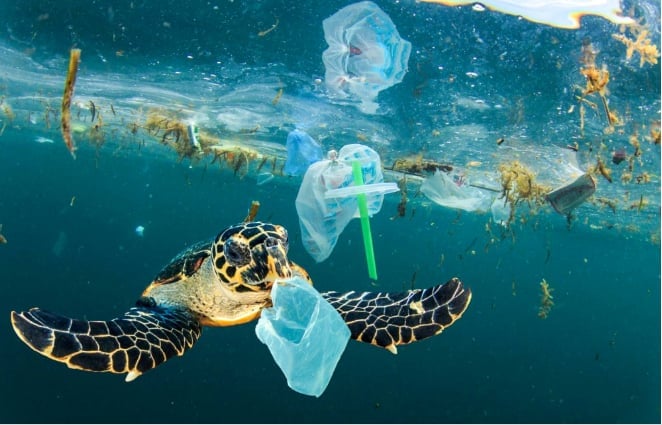
Single-use plastics pose a threat to marine ecosystems. Photo: Illustration.
Not only does plastic waste damage marine ecosystems, but it also poses a threat to the tourism industry, which is a key economic sector for many coastal localities. In Quang Nam, during peak tourist seasons, tens of tons of household and plastic waste are generated, most of which are not sorted at the source. Tourists gradually lose their goodwill toward beaches littered with trash, discolored seawater, and “plastic streams” flowing from riverside resorts.
Meanwhile, in Phu Quoc, Hoi An, and Ninh Thuan, many fishermen have reported decreasing seafood yields, partly due to ecological imbalances caused by plastic waste.
There is a paradox: plastic waste threatens tourism, but tourism is also one of the main sources of plastic pollution in the ocean. The overuse of single-use plastic products in daily life has become one of the leading causes of plastic pollution in Vietnam, especially in coastal tourist areas.
The convenience, low cost, and flexibility of products such as plastic bags, straws, water bottles, and plastic food containers have made them ubiquitous in everyday life. However, this consumption habit is pushing natural ecosystems, especially marine environments, into a critical state.
In tourist areas, hotels, resorts, and seaside restaurants consume single-use plastics at rates far higher than average. Accommodation services often provide free plastic items such as water bottles, toothbrush sets, razors, laundry bags, plastic cups, and shoe covers. Meanwhile, food service areas frequently use foam containers, plastic cutlery, and plastic straws for fast food and take-away meals. Outdoor events, beach picnics, and night markets also generate large amounts of single-use plastic packaging, very little of which is properly collected or recycled.
At the same time, recycling infrastructure in tourism localities remains fragmented; waste sorting at the source is inefficiently implemented, and there are no incentives or penalties from state management. As a result, most plastic waste generated by tourism activities is either burned, buried, or dumped into the surrounding environment, particularly rivers, beaches, and urban coastal drainage systems.
Vietnam has implemented numerous models to effectively manage plastic waste, raise community awareness, promote sustainable consumption behaviors, and reduce negative environmental impacts. Examples include the “Encouraging fishermen to bring waste ashore” model in Dong Hoi City (Quang Binh) and the “Eliminating hot spots and preventing recontamination” initiative to improve marine environment quality and increase aquaculture productivity in Vung Ro Bay (Phu Yen). Both models have shown promising signs of raising community awareness and managing marine plastic waste; however, these efforts only address the surface of the problem.
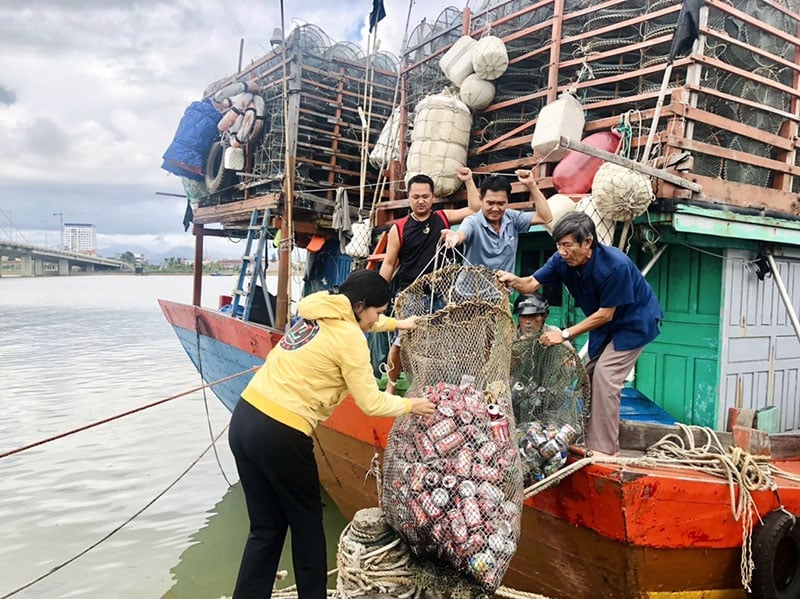
Fishermen in Bao Ninh Commune, Dong Hoi City bring waste back to shore. Photo: WWF-Vietnam.
While pilot models have initially shown promising results, it is difficult to achieve long-term change without sustainable maintenance, timely policy support, and broader scaling. More importantly, the root of the problem lies in the habitual use of single-use plastics—a “convenience culture” deeply ingrained in daily life.
The overuse of convenient plastic products not only reflects an unsustainable consumption system but also exposes the lack of cohesive incentives for transitioning to green business models. Without changes in how plastic products are produced, consumed, and disposed of, pilot efforts will remain merely temporary solutions.
To curb plastic waste, consumption habits must shift toward reduction, reuse, and substitution with environmentally friendly materials. Strong legal tools, financial support mechanisms, and active commitment from businesses must accompany this.
Additionally, coordinated collaboration among all stakeholders is essential. The government must improve the legal framework and implement policies that encourage or mandate the replacement of single-use plastics with eco-friendly alternatives. Tourism businesses must take initiative in shifting their mindset and building brand identities aligned with sustainability. At the same time, every citizen and tourist must be inspired to adopt a green lifestyle, starting with the simple act of refusing a plastic straw or bag that may only be used for minutes but lingers in the environment for centuries.
Translated by Kieu Chi

(VAN) The inevitable path forward is to reorganize production along the value chain, utilizing cooperatives as the core, enterprises as the driving force, and farmers as the central subjects.

(VAN) On November 28, Minister Tran Duc Thang, together with China's Minister of Agriculture and Rural Affairs Han Jun, chaired the 2nd meeting of the Viet Nam - China Agricultural Cooperation Committee.

(VAN) Forest carbon credits are only accepted when they ensure absolute environmental integrity, additionality, permanence, and transparency.

(VAN) Viet Nam partners with Beijing on controlling air pollution, cross-regional management, high-tech monitoring and relocating polluting facilities.

(VAN) With a USD 50 million investment, Australia is partnering with Viet Nam to operate its first public electric bus fleet and develop a nationwide EV charging network.

(VAN) On November 28, in Beijing, Minister Tran Duc Thang met Minister of Ecology and Environment of China Huang Runqiu, to share experience on environmental protection.
/2025/11/28/0950-2-120557_751.jpg)
(VAN) The recent flood spell in the South Central region clearly reflects the characteristics of natural disasters in 2025, which are compound, prolonged, and amplified.
