December 1, 2025 | 10:46 GMT +7
Hotline: 0913.378.918

December 1, 2025 | 10:46 GMT +7
Hotline: 0913.378.918
Surveys show that Vietnam ranks second in the Asia-Pacific region in terms of food waste, with food waste levels in the country being twice as high as those in more advanced and wealthier global economies. Each year, Vietnam generates over 23 million tons of municipal solid waste, with urban areas accounting for around 13 million tons. Organic waste makes up approximately 54–77% of this total.
Speaking at the consultation meeting on the “Current status of food waste and solutions toward a circular economy” in Hanoi, Mr. Nguyen Trung Thang, Deputy Director of the Institute of Strategy and Policy on Agriculture and Environment (ISPAE), stated that the increase in food waste and food loss negatively impacts environmental sustainability. It places a burden on waste management systems and worsens food insecurity. Moreover, food waste is one of the main contributors to three major global environmental crises: climate change, biodiversity loss, and pollution.
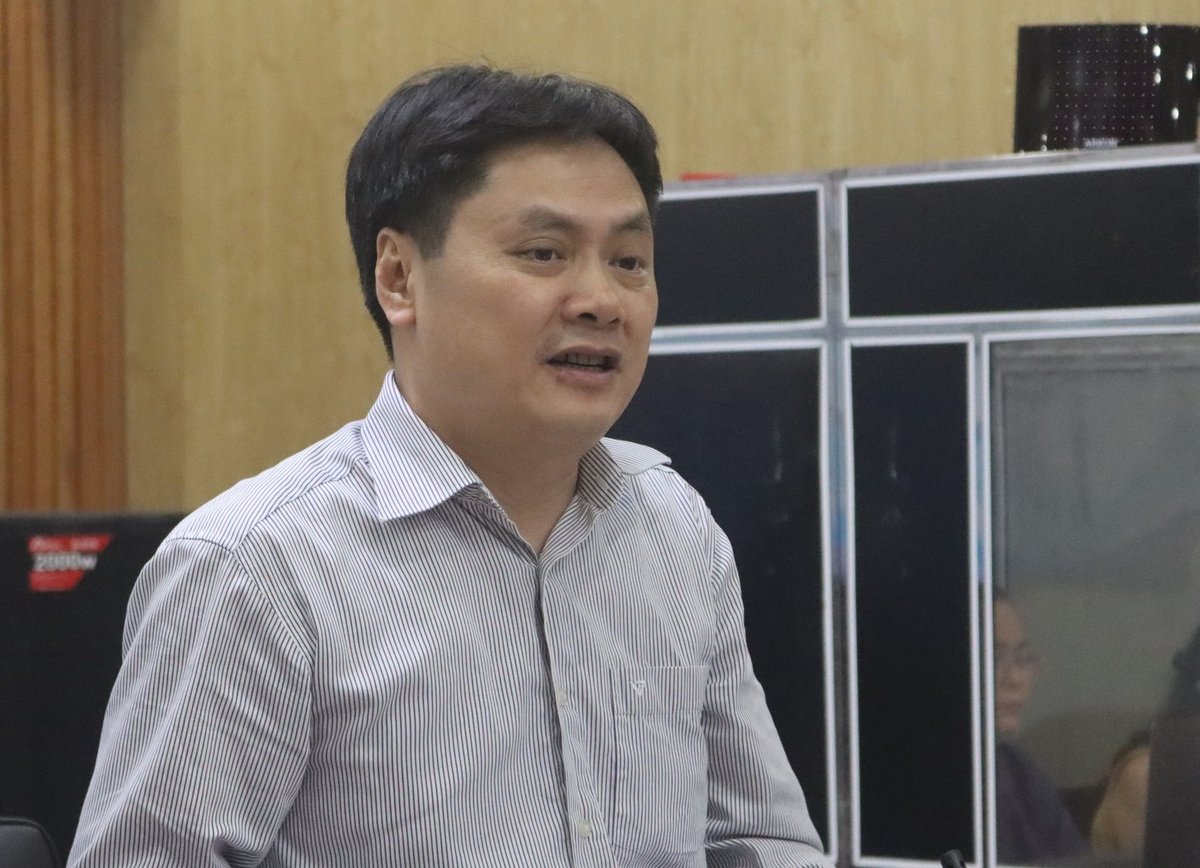
Mr. Nguyen Trung Thang, Deputy Director of the Institute of Strategy and Policy on Agriculture and Environment, speaks at the consultation meeting on the “Current status of food waste and solutions toward a circular economy” in Hanoi. Photo: Hoang Hien.
Mr. Nguyen Trung Thang stated that one-third of global greenhouse gas emissions are linked to the food system, including agriculture, livestock, processing, consumption, and disposal. Food loss and waste account for 8-10% of global greenhouse gas emissions, nearly five times the total emissions from the aviation industry.
The United Nations has adopted the 2030 Agenda, which includes 17 Sustainable Development Goals (SDGs), among which Goal 12.3 aims to halve food waste and reduce food loss by 2030.
Meanwhile, in Vietnam, most municipal solid waste is not sorted at the source. The primary method of treatment is landfilling, which accounts for 63%. Only about 16% is processed at organic composting facilities.
In practice, sorting food waste poses a major challenge in waste management at the source due to its biodegradable nature, high moisture content, unpleasant odor, and the difficulty in transporting and processing it. It also requires separation right at the point of generation. Therefore, developing an appropriate food waste management approach suited to urban conditions is urgently needed.
In major cities like Hanoi, food waste accounts for a dominant share of total municipal solid waste, over 63% from households and up to 97% at certain food service establishments. If not properly managed, food waste can produce foul odors, create conditions for pathogenic microorganisms, and release greenhouse gases. However, if correctly sorted and utilized, this waste stream can become a valuable resource, supporting various industries such as organic fertilizer production, animal feed, bioenergy generation, and even serving as raw materials for the cosmetics and biopharmaceutical sectors.
At the consultation meeting, Mr. Hoang Van Tu, Director of the Ireland-Vietnam Agrifood Partnership (IVAP), emphasized the importance of transforming waste into raw materials for other industries. With millions of tons of food waste generated annually in Vietnam, he stressed the urgent need to develop an inter-sectoral supply chain to reintegrate this massive volume of waste back into the economy as input materials. The cooperation model between Vietnam and Ireland is seen as a positive example, where both sides are working together to explore technology transfer solutions, assess consumer behavior, and pilot initiatives to reduce waste.
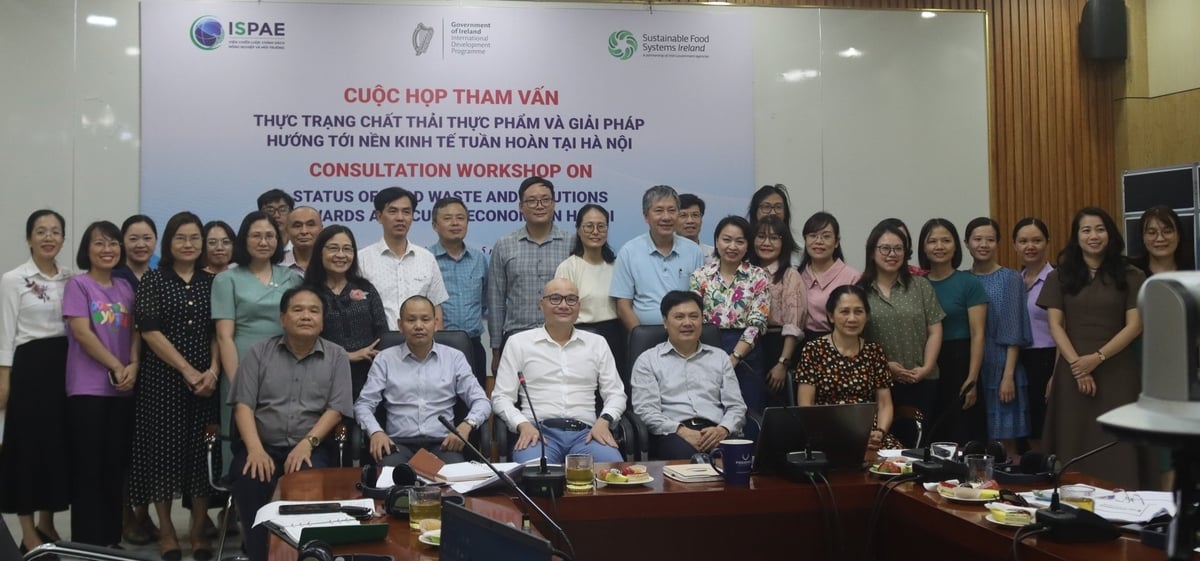
Delegates participate in the consultation meeting on the “Current status of food waste and solutions toward a circular economy” in Hanoi. Photo: Hoang Hien.
Meanwhile, Ms. Ngo Thanh Loan, Head of the Recycling and Environmental Communication Center at URENCO Hanoi, emphasized that effective source separation of food waste can significantly reduce the volume of waste requiring treatment. “Sorting is the first, but also the most crucial step to effectively recycling food waste," she said. By separating food scraps from inorganic waste, transportation, composting, or processing into animal feed becomes more feasible, easing the burden on centralized waste treatment systems.
From an international perspective, Ms. Jennifer Attard from the CircBio Research Group at Shannon ABC, Munster Technological University (Ireland), highlighted similarities in waste models between Vietnam and Ireland. One of the most effective initiatives implemented in Ireland has been the donation of edible surplus food to communities. “Instead of wasting food, give someone a meal,” she said. This initiative has helped Ireland reduce up to 425.528 tonnes of CO2 equivalent annually. Conducting surveys, workshops, and behavioral studies has allowed stakeholders to understand the needs of different target groups better, enabling the proposal of suitable interventions, which are first piloted in small areas before being scaled up nationwide.
Sorting and utilizing food waste is not only a solution to reduce the burden on waste treatment systems but also presents an opportunity to develop green and circular economy sectors. To effectively combat food waste, it is essential to establish a legal framework and long-term strategy with clear objectives. This includes integrating food waste reduction into national policies, implementing systems for measuring and reporting food waste, and promoting the development of technological applications and online platforms that connect businesses with consumers to optimize food usage.
In addition, public awareness should be enhanced through creative communication campaigns, integration into school curricula, and corporate training programs. Vietnam can look to successful models from Ireland, South Korea, and China to widely promote food waste reduction efforts across society.
Translated by Phuong Linh

(VAN) The inevitable path forward is to reorganize production along the value chain, utilizing cooperatives as the core, enterprises as the driving force, and farmers as the central subjects.

(VAN) On November 28, Minister Tran Duc Thang, together with China's Minister of Agriculture and Rural Affairs Han Jun, chaired the 2nd meeting of the Viet Nam - China Agricultural Cooperation Committee.

(VAN) Forest carbon credits are only accepted when they ensure absolute environmental integrity, additionality, permanence, and transparency.

(VAN) Viet Nam partners with Beijing on controlling air pollution, cross-regional management, high-tech monitoring and relocating polluting facilities.

(VAN) With a USD 50 million investment, Australia is partnering with Viet Nam to operate its first public electric bus fleet and develop a nationwide EV charging network.

(VAN) On November 28, in Beijing, Minister Tran Duc Thang met Minister of Ecology and Environment of China Huang Runqiu, to share experience on environmental protection.
/2025/11/28/0950-2-120557_751.jpg)
(VAN) The recent flood spell in the South Central region clearly reflects the characteristics of natural disasters in 2025, which are compound, prolonged, and amplified.
