November 23, 2025 | 17:26 GMT +7
Hotline: 0913.378.918

November 23, 2025 | 17:26 GMT +7
Hotline: 0913.378.918

CEO of De Heus Vietnam: Vietnam's agricultural sector has a positive shift. Photo: De Heus Vietnam.
As 2024 comes to a close, Vietnam’s agricultural sector celebrates numerous milestones, with De Heus emerging as a standout contributor in the livestock industry and sustainable practices. On this occasion, Vietnam Agriculture Newspaper is honored to share insights from Mr. Johan van den Ban, CEO of De Heus Vietnam.
Reflecting on the past decades, Mr. Van den Ban highlighted the remarkable transformation of Vietnam’s agricultural sector. Once a predominantly local industry, it has evolved into one of the world’s leading exporters and producers of many agricultural products. A significant share of this output caters to Vietnam’s domestic market, meeting the needs of its nearly 100 million consumers, while Vietnamese agricultural products are also exported to approximately 200 countries worldwide, becoming daily staples for millions.
Over the years, advancements in the production chain have been transformative. The sector has seen increased professionalization, resulting in improved skills, reduced costs, and higher-quality products that now meet internationally recognized standards.
“This success stems from an ambitious workforce and the commitment of countless family-owned businesses within the sector,” emphasized Mr. Johan Van den Ban.
In the livestock industry, where De Heus Vietnam primarily operates, progress reflects these broader trends. Since its establishment in 2009 in Vietnam, the company has played a key role in advancing the producers of animal protein including meat, eggs, dairy, fish, and seafood by providing high - quality products and services through the food production chain. This year, De Heus marked its 15th anniversary in Vietnam, celebrating numerous achievements in the country and Asia, which were strongly equipped by over 110 years of experience in animal nutrition of Royal De Heus worldwide.
According to De Heus Vietnam’s leader, professionalization within the livestock sector has been instrumental in its success. Farm-level capabilities have improved significantly, aided by better inputs and a clearer understanding of consumer demands. These advancements have not only benefited Vietnam’s domestic market but also secured its position in international markets.
Today, both Vietnamese consumers and global customers can enjoy access to high-quality, affordable animal protein products. This progress underscores Vietnam’s growing influence in global agriculture, driven by innovative practices and a steadfast commitment to quality.
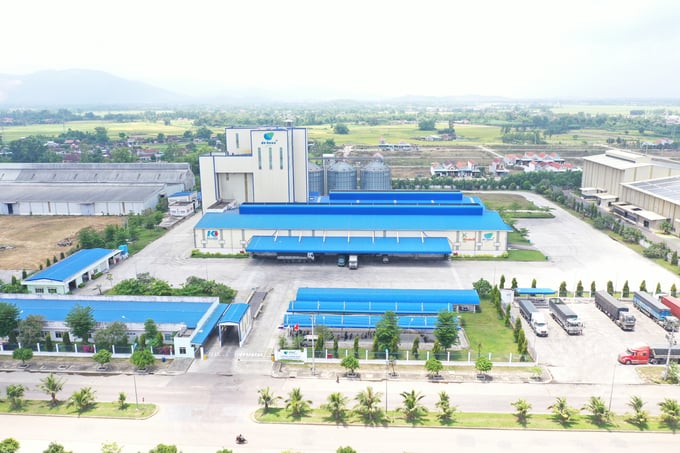
De Heus has gradually asserted its leading role in developing the production of animal proteins such as meat, eggs, milk and seafood. Photo: De Heus Vietnam.
Vietnam’s agricultural sector has achieved impressive growth, but challenges persist, particularly in integrating the livestock and animal production industry into international markets. Of the 60 billion USD agricultural output, only 400 million USD stems from exports of livestock products, a stark contrast that underscores untapped potential for Vietnam to strengthen its global footprint.
For instance, Vietnam has the capacity to produce white broiler chicken at a cost and quality level that compares favorably with other countries in Asia and beyond. Recognizing this, De Heus is taking active steps to connect Vietnam’s production chain to international markets, particularly those adhering to Islamic dietary laws. This requires strict compliance with Halal standards at every stage of production.
De Heus collaborates closely with key players across the value chain, including Bel Ga for feed production, farmers raising the chickens, and slaughterhouses managed directly by De Heus. Their efforts include expanding the value chain and providing Green Chicken products that align with Halal certification requirements.
By facilitating Halal-compliant production, De Heus is paving the way for Vietnamese chicken producers to access high-demand international markets. This presents a substantial growth opportunity for Vietnam’s livestock sector, signaling its potential to capitalize on the expanding global demand for Halal-certified products.
Sustainability has been a priority for De Heus since its entry into Vietnam 15 years ago, and it has only grown in importance for various stakeholders, including production companies, farmers, and the Vietnamese government. On a global scale, sustainability is a key issue, and as a multinational company with a strong presence in Vietnam, De Heus acknowledges its responsibility in this area.
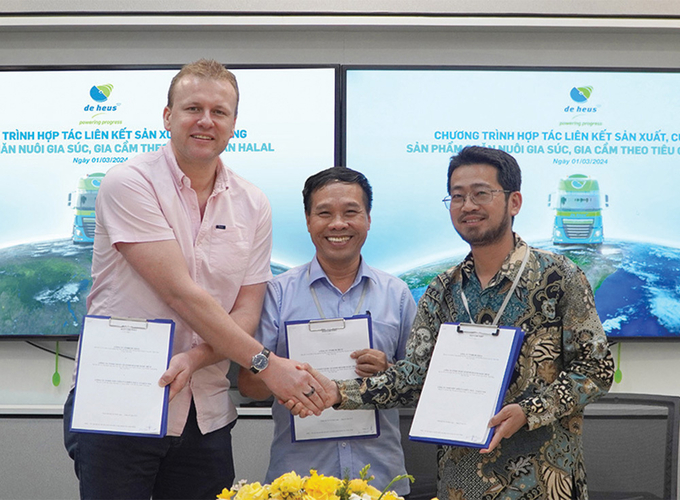
De Heus Vietnam promotes production in compliance with Halal standards. Photo: De Heus Vietnam.
At the heart of the livestock industry are smallholder farmers, and De Heus understands that its success relies on strong partnerships with them.With a strong commitment to support farmers and never compete with them , the company plays a vital role as a supplier and collaborative partner, offering more than just products.
“We aim to work together, to partner up. We offer numerous training programs, combining technical expertise from both international and highly skilled national specialists here in Vietnam, to help farmers improve their technical performance. This in turn reduces their costs, enhancing profitability,” said the CEO of De Heus Vietnam.
Vietnam’s varied climates present unique challenges for farmers, making a personalized approach essential. De Heus takes into account factors such as animal type, climate conditions, and the farmer’s skill level to deliver effective support.
“This is truly the core of De Heus’s strategy,” the CEO explained. “We aim to work with farmers, not compete against them. Working together means supporting one another. Without the farmers' support, we would not succeed – we wouldn’t exist. It’s a mutual dependence, which is what makes our relationship strong and sustainable.”
“I would suggest international businesses coming to Vietnam because things are happening, and there is still significant potential for growth,” said Johan van den Ban. “The Government is highly supportive, and we believe that if we maintain a high level of transparency in terms of the law and food production processes – transparency across the entire value chain and in other industries. The investment environment will remain very positive.”
He cited that GDP growth is steady, and De Heus Vietnam is outperforming other regional peers, with expectations for this trend to continue. The company has developed a comprehensive sustainability strategy that takes a global approach while being adapted to the specific needs of each country.
In Vietnam, De Heus places a strong emphasis on sourcing local raw materials, aligning with the priorities of the Ministry of Agriculture and Rural Development. The company has strategically shifted towards increasing the use of domestic resources, such as locally grown corn and byproducts from the food processing industry. These byproducts, once regarded as waste, are now repurposed in animal nutrition formulations, adding value to materials that were previously discarded.
The use of residual flows allows De Heus to not only lower feed costs but also reduce reliance on imported raw materials. This approach helps decrease the company’s carbon footprint, blending environmental sustainability with economic efficiency. By focusing on both, De Heus supports the sustainable development of the livestock industry, ensuring that growth is balanced with environmental responsibility.
BOX
By 2045, Vietnam is projected to become a high-income country. By combining this framework with the positive energy and growth potential in Vietnam, businesses have a compelling opportunity to invest and flourish in the country.
Translated by Quynh Chi

(VAN) The information was shared at the seminar 'Urban Agriculture - Solutions for Developing Green Spaces,' organized by the Kinh te & Do thi Newspaper and the Biotechnology Center of Ho Chi Minh City.
/2025/11/19/4141-2-132831_216.jpg)
(VAN) One of Japfa's outstanding solutions is implementing digital transformation and artificial intelligence (AI) to optimize operations, enhance productivity, and advance sustainable development.
/2025/11/19/4847-1-093540_448.jpg)
(VAN) The Gia Lai Provincial People’s Committee had a working session with the delegation of the U.S. Department of Agriculture, the State of Idaho, and representatives of the State's leading enterprises.

(VAN) Ca Mau has a sufficient foundation to become a strong regional aquaculture center, where production integrates the economy, the environment, and the lives of the people.

(VAN) SEIKI Group envisions itself as a pioneer in the ‘dual transformation’ of digital technology and green industry, standing alongside the Government and Vietnamese businesses in their pursuit of sustainable development.

(VAN) The VNGEONET network affirms Viet Nam's progress in mastering digital space, providing a precise positioning data platform to serve socioeconomic development.
/2025/11/14/3247-1-184556_35.jpg)
(VAN) Thai Nguyen is methodically implementing digital transformation in the livestock sector, laying the foundation for a modern, transparent, and sustainable agriculture.
