July 21, 2026 | 16:30 GMT +7
Hotline: 0913.378.918

July 21, 2026 | 16:30 GMT +7
Hotline: 0913.378.918
The process is designed to ensure that these assets are genuine, cannot be traded more than once, and are settled securely.
Imagine that a cement plant has recently invested in an energy-efficient production line. After one year of operation, its greenhouse gas emissions are lower than the emission allowance allocated by the Government, leaving the company with unused emission allowances.
Meanwhile, a steel manufacturer faces the opposite situation. Due to increased production demand, its emissions exceed the allocated allowance, and it needs to purchase additional emission allowances to meet its compliance obligations. The two companies reach an agreement on the transaction price.
Can they simply transfer the payment and ownership as they would in an ordinary commercial transaction?
The answer is no.
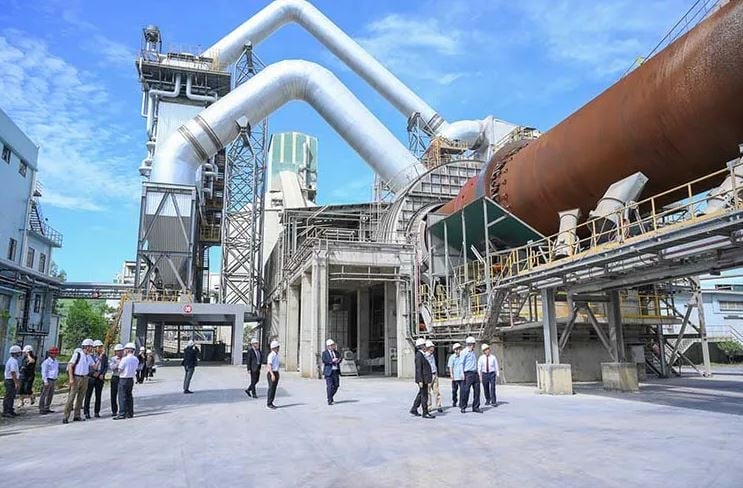
A cement manufacturer invests in production technology to reduce greenhouse gas emissions. Photo: Illustration.
The national registry system records two types of accounts: Emission Allowance Accounts and Carbon Credit Accounts. It should be noted that an Emission Allowance Account may hold both emission allowances and carbon credits.
The first step is for the enterprise to register its emission allowances in the National Registry for Greenhouse Gas Emission Allowances and Carbon Credits, managed by the Ministry of Agriculture and Environment. Each enterprise included in the Government's emissions allowance allocation scheme is assigned an Emissions Allowance Account in the registry system.
Once registered, each emission allowance is assigned a unique identification code that identifies its owner and enables the asset to be tracked throughout its entire trading lifecycle. This identification code is then transmitted to the Vietnam Securities Depository and Clearing Corporation (VSDC) and the Hanoi Stock Exchange (HNX), allowing market participants to verify transaction information.
Similarly, carbon credits must also be registered in the National Registry and assigned their own unique identification codes before they can be traded, following the same registration procedures applicable to greenhouse gas emission allowances.

An Emission Allowance Trading Account may be used to trade both emission allowances and carbon credits, whereas a Carbon Credit Trading Account may be used only for trading carbon credits. Photo: Illustration.
Once registered, emission allowances or carbon credits cannot be traded immediately. The owner must complete a second step by depositing the assets into the National Registry system.
If the carbon exchange is compared to a bank, this deposit functions much like placing funds into a bank account before making a transfer. Only assets that have been deposited into the system are eligible for trading. This requirement helps prevent the same emission allowance from being sold multiple times and minimizes ownership disputes.
For this reason, the National Registry is directly connected to the HNX and VSDC. Whenever a transaction is initiated, the relevant information is automatically cross-checked to ensure that the asset being traded is valid and legally owned.
The Hanoi Stock Exchange provides carbon trading services. Enterprises and organizations wishing to participate in the market must open a trading account through an approved carbon trading member - a securities company that satisfies the required qualifications and has been authorized to participate in the carbon market. Each enterprise or organization is permitted to maintain only one carbon trading account.
An Emission Allowance Trading Account may be used to trade both emission allowances and carbon credits, while a Carbon Credit Trading Account may be used exclusively for trading carbon credits.
Once an enterprise has its carbon assets registered and deposited, transactions proceed through the following steps: Order placement through a carbon trading member → Trade confirmation → Settlement and transfer of ownership.

Settlement on the domestic carbon exchange is conducted on a real-time settlement basis. Photo: VAN.
According to Mr. Nguyen Tuan Anh, Deputy Chief Executive Officer of the Hanoi Stock Exchange, transactions on the domestic carbon exchange are settled in real time. This means that before a trade can be matched, the buyer must have sufficient funds, while the seller must hold enough emission allowances or carbon credits in their depository account. These conditions are verified by the carbon trading member firms. Once all requirements have been satisfied, the trade is matched, and both the payment and the transfer of ownership are completed immediately.
Mr. Nguyen Tuan Anh also said that during the pilot phase of Viet Nam's carbon market, which will run through the end of 2028, the domestic carbon exchange will operate under a negotiated trading mechanism.
Under this model, account holders are responsible for identifying counterparties, negotiating directly, and reaching agreement in advance on the transaction price, the quantity of emission allowances or carbon credits, and the timing of the transfer. Once an agreement has been reached, the transaction is submitted to the exchange through a securities company for confirmation and settlement.
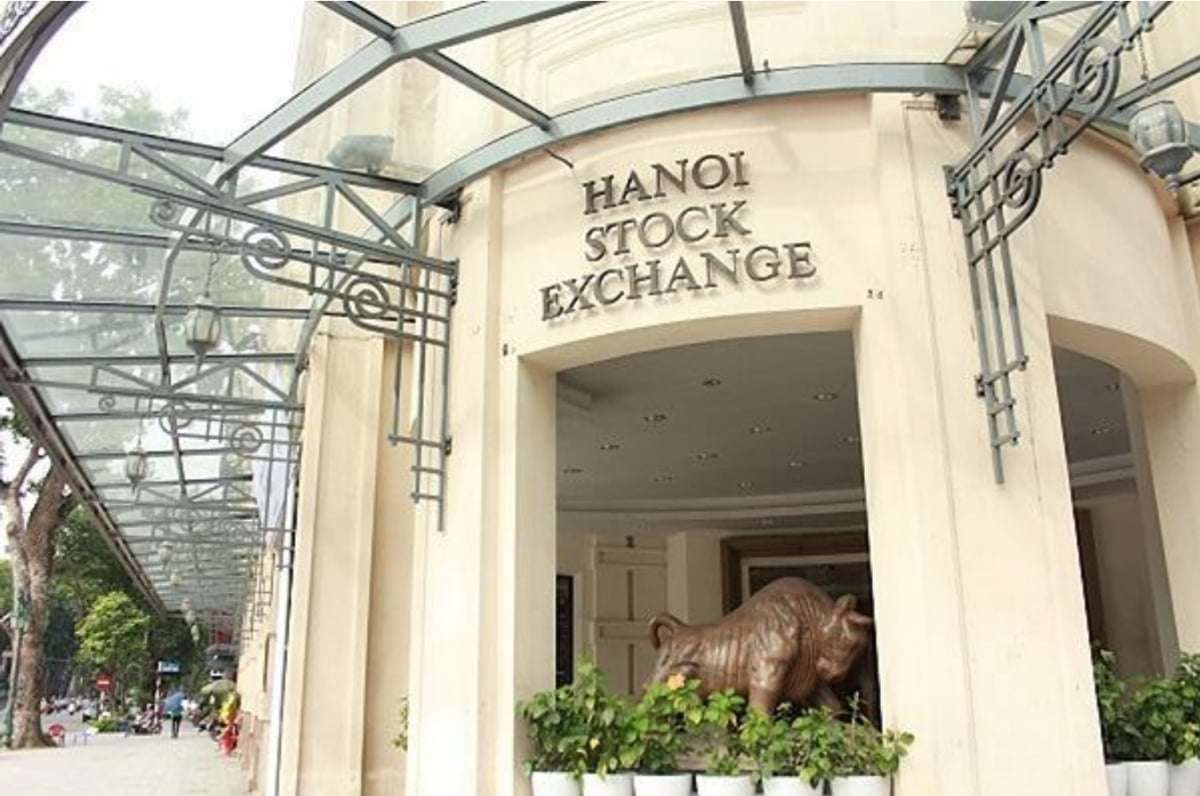
The Hanoi Stock Exchange provides carbon trading services. Photo: HNX.
At this stage, the domestic carbon exchange functions primarily as a platform for confirming transactions, recording ownership, and facilitating settlement, rather than determining market prices. This approach reflects the current scale of the market. During the initial phase, only 110 facilities from the three largest emitting industries are participating, so trading volumes are expected to remain relatively limited. As market liquidity increases, the authorities plan to introduce additional trading mechanisms and may eventually develop carbon derivatives.
According to the Ministry of Finance, this model leverages the Vietnamese securities market's long-established experience in account management, transaction oversight, and system security. The involvement of intermediary institutions also helps reduce technical risks and minimize the likelihood of failed transactions as the market expands.
As a newly established market, the carbon exchange has been designed with comprehensive supervisory mechanisms to prevent market manipulation. The Government's Decree on the carbon exchange clearly stipulates that activities such as collusion to manipulate prices, dissemination of false information to influence the prices of emission allowances or carbon credits, and exploitation of technological vulnerabilities to misappropriate assets are prohibited and will be dealt with in accordance with the law.
The Ministry of Agriculture and Environment is responsible for overseeing the carbon assets traded on the exchange, while the Ministry of Finance and the State Securities Commission of Viet Nam supervise trading activities, service providers, and compliance with the exchange's operating regulations.
From now until the end of 2028, the Hanoi Stock Exchange, the Viet Nam Securities Depository and Clearing Corporation, and the Viet Nam Stock Exchange will waive service fees while continuing to refine the market's operating framework and study the introduction of additional trading products.
Following the pilot phase, HNX will conduct a comprehensive assessment and submit recommendations to the competent authorities on introducing additional negotiated trading mechanisms to enhance market flexibility.
Although these rigorous procedures may result in a slower market launch, they provide the essential foundation for market confidence by ensuring that every emission allowance and carbon credit traded represents a genuine, transparent asset protected by law. This will be a key prerequisite for the sustainable development of Viet Nam's carbon market in the years ahead.
Translated by Phuong Linh

(VAN) Viet Nam is actively preparing to participate in GREEN EXPO 2027 to promote its image as a green, sustainable, and innovative nation on the global stage.

(VAN) Lai Chau is passing by in a hurried rhythm at this time. Everyone is working tirelessly against the clock, devoting all efforts to overcoming the aftermath of the disaster.

(VAN) Some countries consider agriculture a public service, so the state must invest in it, according to Ass. Prof Dr. Dao The Anh, former Deputy Director of the Viet Nam Academy of Agricultural Sciences.

(VAN) The Minister of Agriculture and Environment of the Lao PDR recognizes the VRG's significant contributions over two decades of investment and operations in Laos.

(VAN) The VNMHA held a conference to review its work over the first six months of the year and set out priority directions and tasks for the second half of 2026.

(VAN) Khanh Hoa Sea Festival 2026, themed ‘Colors of the Ocean - Reaching International Scale,’ conveys a message of green marine economic development, integration, and Khanh Hoa's rising position.

(VAN) Viet Nam and the Food and Agriculture Organization of the United Nations (FAO) have launched a project to strengthen water resources management, reduce pollution and restore water quality in the Gulf of Tonkin.
