July 21, 2026 | 16:30 GMT +7
Hotline: 0913.378.918

July 21, 2026 | 16:30 GMT +7
Hotline: 0913.378.918
1 allowance = 1 credit = 1 ton of CO2 equivalent (CO2e)
With more than 511 million CO2 allocated by the Prime Minister to the thermal power, iron and steel, and cement sectors for the first compliance period (2025-2026), Viet Nam has established a substantial initial supply of tradable carbon assets for its domestic carbon exchange. These emission allowances have been registered, assigned unique identification codes, and are eligible for trading during the market's initial phase.
Out of the total allocation of 511 million tCO2e, the Ministry of Agriculture and Environment has distributed greenhouse gas emission allowances to the first 92 enterprises, covering 110 regulated facilities.

The Ministry of Agriculture and Environment has issued guidelines for implementing administrative procedures for eliminating forest carbon credits. Photo: VAN.
Greenhouse gas emission allowances are the primary commodity traded on Viet Nam's domestic carbon exchange and are expected to represent the largest share of market transactions.
Under the allocation system, enterprises that emit more greenhouse gases than their allocated allowances must either purchase additional allowances from lower-emitting companies or acquire carbon credits to offset their excess emissions. Carbon credits may be used to offset up to 30% of the emission allowances allocated to a regulated facility.
The system also includes strict compliance measures. Enterprises that exceed their allocated allowances without purchasing sufficient offsets will be subject to administrative penalties under environmental protection regulations. In addition, any shortfall in surrendered emission allowances will be deducted from the company's allowance allocation for the following two years.
This mechanism creates a strong economic incentive for businesses to invest in cleaner technologies. Reducing emissions is no longer simply a matter of regulatory compliance, it can also generate financial returns by allowing companies to sell surplus emission allowances.
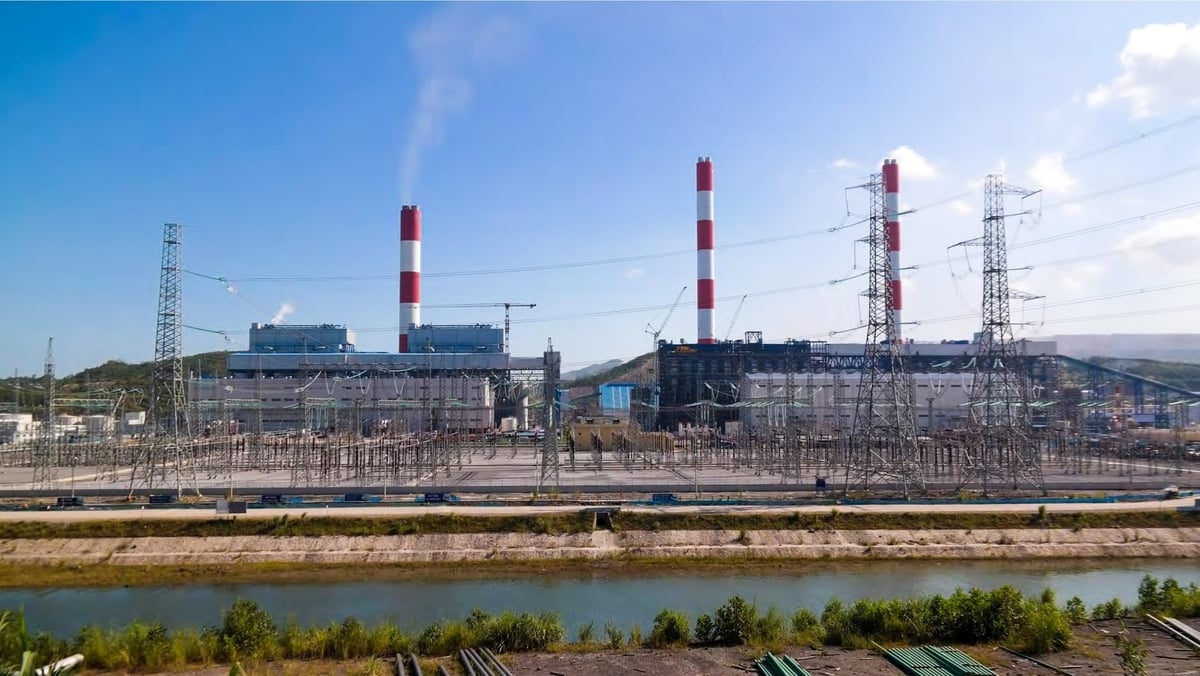
Thermal power plants holding greenhouse gas emission allowances can begin trading them immediately on the domestic carbon exchange. Photo: Illustration.
According to Mr. Nguyen Tien Dung, Deputy Chief Executive Officer of the Viet Nam Stock Exchange, international experience suggests that trading volumes are likely to remain modest during the initial phase of market operation, as regulated entities require time to become familiar with the new system. However, once market participants gain experience, trading activity typically expands rapidly.
The allocation of greenhouse gas emission allowances by the Ministry of Agriculture and Environment to the first group of enterprises is therefore a significant milestone. It signifies that these companies have officially joined Viet Nam's greenhouse gas emissions management system, strengthening their credibility and reputation in both domestic and international markets.
In practice, foreign investors are increasingly requiring companies to demonstrate compliance with green growth and environmental sustainability standards before making investment decisions. For example, in the garment industry, many international buyers now source products only from factories that can verify their use of renewable energy, such as rooftop solar power.
Carbon credits are the second-largest commodity traded on Viet Nam's domestic carbon exchange. They function as certificates verifying that their holders have successfully reduced or removed a specified amount of greenhouse gas emissions.
Projects such as afforestation and reforestation, renewable energy development, low-emission agricultural practices, rice straw management, and the deployment of fuel-efficient cookstoves, among others, may generate carbon credits once they meet applicable standards and their greenhouse gas emission reductions or removals are verified.
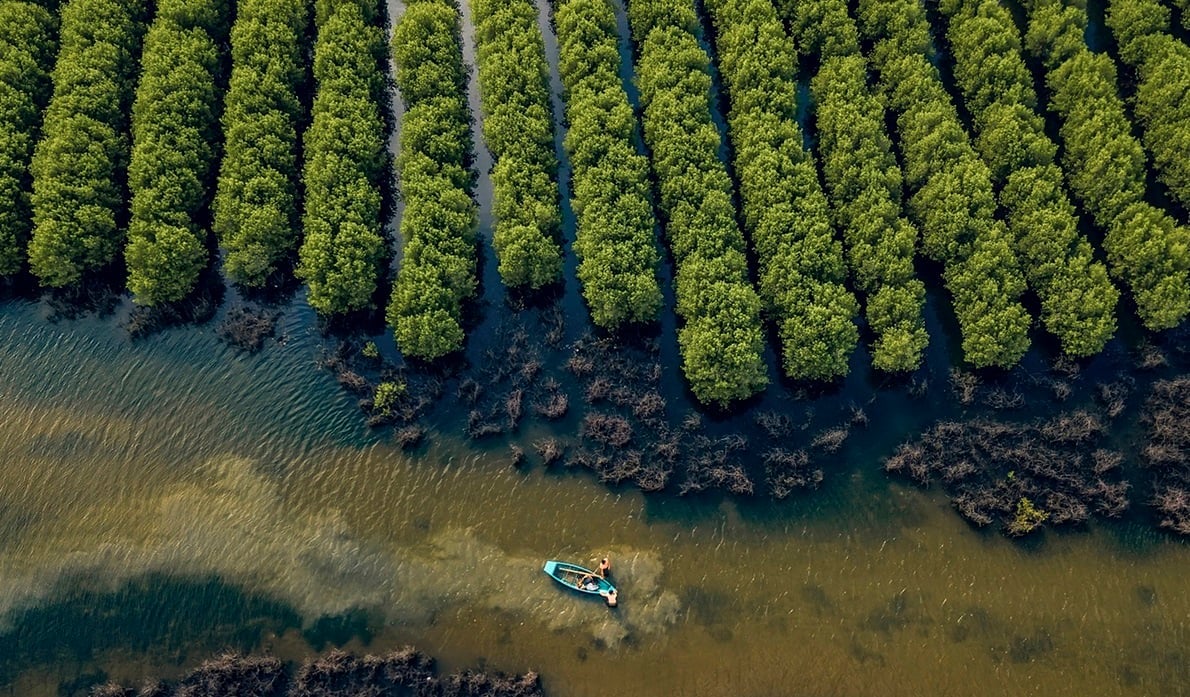
Forest carbon credits are now supported by domestic regulations governing the registration of carbon credit projects under national standards. Photo: DCC.
It should be noted that not all carbon credits are eligible for trading on Viet Nam's domestic carbon exchange. Under Decree No. 119/2025/ND-CP, only carbon credits generated through emission reduction programmes or projects under three approved carbon crediting mechanisms may be used to offset emission allowances. These include mechanisms established under Article 6.2 and Article 6.4 of the Paris Agreement, as well as Viet Nam's domestic carbon crediting mechanism.
In simple terms, these mechanisms serve as a set of rules to ensure that each carbon credit genuinely represents a verified reduction or removal of greenhouse gas emissions. They are designed to prevent double counting and to ensure the environmental integrity and credibility of carbon credits.
Drawing on his experience advising numerous carbon credit projects, Mr. Nguyen Tien Hai, Technical Director of the Energy and Environment Consultancy Joint Stock Company, noted that domestic demand for carbon credits had previously been almost nonexistent. As a result, most carbon credits generated in Viet Nam were sold overseas through intermediaries.
Now that the domestic carbon exchange has officially commenced operations, only high-quality, certified carbon credits will initially be eligible for trading. Nevertheless, the exchange is expected to become an important platform for stimulating domestic demand, supporting project developers, and fostering the growth of Viet Nam's carbon market.
According to Mr. Hai, enabling direct transactions between buyers and sellers in the domestic market will provide strong incentives for carbon credit project developers to invest with greater confidence, while also paving the way for future trading in a wider range of carbon credit products.
Frequently asked questions on carbon market
Can companies receive emission allowances at their own discretion?
No. The Government sets the total greenhouse gas emission allowance cap based on Viet Nam's national emission reduction targets. The Ministry of Agriculture and Environment then allocates emission allowances to individual regulated facilities.
How long does each allocation period last?
Two years. The current allocation period covers 2025-2026, followed by subsequent compliance periods for 2027-2028, 2029-2030, and so on.
How many enterprises are currently participating in emissions allowance trading?
As of 29 June 2026, 110 regulated facilities operated by 92 key emitting enterprises are eligible to trade greenhouse gas emission allowances.
Can all carbon credits be traded on Viet Nam's domestic carbon exchange?
No. Only carbon credits generated under approved high-integrity carbon crediting and offset mechanisms are eligible for trading. In addition, the credits must have been issued on or after 1 January 2021.
Can individuals participate directly in the carbon market?
No. Individuals do not participate directly in trading. Instead, they engage through representative organizations such as cooperatives, enterprises, forest owners, or by participating in carbon programmes and projects in forestry, agriculture, renewable energy, or waste management. This approach helps reduce transaction costs while ensuring professional and efficient participation in the carbon market.
Translated by Phuong Linh
/2026/07/20/1547-1-180442_204.jpg)
(VAN) A farmer in Can Tho has found the secret to raising giant water bugs that produce intensely aromatic essence, earning annual profits of hundreds of millions of dong.

(VAN) From crop conversion to deep processing, Ba Che Commune in Quang Ninh Province is building a comprehensive cinnamon value chain that creates sustainable livelihoods while strengthening the local forestry economy.

(VAN) The ACIAR-SunRice public-private partnership, rooted in science and sustainable development, is expected to support rice farmers in the Mekong Delta.

(VAN) Linking the shrimp, rice, and coffee sectors through a circular economy model is opening up a new pathway for Viet Nam's agriculture.

(VAN) HCMC is accelerating the transition to circular industry by transforming industrial parks into eco-industrial zones, fostering industrial symbiosis, and expanding international partnerships for green manufacturing.
(VAN) The digital map of raw material zones is expected to resolve overlapping investments, ensure production transparency, and accelerate deep processing in the coconut industry.
(VAN) Transforming barren hills once dedicated only to acacia and cassava, the Anh Mai Medicinal Plant Cooperative has found a new direction with red turmeric, opening up sustainable livelihoods for local residents.
