July 21, 2026 | 13:19 GMT +7
Hotline: 0913.378.918

July 21, 2026 | 13:19 GMT +7
Hotline: 0913.378.918
In Area 1 of Sin Ho Commune, Lai Chau Province, it is easy to find the home of Ms. Tan My Dao, a Dao ethnic woman who has devoted many years to treating patients with traditional herbal medicine in the highlands. Her house is rarely quiet, with a steady stream of visitors seeking treatment or herbal remedies.

The dong quai cultivation area developed by the Mý Dao Cooperative. Photo: Duc Binh.
From early morning until late evening, Ms. Dao is constantly on the move. One moment she is carefully preparing traditional herbal prescriptions; the next, she is out in the fields inspecting rows of medicinal plants at the peak of the growing season. After years of dedication, she established the My Dao Cooperative, working with local farmers to cultivate nearly 20 hectares of Angelica sinensis (dong quai) across the mountain slopes of Sin Ho.
Ms. Dao comes from a family with generations of experience in traditional Vietnamese herbal medicine. From an early age, she accompanied her elders into the forest to collect medicinal plants, becoming familiar with the leaves, roots, and herbs that thrive in the high mountains. Those expeditions often began at dawn, winding through rocky streams and ancient forests surrounding Sin Ho.
Perhaps it was those childhood experiences that earned her the nickname "the miracle healer" among her university classmates. Whenever someone suffered from joint pain or muscle aches, she would gather medicinal herbs, prepare traditional remedies, and treat them with both topical applications and herbal decoctions.
Her reputation eventually led her to meet Mr. Giang Xuan Cuong, a young Hmong man from Muong Khuong District in Lao Cai Province. At the time, Mr. Cuong had been suffering from sciatica and had sought treatment through both traditional and modern medicine with little success. Only after using a traditional Dao herbal bath remedy prepared by Ms. Dao, following her instructions, did his condition gradually begin to improve.
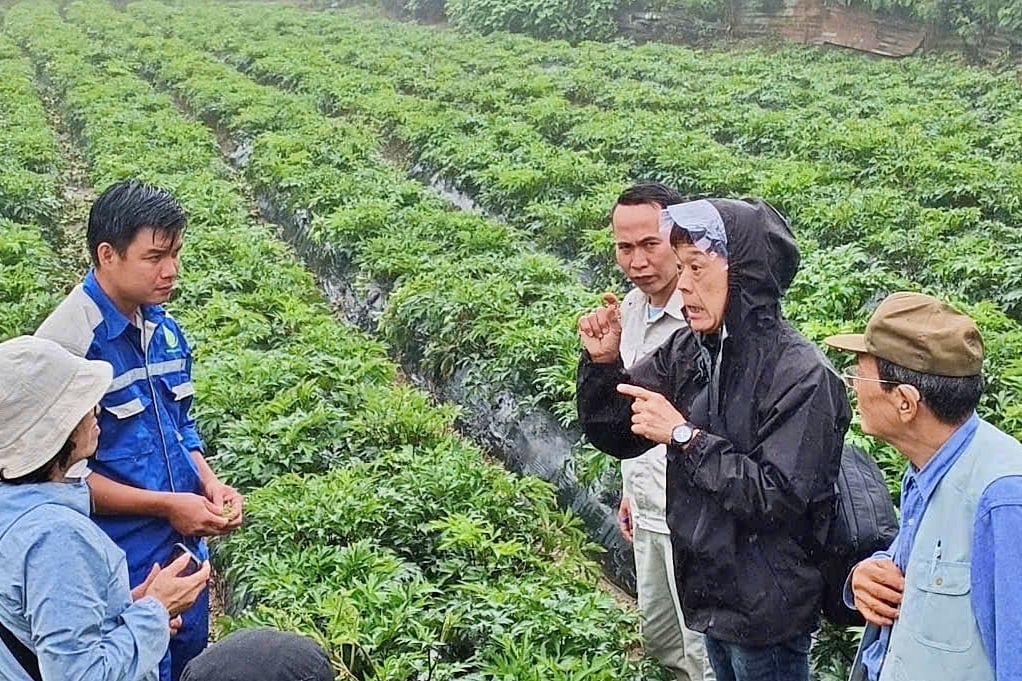
Visitors tour the My Dao Cooperative’s medicinal herb production model, which links local farmers through a sustainable cultivation network. Photo: Duc Binh.
To prepare herbal remedies for Mr. Cuong, Ms. Dao made countless trips into the forest to gather medicinal plants. Even on rainy days, when mountain trails became slippery and dangerous, she would set out early, following rocky streams in search of the herbs she needed.
The freshly harvested plants were carefully tied into bundles with forest vines before being taken home to dry or boiled into individual herbal prescriptions. Every time she sent medicine to Mr. Cuong, she meticulously enclosed handwritten notes explaining how to prepare and use each remedy. Their relationship began with those packages of herbal medicine and gradually grew into a lifelong partnership, united by their shared journeys through the mountains in search of medicinal plants.
“After making repeated trips into the forest to collect herbs for my husband and for people in the community, I realized that wild medicinal plants were becoming increasingly scarce, and we had to travel farther each time to find them. Many plants were being dug up completely, roots and all. If people keep harvesting from the forest without replanting, eventually there will be nothing left,” Ms. Dao recalled.
That realization inspired her to cultivate medicinal herbs in her own fields, ensuring a sustainable supply of raw materials for traditional herbal medicine rather than relying entirely on wild forest resources. She chose Angelica sinensis (dong quai) as her principal crop because it is relatively well suited to local conditions and is an essential ingredient in many of her traditional herbal formulations.
Dong quai, however, is a demanding crop. Compacted soil restricts plant growth, while excessive use of chemical fertilizers can cause the roots to rot or become hollow. Drought slows development, whereas waterlogging can quickly damage the root system. The crop also cannot be grown continuously on the same land for many years because of its susceptibility to root diseases. When freshly harvested, the pale yellow roots release a distinctive earthy aroma that lingers on the hands of those who collect them.
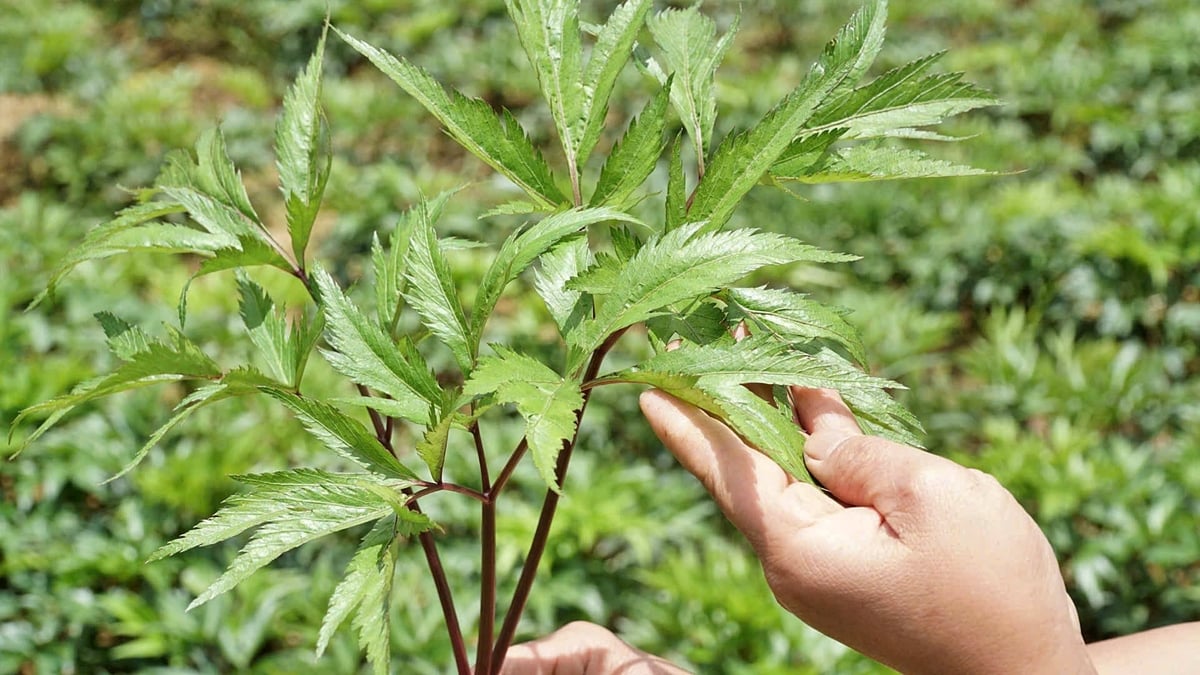
Dong quai is a demanding crop, compacted soil can significantly slow its growth and reduce root development. Photo: Duc Binh.
In the first planting season, Ms. Dao invested in seedlings and land preparation. She began by applying well-composted livestock manure as a basal fertilizer. After nearly a month, the seedlings were transplanted into the field. The land was formed into raised beds to prevent waterlogging, while plastic mulch was laid over the beds to retain moisture and suppress weeds. Notably, she avoids using chemical fertilizers and pesticides, allowing the plants to grow under natural cultivation practices.
According to Ms. Dao, a well-managed hectare of Angelica sinensis (dong quai) can yield around 10 tonnes of fresh roots. However, she emphasized that the most important factor is not productivity but soil health.
“If you focus on quick gains by applying excessive chemical fertilizers, the soil will be degraded after just a few growing seasons,” she said.
For this reason, all households participating in the My Dao Cooperative's production network are instructed to practice crop rotation. After approximately three years of cultivating dong quai, the land is rotated to rice or maize for a period to restore soil fertility.
Compared with maize, dong quai generates significantly higher economic returns. After 8-10 months of cultivation, each root can weigh from more than 0.5 kg to nearly 1 kg when grown under proper management practices. Fresh roots typically sell for VND 30,000-50,000 per kilogram, while dried and sliced products can fetch over VND 300,000 per kilogram, substantially increasing their market value.
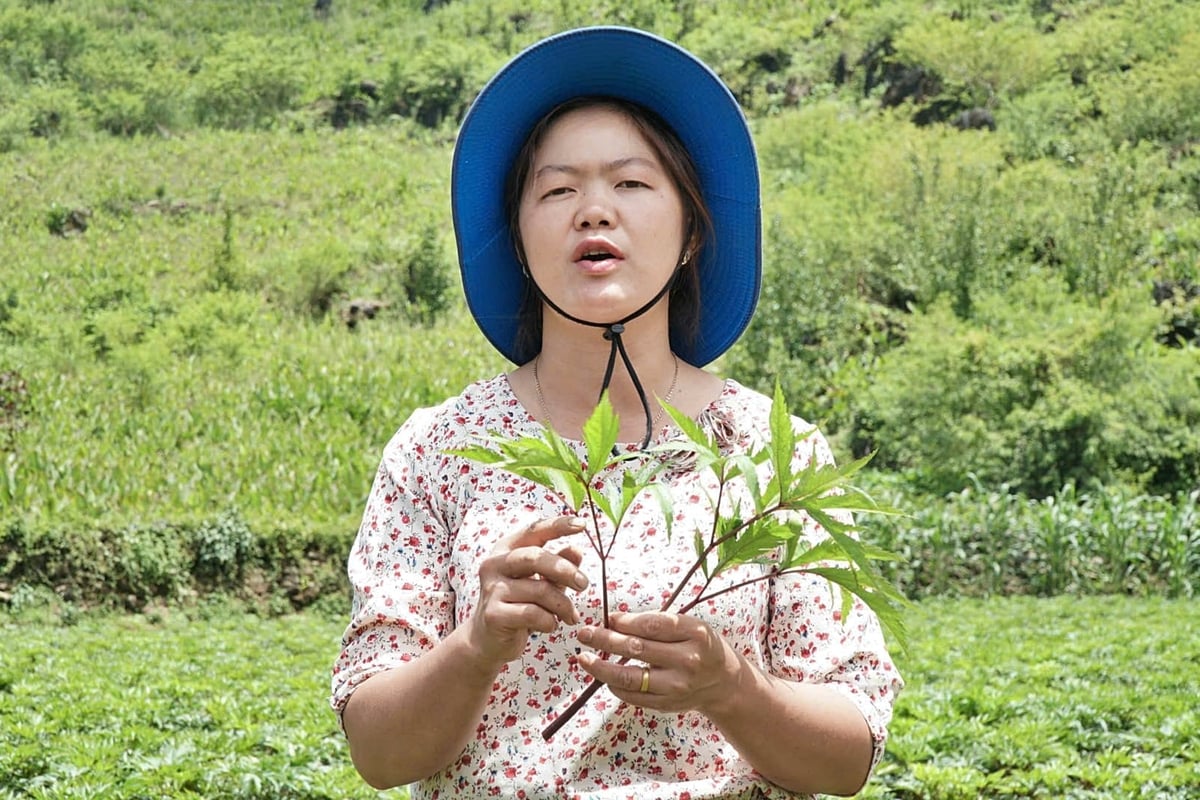
A well-managed hectare of dong quai can produce around 10 tonnes of fresh roots. Photo: Duc Binh.
In addition to selling fresh medicinal roots, Ms. Dao operates a traditional medicine clinic, where she treats patients using herbal remedies passed down through generations of the Dao ethnic community. Inside her wooden house, located beside the herb fields, bundles of medicinal plants hang drying from the rafters, while sacks filled with roots, stems, and other herbal ingredients line the walls.
After years of research and refinement, the My Dao Herbal Bath was launched, marking a significant milestone for the My Dao Cooperative. The product is formulated from more than 19 medicinal herbs native to the Sin Ho plateau, combining the Dao people's traditional knowledge with modern production techniques. Herbs collected from the mountains are cleaned, dried, and blended according to carefully developed formulas before being marketed.
The cooperative currently offers three product lines - herbal medicines, herbal bath products, and massage essential oils designed to support health care, improve blood circulation, relieve joint and muscle pain, and aid postpartum recovery for women. In 2019, the herbal formula was officially recognized by the Lai Chau Department of Health, and in 2020 it received a 3-star OCOP (One Commune One Product) certification. Each year, the cooperative supplies around 40 tonnes of fresh medicinal herbs to the market while investing in high-capacity drying facilities to expand production of value-added products such as concentrated herbal extracts, massage oils, and dried medicinal herbs.
According to Mr. Tran Van Tuyen, Head of the Economic Division of Sin Ho Commune, the local government is positioning medicinal herbs as one of the commune's flagship agricultural commodities, particularly in highland areas with year-round cool climates such as the Sa De Phin, Ta Phin, and Phang So Lin sub-regions. The commune currently has approximately 313.5 hectares under medicinal herb cultivation, including around 70 hectares dedicated to Angelica sinensis (dong quai).
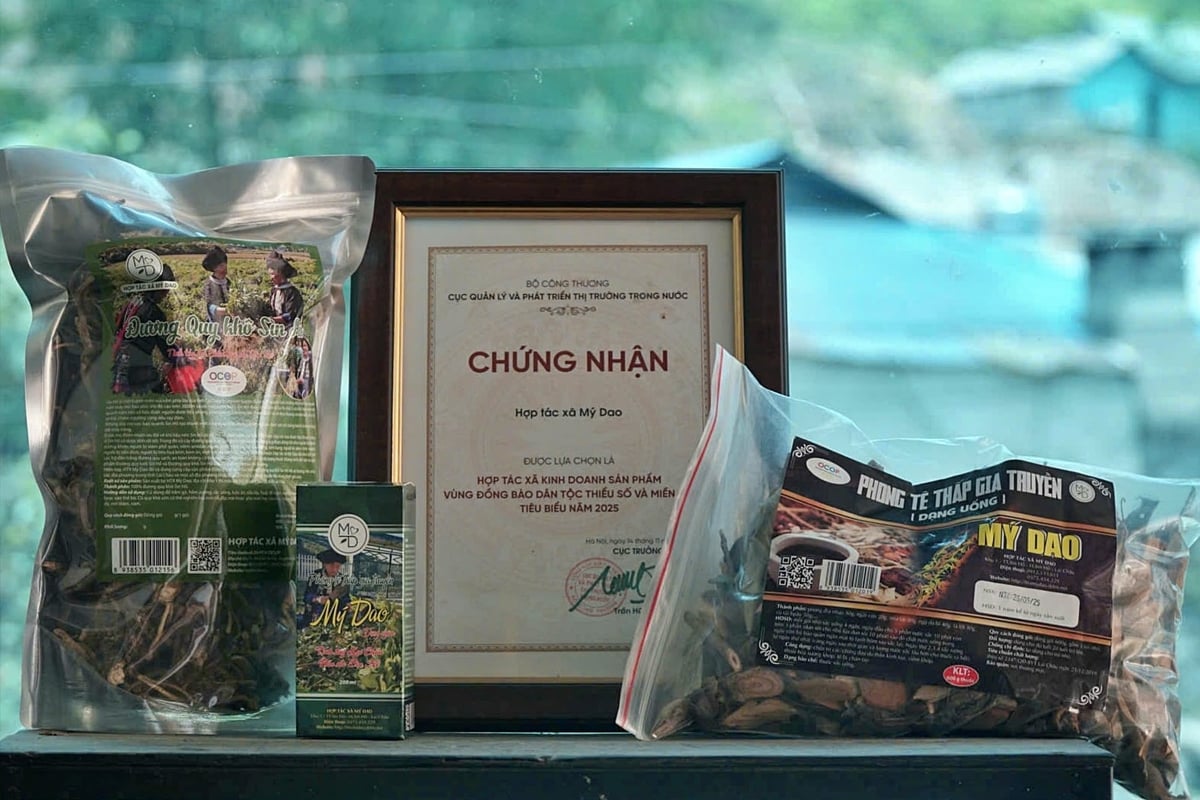
Products developed by the Mý Dao Cooperative have been certified under Lai Chau Province’s OCOP. Photo: Duc Binh.
Sin Ho was once one of the largest medicinal herb-growing areas in both Lai Chau Province and Viet Nam’s Northwest region. During the 1970s and 1980s, hillsides across the commune were covered with crops such as Angelica sinensis (dong quai), artichoke, balloon flower root, and Eucommia ulmoides.
“In the past, farmers cultivated medicinal herbs on a small scale with limited access to modern techniques. As a result, the roots were small, product quality was low, and prices were poor. After the state farms were dissolved, many households returned to growing maize and upland rice,” Mr. Tuyen added.
As part of the commune’s economic development strategy, green agriculture has been identified as a key pillar. The local government has been encouraging farmers to adopt more sustainable cultivation practices, reduce the use of chemical pesticides, transition to safe agricultural production, and develop value chain linkages to improve market access and product value.
“Sin Ho Commune is not pursuing rapid expansion of its medicinal herb cultivation area. Instead, it is focusing on improving product quality, developing stable raw material zones, and promoting deep processing to enhance added value. The medicinal herb production linkage model has also helped many local households increase their income, with average annual earnings reaching VND 40-50 million. Successful models such as Ms. Mý Dao’s will be replicated in the coming years,” said Mr. Tran Van Tuyen.
$ 1 = VND 26,466 - Source: Vietcombank.
Translated by Kieu Chi

(VAN) Recently, the Lao Ministry of Agriculture and Environment delegation visited, worked, and signed a pact with the Vietnam Academy of Agricultural Sciences.

(VAN) Da Nang steps up free rabies vaccination in mountainous communes, delivering vaccines directly to villages to build an immunity shield.

(VAN) Native honeybee farming in Ha Tinh grew strongly, providing stable incomes and promoting sustainable rural economic development.
/2026/07/20/3847-3-113606_381.jpg)
(VAN) The global spread of the SAT-1 FMD virus strain underscores the need for Viet Nam to proactively enhance surveillance and develop response scenarios well in advance.

(VAN) Agricultural by-products are being recognized as resources that can generate new economic value, reduce emissions, and create new opportunities for green growth in circular agriculture.

(VAN) The project aims to help ethnic minority women strengthen their agricultural processing skills, develop climate-resilient livelihoods, and improve their incomes.

(VAN) The BLOOM project, funded by the Government of Canada, aims to restore ecosystems while improving livelihoods for ethnic minority women in Dak Lak.
